



Angular Milling Explained: Precision Techniques for Complex Part Fabrication
The manufacturing industry is one of the most dynamic industries in the world. For instance, some decades ago, you could manufacture products or parts using only conventional tools. However, it’s quite challenging today to fabricate any part and meet product designers’ requirements without using special manufacturing processes like angular milling.
The angular milling process isn’t like any other process; its unique mode of operation and cutting tool design make it ideal for fabricating a broad range of complex parts. And in this article, we’ll cover everything you need to know about this fascinating manufacturing method.
What is Angular Milling?
Angular milling (or angle milling) involves removing portions of material from a workpiece to form the desired product. However, unlike conventional milling, angular milling creates flat surfaces that aren’t parallel (or perpendicular) to the axis of the cutting tool. Instead, the surfaces are at an angle to the cutting tool’s rotating axis, as shown below.
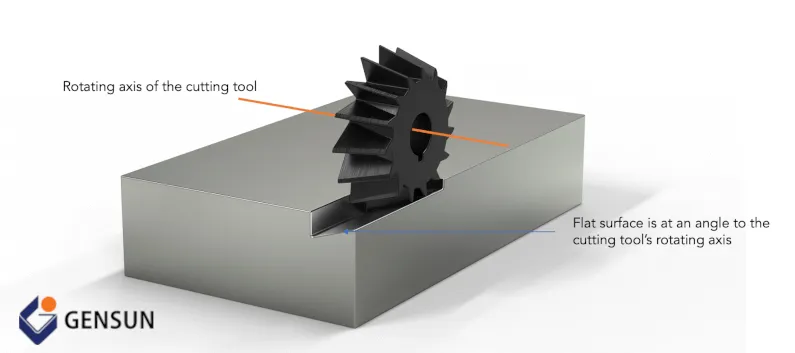
Figure 1: The angular milling process
Notice how the angular milling process utilizes a unique cutting tool that features angular grooves. This cutting tool is called the angular (or angle) milling cutter, and it allows machinists to machine angles and features like notches and serrations. However, these cutters come in different types, each with its unique feature and suitability for different application needs.
Types of Angle Milling Cutters
The angle milling cutters are categorized into:
- Single-angle milling cutters
- Double-angle milling cutters
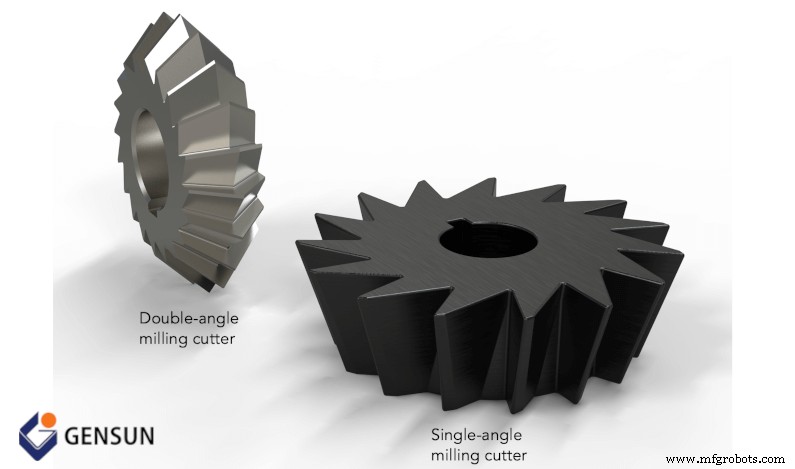
Figure 2: Single-angle and double-angle milling cutters
Single-angle Milling Cutter
The single-angle milling cutter features teeth on the cutter’s conical (or angular) face. These cutters come in different types and are specified based on the combined angle between the cutter’s conical face and the larger end face. Common single-angle milling cutter angles include 30°, 45°, and 60°.
The single-angle milling cutter is ideal for creating simple dovetails, slots, and bevelling parts. Top-tier machine shops also rely on the 30° single-angle milling cutter for surface finishing operations.
Learn more: Understanding Surface Finishing in Manufacturing.
Double-angle Milling Cutter
The double-angle milling cutter features V-shaped teeth with two conical faces at an angle to their end faces. This unique design allows machinists to create cuts from either side of the cutter, making them ideal for fabricating v-grooves, serrations, and other angular surfaces, as shown below.
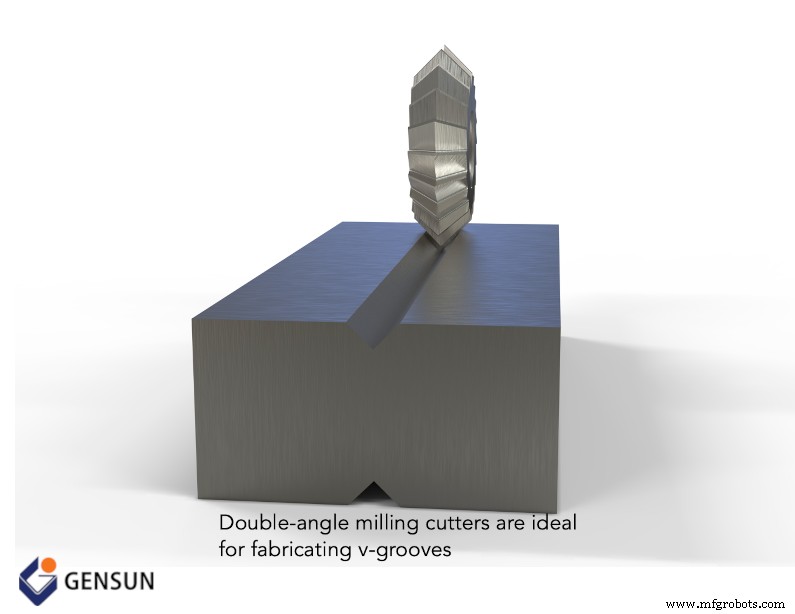
Figure 3: Fabricating v-grooves using the double-angle milling cutter
Machinists also use the double-angle milling cutters for thread milling, chamfering and deburring operations.
Tips for Angular Milling
Here are essential tips that top-tier machine shops adhere to during angular milling:
- Operate angle milling machines at the recommended speed for the type of angle milling cutters used. Excessive speeds will cause the cutting tool to overheat and wear rapidly. Top-tier machinists typically use angle milling cutters made of carbide or steel for high-speed angle milling.
- Choose an angle milling cutter large enough to span the workpiece. This allows machinists to perform cutting operations with a single pass of the cutter across the workpiece.
- Use coarse angle milling cutters during the initial machining stage to create roughing cuts, while fine angle milling cutters are better suited for surface finishing operations.
- Use a combination of milling cutters to create complex cuts and features. For instance, a combination of fly cutters and angle milling cutters might be ideal for milling the square end of a shaft or reamer shank.
- Use computer numerical control (CNC) technology to automate the sequence of movement of the cutting tool and workpiece to create desired products. This technology eliminates the human error factor common in the conventional angle milling process.
Learn more: Understanding How CNC Machining Works.
Angle Milling: Gensun Can Help
Now that you know what the angle milling process entails, you’d agree that it can create complex features. However, your project’s success also depends on the machine shop you work with.
Gensun Precision Machining is a leading provider of machining services across Asia. We have a team of highly qualified machinists and quality control experts who work together to get your product done right.
Learn more about our CNC machining services.
CNC Machine
- Expert Shaft Manufacturing: Precision Processes & Custom Solutions
- Understanding Composite Manufacturing: Processes, Technologies, and Economic Impact
- Understanding Process vs. Discrete Manufacturing: Key Differences & Benefits
- Mastering CNC Milling: Precision Metal Fabrication Explained
- Plain Milling Explained: The Key to Precision Machining
- CNC Milling Explained: Precision Manufacturing for Complex Parts
- CNC Machining Explained: The Precision Process Behind Modern Manufacturing
- Understanding the Extrusion Process: Applications, Materials, and Techniques
- Comprehensive Guide to CNC Milling: From Design to Production
- Optimized Contract Manufacturing with Advanced CNC Automation