



How CNC Machine Shops Work & How to Pick the Best Partner
Have you recently come up with a new product (or part) design, and are you unsure how to proceed with manufacturing? An important decision you likely need to make is whether to set up a production facility of your own or outsource the manufacturing processes to a third-party CNC machine shop.
Without a doubt, outsourcing offers numerous advantages over setting up a production facility. But these advantages will only be felt if you do your homework and choose a top-tier machining service provider.
That’s why we’ve put together an in-depth overview of machine shops in this article. It will serve as a guide to help you sort the top-tier CNC machine shops from the low-end ones and choose the best shop for your manufacturing project.
What is a Machine Shop?
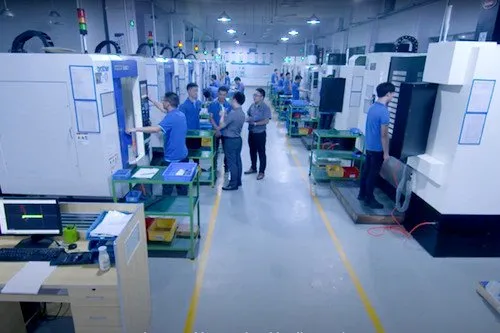
A machine shop is a place where materials like metal and plastic are cut, formed, and shaped into custom parts using different machinery. It’s not a “shop” in that sense; you don’t just walk in there to find whatever part you need. Instead, it’s a manufacturing facility that helps you create and deliver orders precisely to your specifications.
Let’s take a look at some of the machinery you’re likely to find in every machine shop.
What Will You Find Inside a Machine Shop?
#1 CNC Milling Machine
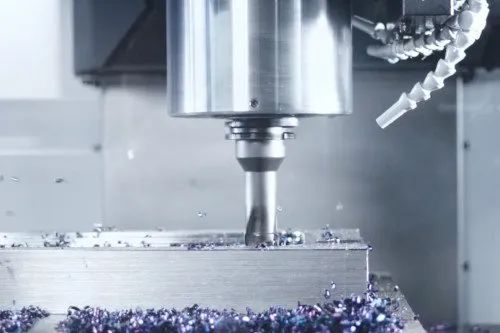
The CNC milling machine is one of the most essential pieces of machinery in the machine shop. This automated machine uses a rotating multi-bladed tool to create cuts on a stationary workpiece, shaping it until it matches the specified design.
CNC milling machines are available in 3-, 4-, 5- and 6-axis configurations, allowing the machinist to fabricate complex designs with many angled internal parts and hidden geometries.
Learn More About: CNC Milling.
#2 CNC Turning Machine
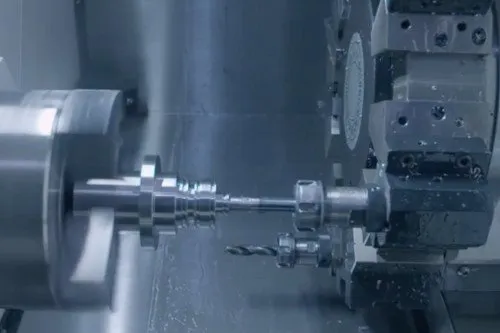
CNC turning machines are similar to CNC milling machines; they both rely on 3D CAD models and computer instructions (G-code) to create parts. However, these machines differ in their working method.
Unlike in CNC milling, where the workpiece remains stationary, CNC turning machines feature a chuck and spindle that holds (and rotates) the workpiece against a stationary cutting tool. They are ideal for knurling, turning, drilling, and grooving cylindrical parts.
Learn More About: CNC Turning.
#3 Electric Discharge Machine
An Electric Discharge Machine uses electrical sparks to manipulate a workpiece and shape it into a custom part. They are usually faster and more accurate than conventional lathes and milling machines.
#4 Grinding Machine
A grinding machine, also known as a grinder, is a power tool used for grinding a workpiece to produce a smooth finish. Grinding machines feature a grinding wheel, which is coated with an abrasive material that rotates at high speed against the surface of the workpiece.
#5 Band Saw
A band saw is a power saw consisting of a continuous toothed metal sheet. Operators use it to make cuts (or roughly remove sections) of a workpiece before a more precise cutting operation is done.
#6 Surface Finishing Tools
Surface finishing tools describe the pieces of equipment used on a workpiece to improve its aesthetic appearance, strength, or other properties. Surface finishing services include buffing, polishing, sandblasting, anodizing, and painting.
#7 Coordinate Measuring Machine
A Coordinate measuring machine (CMM) is used in machine shops for quality control. This device allows the machinist (or quality control expert) to measure the geometry of machined parts, ensuring that they match the specifications provided in the 3D CAD file.
How do CNC Machine Shops Manage Quality Control?
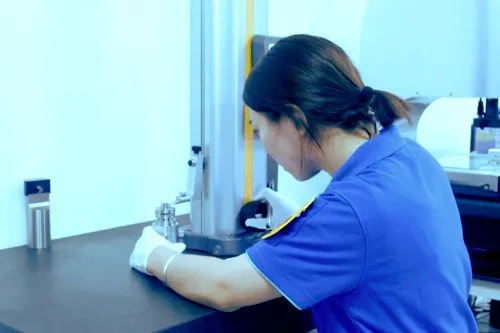
Top-tier machine shops usually have a dedicated team of control experts who verify specifications using CMM, microscopes, and 2D projectors. They also typically have trained machinists who inspect parts during (or immediately after) machining using tools like micrometers and go/no-go gauges.
Learn More About: Quality Control for CNC Machining
How do You Choose the Right Machine Shop?
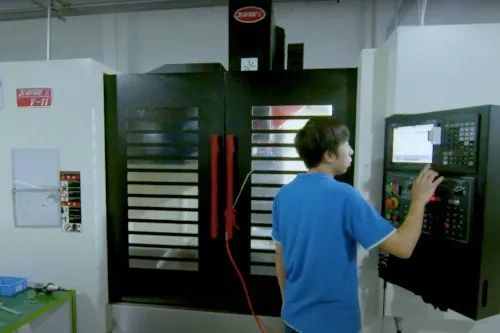
By searching for “machine shop” on Google, Bing, or your favorite search engine, you can expect to see an endless list of third-party machining service providers. The manufacturing industry is flooded with so many machine shops that it can be overwhelming to find good ones.
The following tips will help you choose the best machine shop for your project.
- Choose a CNC machine shop that meets the requirements of several regulatory bodies and standards, such as ISO 9001, ISO 14001, and ISO 13485.
- Choose a machine shop that can build high-precision parts to extremely tight tolerances, for example, ±4 μm.
- Ensure that the CNC machine shop has state-of-the-art CNC equipment as well as highly qualified technicians and engineers.
- Ensure that the CNC machine shop has a dedicated team of quality control experts.
- Choose a machine shop that has experience serving your industry.
- Choose a machine shop that allows you to request a quote by providing you with a means to upload your 3D CAD file and specify your materials, finishes, and quality requirements.
Gensun Precision Machining satisfies all these requirements and more. We have been providing high-quality machining services for nearly two decades. Our facility is ISO 14001 and ISO 9001 certified, and our highly experienced engineers and QC experts will ensure you get high-quality parts exactly to your specification.
Learn more about our CNC Machining Services.
CNC Machine
- Choosing the Ideal CNC Router: A Comprehensive Guide
- Choosing the Ideal CNC Machine: A Practical Guide
- Understanding Shaft Fits: Three Types and How to Pick the Right One
- Choosing the Right Compactor: A Comprehensive Guide to Efficient Waste Management
- Choosing the Perfect Motor Driver: A Comprehensive Guide
- Selecting the Optimal CNC Cutter and Programming for Peak Performance
- Choosing the Right CNC Machine Shop: A Professional Guide
- Choosing the Right Plastics for CNC Machining: A Practical Guide
- Understanding 5‑Axis CNC Machines: Function, Benefits, and How They Operate
- CNC Machining Explained: How Computers Shape Precision Parts