



CNC Machining Cost Explained: Key Factors That Shape Your Project Budget
CNC machines have completely revolutionized manufacturing, allowing product designers to automate manufacturing and produce high-quality machined parts. However, many product designers find CNC machining cost estimation quite challenging. As a result, they are often overwhelmed when they receive project quotes from manufacturers.
Several factors affect the cost of your CNC machining project, including product design, choice of material, manufacturing technology, tooling, and surface finish.
This article will cover all of these factors. And by the end of this read, you’ll learn how to estimate (and reduce) your CNC machining costs and create the perfect parts for your project.
Factors that Affect CNC Machining Costs
#1 Complexity of Design
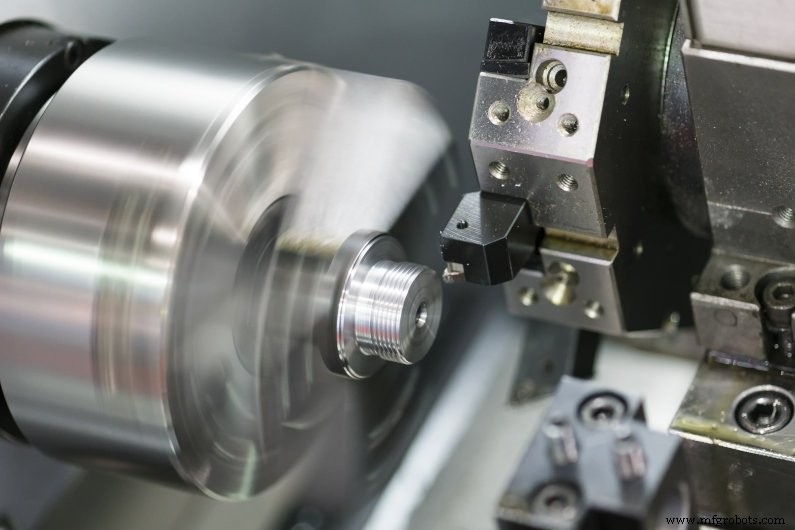
CNC machining is a subtractive manufacturing process ㅡ which means it uses cutting tools to remove portions of material from a workpiece till the desired part is formed. As a result of this mode of operation, there are certain design restrictions in CNC machining.
For instance, internal vertical corners of CNC machined parts will always have a radius regardless of the size of your cutting tool. Also, CNC cutting tools typically access the workpiece from the top surface, making it challenging (and costly) to fabricate certain features or parts.
The more complex your product design is, the longer it takes to machine your part, resulting in higher machining costs. Therefore, to simplify your product design and reduce your manufacturing costs, you should optimize your design by implementing the following tips:
- Add a corner radius on internal edges to account for the cylindrical shape of the CNC cutting tool. The radius should be at least one-third of the cavity depth and should be the same for all internal edges to save time and eliminate the need for additional tooling.
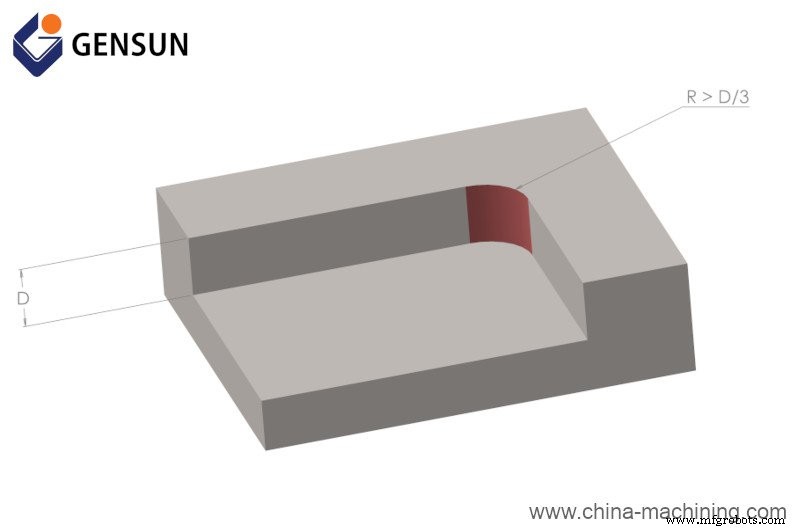
Figure 1: Corner radius on internal edges
- Use undercuts when you need to create a 90° internal edge since reducing the size of the end mill tool won’t do the job.
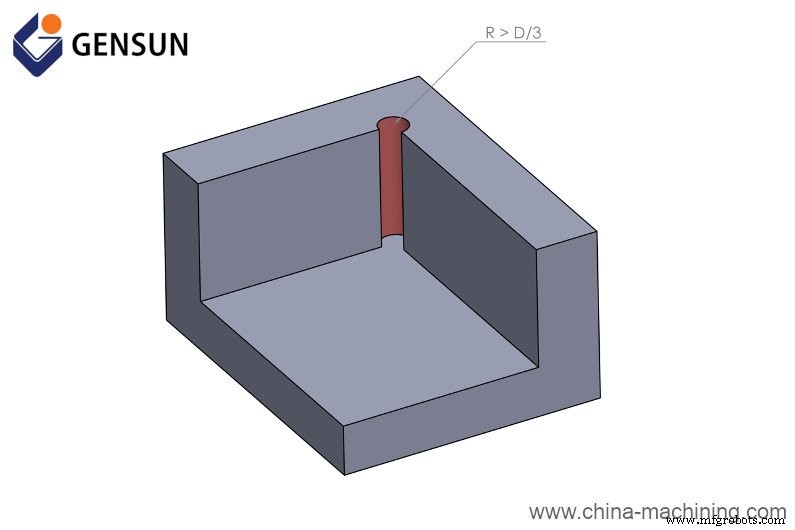
Figure 2: When you need to fabricate a 90° internal edge, reducing the radius of the end mill tool won’t work. Instead, you want to create an undercut with a radius of at least three times the cavity depth.
- Limit the depth of the cavities to four times their length (or width). Cavities with a smaller depth-to-width ratio require specialty end-mill tools, increasing manufacturing costs.
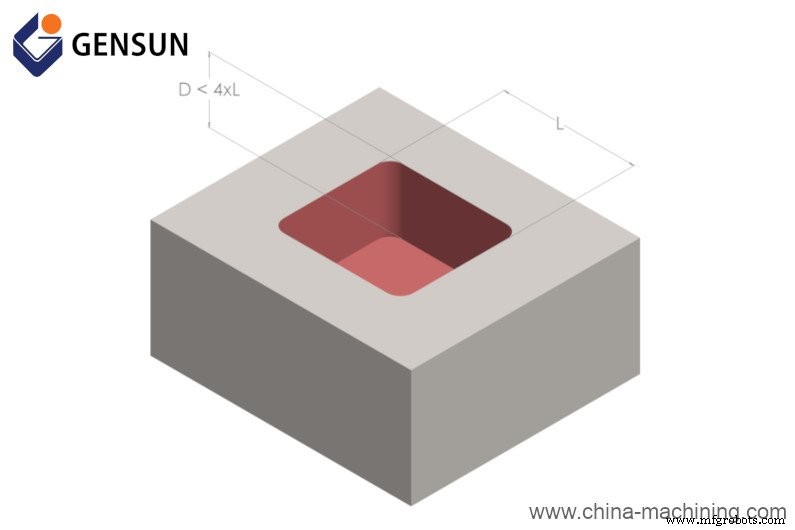
Figure 3: Limit the depth of cavities
- Design undercuts to have a depth of approximately two times their width and enough clearance to allow cutting tool access. As a rule, the clearance should be at least four times the undercut depth, especially if you will be using a T-slot cutting tool.
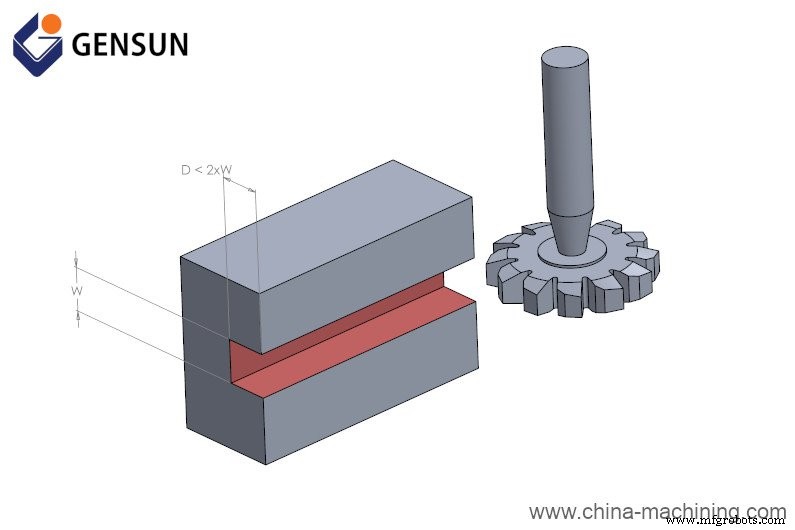
Figure 4: Undercuts require specific tooling and depth-to-width ratio to reduce CNC machining costs
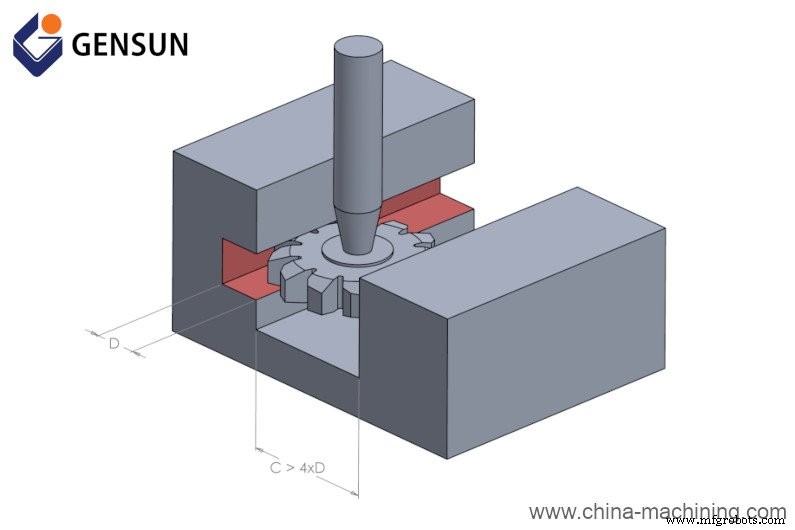
Figure 5: Add clearance to undercuts when you plan to use the T-slot cutting tool
- Minimize the number of machining orientations by keeping features on one side of the workpiece unless it’s absolutely necessary to do otherwise. For instance, you’ll have to set up a 3-axis CNC milling machine twice to create the product shown below.
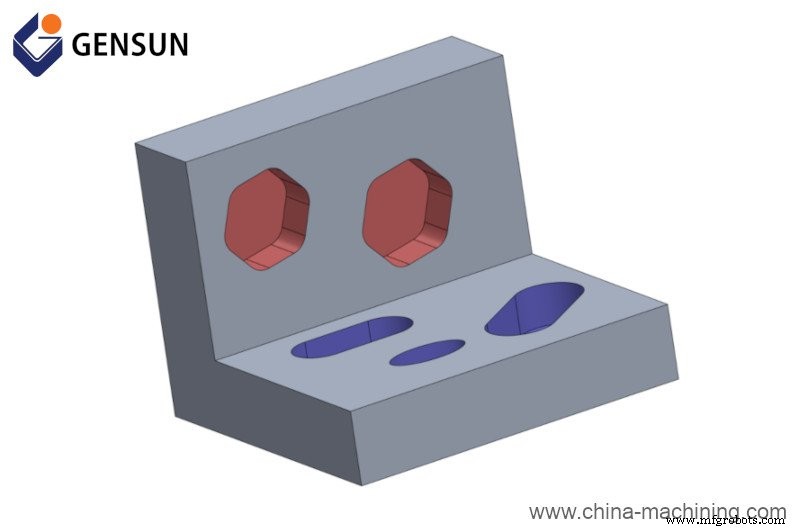
Figure 6: Minimize the number of machining orientations
#2 Labor
The product development process using CNC machines involves several steps. For instance, you need to first create a 3D CAD file before converting it into a computer program that the CNC machine uses to automate manufacturing.
Because these processes add to the labor costs, you can cut costs by performing some of these processes yourself rather than outsourcing. For instance, you can create your product’s 3D CAD before outsourcing the review and production to a manufacturing engineer.
Your manufacturing costs also depend on the number of parts (or units) you’d be producing, with higher units translating to higher manufacturing costs. However, you can expect a lower cost-per-part for bulk parts production compared to low-quantity production.
#3 Choice of Engineering Material
The material you choose for your product is a huge determinant of CNC machining costs. As CNC machining is a subtractive process, it tends to use more material than additive manufacturing processes like 3D printing. CNC machine shops typically buy these materials in blocks and calculate the prices per block.
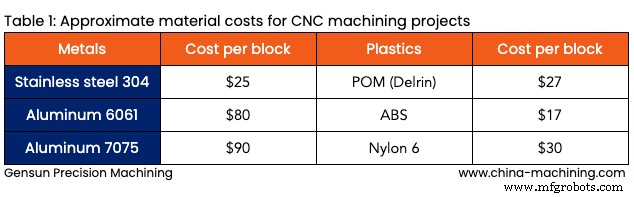
The two types of materials commonly used for CNC machining projects are metals and plastics. Metals are generally more expensive than plastics, so you can expect to spend more when fabricating metal parts than plastics. Table 1 presents the approximate material costs for CNC machining projects.
#4 Surface Finish
CNC machined parts usually come off the production line with an impressive surface finish (see Figure 7).
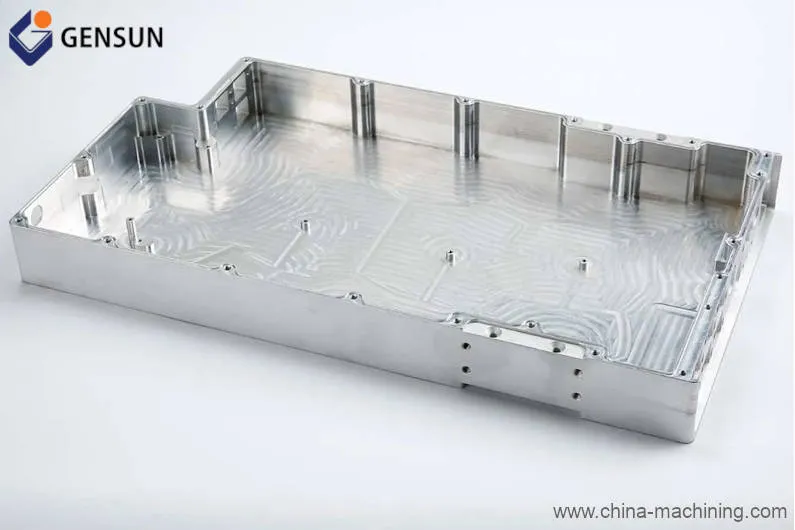
Figure 7: The as-machined surface finish of a CNC machined part
Machinists won’t charge you an additional fee to create these as-machined parts. However, you should expect a higher project quote if your product requires additional post-processing operations (like anodizing, polishing, and powder coating).
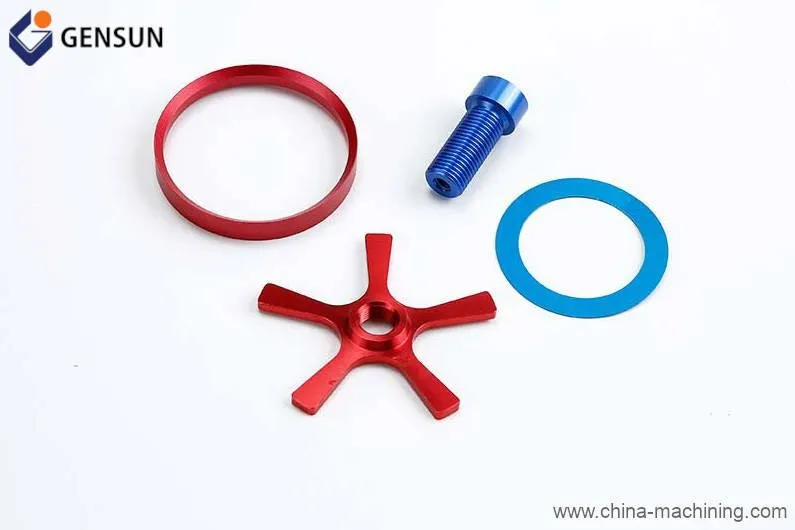
Figure 8: CNC machined parts with anodized surface finish
Outsourcing Can Help You Reduce Manufacturing Costs
Many top-notch product designers and business owners reduce machining costs by outsourcing their manufacturing projects to CNC machine shops in China. For instance, say you’re looking to manufacture a complex part using multi-axis CNC machines. In this scenario, you can expect to pay as low as $40 per hour in China, whereas European (or American manufacturers might charge up to $120 per hour.
However, just because prices are more friendly across Asia, it doesn’t mean you should take the plunge with any Chinese manufacturer. Instead, you must choose a manufacturer with state-of-the-art CNC technologies and highly qualified engineers, technicians, and quality control (QC) experts.
Gensun Precision Machining is a leading provider of CNC machining services in China. We have a team of highly experienced technicians, engineers, and QC experts who work together to get your product done right at affordable prices.
Learn more about our CNC machining services.
CNC Machine
- Understanding CNC Machining Costs: Key Factors & Pricing Guide
- Factors Influencing CNC Machining Costs: What You Need to Know
- How AI and Machine Learning Revolutionize CNC Machining
- Cut CNC Machining Costs: Proven Strategies for Precision & Savings
- Understanding CNC Machining Costs: Key Drivers and Proven Strategies to Cut Expenses
- Understanding 4-Axis CNC Machines: Benefits and Comparison to 3-Axis Systems
- Reduce CNC Machining Costs: Expert Tips for Precision Parts
- Understanding CNC Machining Costs: Factors & Cost‑Saving Strategies
- What Is the Cost of a Metal CNC Machine? Pricing Insights & Investment Guide
- CNC Machining Explained: How Computers Shape Precision Parts