



CNC Cutting vs Laser Cutting: Choosing the Right Manufacturing Process for Your Needs
Both CNC cutting and laser cutting methods are used in the manufacturing industry and can produce intricate, precise, and reliable parts and components, but both methods work in different ways. So it is essential to figure out the significant differences between CNC cutting and laser cutting, and it can help choose the right company and CNC machining method. CNC routers and CNC lasers have similar features and applications, such as being controlled by CNC machines, producing precise parts, low waste production, more capacity, and high productivity. They use for the fabrication of parts and create limitless designs. CNC cutting is a connection base cutting procedure and manufactures precise parts with exact positioning and velocity. We can find some differences, such as laser cutting perform through heat while CNC cutting can achieve through friction. Laser cutting uses a laser in a place of physical method like CNC router. CNC router has one advantage of cutting straight lines, curved and diagonal cuts, which we can’t get by other methods. Another main difference is the low cost of CNC cutting as compared to CNC laser. It can cut material like foam, wood, plastic, and acrylic like CNC laser. We can cut tough gemstone and metal with a CNC laser, and it can complete with the help of a laser beam that uses for a custom shape and design for the cutting. Laser cutting is a non-connection base method and performs many processes. CNC laser produces intricate parts with high tolerance. Parts manufactured by CNC laser don’t require any after finishing or polishing. The clear cut is possible in laser cutting due to burning techniques. CNC cutting/router uses specific tools for fast and efficient parts production. You can create a custom design according to clients’ requirements by using AutoCAD and CorelDraw. CNC cutting also can produce multiple products and use thick materials. It is easy to cut and control over depth of cut by using a CNC router. It gives no discoloration of the edge and allows us to produce three-dimensional cuts. Cutting tools are as necessary for a manufacturing process as other items. The quality of work and production parts can affect by CNC cutting tools. We can perform various cutting operations using CNC cutting tools, allowing CNC laser and cutting machine to perform multiple cuts. They also help remove the extra material from the workpiece with the process of shear deformation. The cutting tool type can affect the spindle speed, feed rate, and chip size removed from the workpiece. Some features that make a tool effective are: Some of the common CNC tools are as under: Ceramics use for high-quality finishing and cutting of solid material, cast iron, and superalloys. They have high corrosion and heat resistance. They are cheap and use for low-speed operations. It contains silicon, manganese, and 0.6-1.5% carbon and can find in drilling, turning, tool cutting, and tool forming. It uses for excellent quality surface finishes and mostly makes up with other metals like tantalum, tungsten, and titanium. It designs explicitly for high-speed operations and can withstand up to 1000 OC. It is a rigid material and blends tungsten, molybdenum, and chromium. A blending of these elements improves its wear resistance, toughness, and hardness. Surface treatment can prove helpful in improving its characteristics and features. Coating of cutting tools can use to increase functionality and the life span of tools. It also makes tools harder. Some of the common cutting tool coatings are: It would be best if you chose the right tools for your project. It is critically vital for accuracy, excellent productivity, precision, and efficient machine operation. Right tools selections lead to a successful and progressive project. We can categorize CNC routing into five types; drilling, male cuts, female cuts, online cutting, and cleanouts. Drilling cuts are inside the piece and it uses for the creation of holes for the exact size of bit used. It can be an outside cut of a piece around the object or the final cut. The cutter comes down on the outside of the components during cutting male cuts, and it ensures the width, height, and dimension of the final parts will design. It applies to the outside of the part and is slightly outside the part. You can not get an inside corner of 90 degrees and sharp edges created in inside corners. It is because of using router bits. It can cut material to remove a piece and is different from male cuts. It is more significant than the diameter of the CNC software for the generation of the tool path. It is diverse and a little large compared to the CNC software diameter for generating tool paths like male cuts. The cuts made by female cuts are round like male cuts inside the corners. It can follow a simple line segment and mainly uses shapes. The shapes may have a cut and need another cut like beveling applying a V-bit. It can use for creating grooves in materials for 3D Routing, and it doesn’t wrap during the cutting process. It may take some time, and you can use significant bits for cleaning a large area. It can cut a certain depth and will be similar to hollowing out a canoe. CNC laser also refers to sheet metal cutting and the process used to vaporize, melt, and remove material by using a laser beam. It can use optics, a guidance system, and an assist gas for focusing the laser beam into the workpiece. The main types of cutting lasers are: It makes possible uniform cuts on complex parts. CNC laser has limitations for working on delicate parts and provides clean vertical lines. Laser cutting can perform by: CNC cutting laser is widely used for many industries due to its high precision, such as electronics, shipbuilding, and metallurgy. The main cutting characteristics are: Laser cutting is one of the best options for precise and high-quality parts. Cutting laser perform by a focused beam of light which cuts the material with high accuracy and precision. Industries that require high tolerance, such as medical and aerospace, uses laser cutting processes for parts manufacturing. The tolerance of the laser is 0.003mm to 0.006mm. Laser cutting uses less amount of energy and doesn’t have any moving parts. It has low power consumption even if you have to cut reflective and thick material. It also decreases the cost of projects and also has a beneficial impact on the manufacturing process. The main advantage of laser cutting is using a high percentage of sheet material to maximize usable parts and components. It will reduce the costs and fasten the production time. It would help if you had less time for shaping new sheets of material, and eventually, it will reduce the material wastage. CNC laser cutting tools don’t have many moving parts like other CNC cutting processes, and it is a critical factor for low maintenance and operational costs. Laser cutting proves cost-effective for limited runs and large batch production. The reason for this cost-effectiveness is having no physical cutting surface and any tooling for modifications. There are three types of laser cutting use for sheet metal. Fibre is suitable for cutting a wide range of metals, including aluminium, copper, and brass. It is a solid-state laser that uses as a laser medium. The main advantages of fibre are: The short wavelength of fibre makes the cutting process difficult. Fibre can produce small spot sizes due to its short wavelength. It is a crystal laser uses as a medium for a solid-state laser. Nd: YAG is a good choice for cutting a wide range of materials. The high power density makes Nd: YAG best for the manufacturing of precision cuts and tight spots. Main benefits of Nd: YAG is: The expensive pump diodes are one of the main drawbacks of their short Rayleigh length, and regular replacement needs make it tough to cut thick and rigid material. Carbon dioxide is the highest-powered laser type available in the market and can produce a long infrared wavelength. These wavelengths can absorb various materials such as mild steel, titanium, aluminium, and stainless steel. The main advantages of carbon dioxide are fast & quick processing time and the ability to cut a wide range of materials. Some drawbacks of carbon dioxide are: High precision cuts and designing of corners and curves are significant advantages of laser cutting. We can cut a 0.1mm/ 0.004 inches radius, while CNC milling can cut down 2mm-0.08mm. Exact designing of curves and corners with high precision is possible with laser cutting methodology. It also reduces material waste that eventually decreases the overall cost of the manufacturing process. High speed is the other factor to consider in choosing a CNC laser as it has double speed compared to CNC milling. Cutting of material in one pass and thick parts is easier to fabricate on a CNC laser machine. It doesn’t require a workpiece and physical force to manufacture reliable and precise parts. CNC laser can create a final product without clamping and post-processing procedure, and this slight change can make a massive difference in project cost and time. CNC lasers need no clamping and post-processing steps in the parts manufacturing process. This factor will decrease overall project cost. We can get a product without little processing and creating a cut around the product by using a CNC laser, which is difficult in the CNC milling machine. Manual working and CNC milling can’t give us perfection like a CNC laser. They require clamp and post-processing for the production of the final part. The laser cutting is free from many additional steps you have to complete in CNC cutting or milling methods. The laser can create a finished product. It doesn’t require flame polishing, vacuum preparation, and fixing material steps, and this factor can reduce the labour cost and boost the profit margin in parts manufacturing. The shipbuilding industry has become more precise and rapid and has high requirements for transfer accuracy and hull segmentation. Steel plate is the primary raw material in the shipbuilding industry, and the use of laser cutting plate can be an excellent alternative to some cutting methods. The shipbuilding industry mainly adopts laser cutting, plasma cutting, flame-cutting, and shear processing to cut hull-plate parts. Laser cutting can use in shipbuilding has lots of advantages over other methods such as it is: CO2 laser cutting technology is most commonly used in shipbuilding processing and manufacturing and promotes steel metal, automotive, and many other fields and industries. Currently, the incredible technology of laser cutting has been becoming more efficient and versatile. It serves various industries and produces tight and smooth cuts, especially for the medical and aerospace industries. But to some degree, the complexity of laser cutting, complex maintenance, and high cost hinder laser cutting uses in the domestic sector. Only big companies use laser cutting technology, which is not implied in the domestic and local industries. As for CNC cutting, it can cut large parts, and uses a rotary cutter for removing material from a solid piece of wood. CNC cutting has some advantages over CNC laser cutting, such as there is no discoloration of edge, great control over the depth of cut, and you can make three-dimensional objects or cut with CNC cutting. The ability to cut the thicker parts is also the main advantages of CNC cutting compared to CNC lasers. CNC cutting system provides a wide array of applications and can cut complex 3D parts, including pipes, high-pressure container caps, and different profiles V, Y, and K cross-sections. CNC cutting makes it possible for CNC machining to access complicated parts. From the information mentioned above, you can consider what CNC cutting and a laser are and how they can be the best and most optimal solutions for your projects. The particular machines, laser cutting capabilities, and cutting applications must suit your requirements. At Wayken, we have the expertise and experience to help you. Call us or visit our site for more info.What Is CNC Cutting

CNC Cutting Tools
Ceramics
Carbon Steel
Cemented Carbide
High-Speed Steel (HSS)
5 Types of Cutting in CNC Routing
1) Drilling
2) Male Cuts/ Male Tool Paths
3) Female Cuts
4) Online Cutting/ On Center Cutting
5) Cleanouts
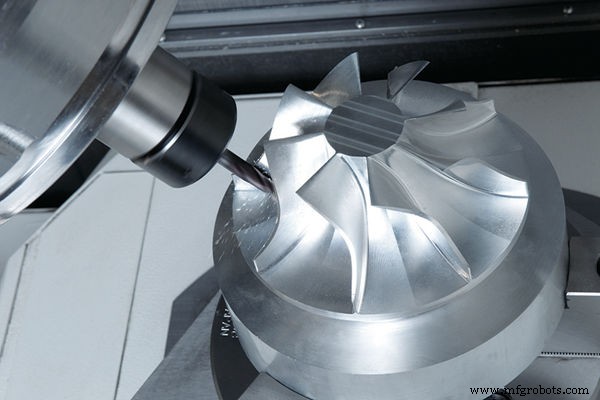
What Is CNC Laser Cutting
Characteristics of Laser Cutting
Advantages and Benefits of Laser Cutting
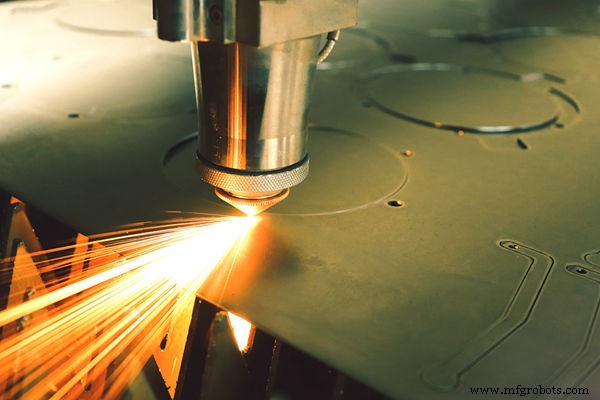
1) Precision Cuts & High Accuracy
2) Low Power Consumption
3) Higher Sheet Utilization with Less Waste
4) Lower Maintenance and Repair Costs
What Types of Laser Cutting are used for Sheet Metal
1) Fibre
2) Nd: YAG (Neodymium-doped yttrium aluminum garnet)
3) Carbon Dioxide Laser
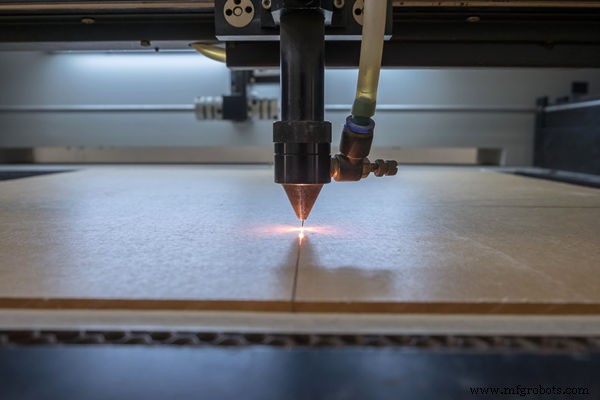
Differences between CNC Cutting and Laser Cutting
1) High Precision & Cuts
2) High Speed
3) Low Processing Cost
4) Little No Post-Processing Requirements
5) Applications & Uses
How to Choose CNC Cutting And Laser Cutting
CNC Machine
- CNC Tooling Essentials for Precision Wood Cutting & Carving
- CO2 vs Fiber Laser: Which Cutting Technology Suits Your Business?
- Advanced CNC Programming for Plasma & Laser Cutting: Mastering Slats, Tabs, Piercing & Lead‑Ins
- Waterjet vs. Laser Cutting: Selecting the Ideal Metal Cutting Technique
- Fiber Laser vs CO₂ Laser: Choosing the Best Technology for Your Application
- Waterjet vs Laser Cutting: Choosing the Right Sheet Metal Fabrication Process
- Plasma Cutting vs Laser Cutting: Choosing the Right Technique for Your Project
- Plasma vs. Laser Cutting: Which Fabrication Technique Delivers Best Results?
- Laser Cutting Advantages: Precision, Cost‑Effectiveness, and Versatility
- Laser Cutting Robotics: Does It Fit Your Production Needs?