



Waterjet vs. Laser Cutting: Selecting the Ideal Metal Cutting Technique
Two major cutting methods metal fabricators frequently utilize when cutting materials include laser cutting and water jet cutting. Depending on the type of material used and the desired end result, it’s beneficial to understand the differences between the two. Read this blog further to learn more about these cutting processes to better assess the difference between laser cutting and waterjet cutting.
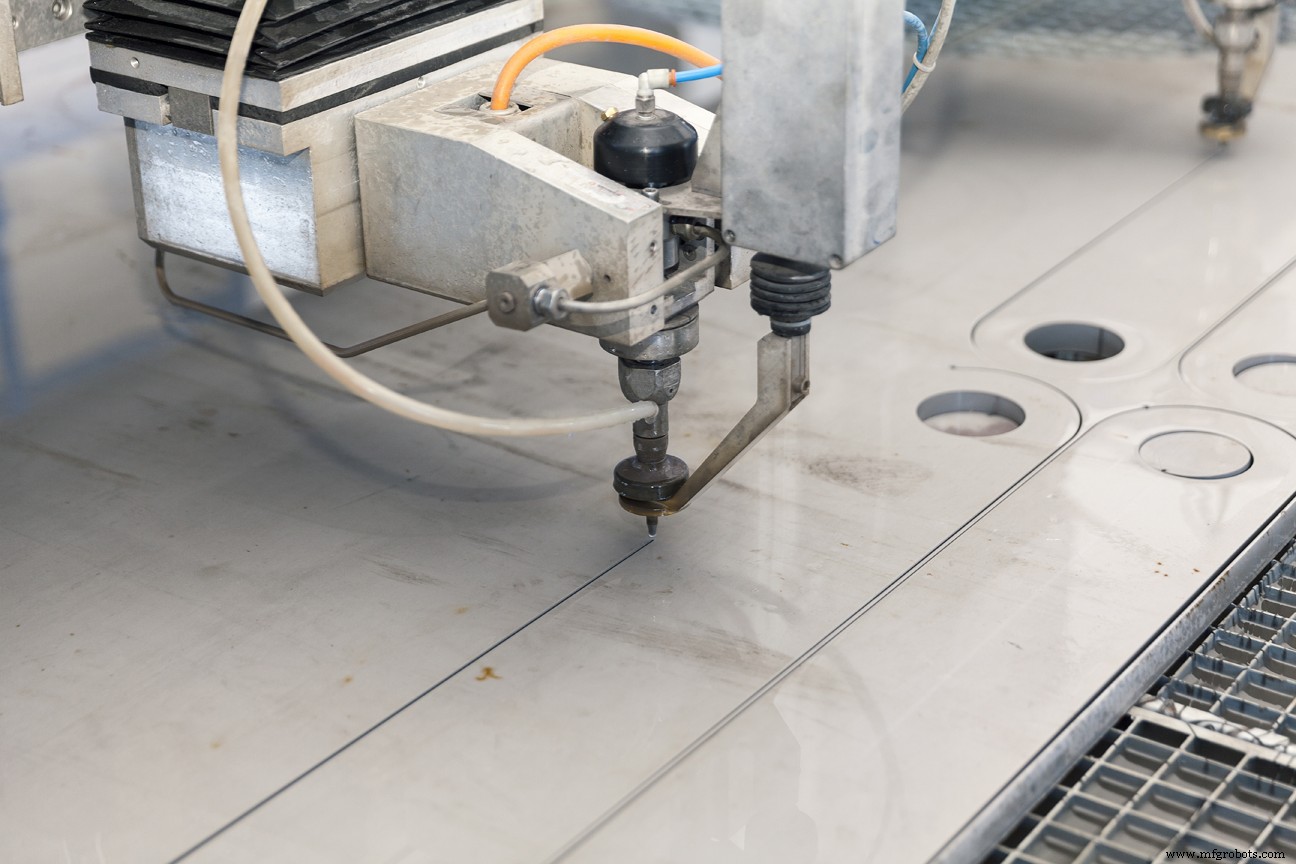
Waterjet Cutting
Waterjet cutting is an abrasive cutting process that uses high-pressure water to cut virtually any material. The water is pressurized and pushed through a concentrating water stream designed to precisely cut material such as steel to plastic. Waterjet cutting services has several advantages including:
- Waterjet cutting eliminates the need to buy custom tooling, thereby reducing set up time and unnecessary costs. Unlike laser cutting, waterjet cutting is a more inexpensive solution.
- This cutting system is capable of cutting a wide variety of materials. This system commonly cuts Steel, Stainless Steel, Aluminum, high temp and aerospace alloys like Titanium, Inconel, Waspaloy, Hastelloy, reflective metals like Brass and Copper, Plastics, Composites and are especially good at cutting laminated materials like Carbon Fiber.
- Water jet cutting is a cold process and does not put any heat into the material during the cutting process. This means that no heat-affected zone is created during the cutting process. This is a very important fact to those in the Aerospace industry as the waterjet cutting process to does not alter the physical state of the material being cut or cause the material to warp from the heat.
- Plus, the lack of a heat-affected zone helps sheet metal fabricators as well. The elimination of a heat affected zone means the process can go straight from the waterjet to threading or welding operations without the need to remove any heat-affected material. This reduces labor and help metal fabricators a quality product with speed and efficiency.
To see how waterjet cutting works check out our video here: https://youtu.be/QCiqUK_ZdPQ
Vs.
Laser Cutting
Laser cutting is known for its ability to accurately cut thin sheet metal at fast speeds. This is a “hot” cutting process which works by using a laser beam to cut materials, which is controlled by computer parameters. The path of the laser burns or melts the material resulting in an even cut. A major benefit of laser cutting technology is the speed at which it cuts materials under 3/8” inch thick. For materials greater than 3/8” thick the cutting speeds slows significantly. According to ThomasNet, laser cutters work well with a variety of materials including steel, stainless steel and thin aluminum, copper and brass sheet. If a material combination consists of materials with different melting points, however, it can be rather difficult to cut. Sandwich structures with cavities cannot be cut at all using a laser, and materials with limited access prove difficult as well. 3D material cutting is also hard to manage because of the rigid beam guidance (source). Precision with laser cutting is key. However, be sure with thinner materials to use the proper distance to avoid damage and potential burring. The following are a few more advantages of laser cutting:
- Time is saved during the set-up process with the ability to react and modify quickly if needed.
- Efficiency is heightened as multiple jobs or parts can be placed and cut in a single program.
- The latest laser technology, Fiber Laser, is even faster than the more commonly available CO2 machines.
How to Choose the Right Metal Fabrication Company
Water Cutting for Stunning Architectural Metalwork
Industrial Technology
- Fiber Laser Cutting: The Optimal Choice for Modern Metal Fabrication Projects
- Maximize Efficiency: 4 Proven Tips for Your Waterjet Cutter
- Compression vs. Injection Molding: Choosing the Right Process for Your Product
- Waterjet vs Laser Cutting: Choosing the Right Sheet Metal Fabrication Process
- Laser Cutting Materials: Selecting the Ideal Choice for Rapid Prototyping
- Should You Automate Your Laser Cutting System? A Strategic Guide for Success
- Exploring the Versatile Applications of Waterjet Cutting Technology
- Waterjet vs. Laser Cutting: Which Technology Suits Your Project Best
- CNC Cutting vs Laser Cutting: Choosing the Right Manufacturing Process for Your Needs
- Laser Cutting: The Ultimate Solution for Precise Metal Fabrication