



How to Select the Ideal Grinding Wheel for Your Specific Application
Taking the general-purpose grinding wheel path is fast, easy and seemingly economical. It could also be the best way to become noncompetitive.
Shops have several good reasons to use general-purpose cylindrical and centerless grinding wheels. Wheel replacement is time-consuming and requires a fair amount of skill, making changeover an expensive process.
The wheels themselves are also fairly expensive, so it’s only logical that shop management would want ones that can grind as wide a variety of materials as possible, thus minimizing investment.
And wheels must be properly stored when not in use—depending on the size and type of the grinder and the wheels it uses, this can require a significant amount of space.
That said, many grinding experts have strong arguments for taking an application-specific grinding wheel approach, particularly on higher job quantities or where materials are challenging to grind.
Attempting to muscle through with a general-purpose wheel often leads to a host of problems, among them wheel loading, workpiece burning, poor productivity levels and unstable processes.
Worst of all, it can generate scrap at what is typically the final machining operation, when parts are at the highest value and replacing them will potentially require weeks of rework.
Consider the Grinding Operation Variables
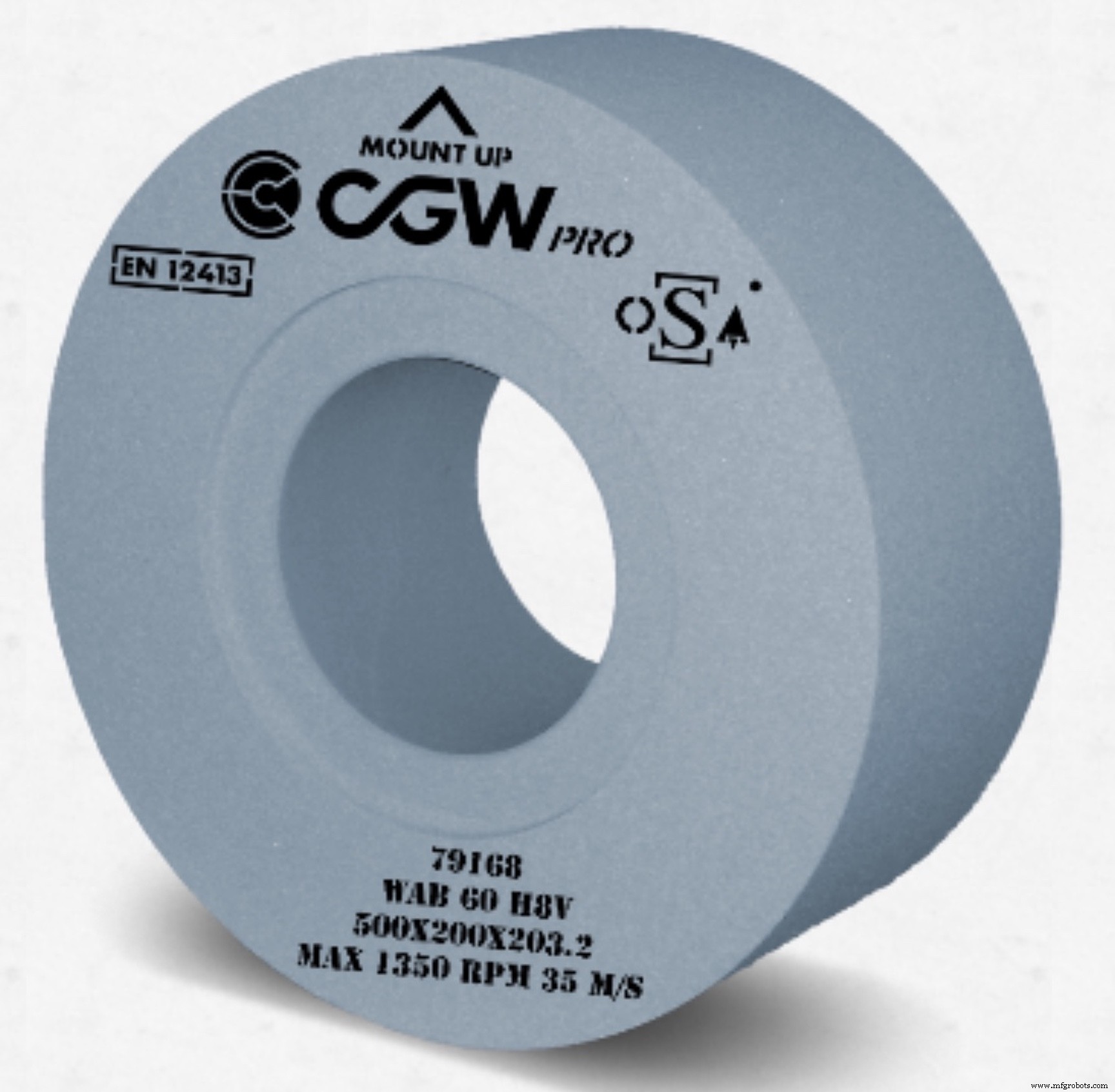
But the term “application” encompasses many variables. As suggested, higher production quantities are a big part of the wheel justification calculus, but there’s also the specific part geometry to consider, as well as accuracy requirements, material type and hardness, and the quality or age of the machine tool that will be used to grind them. Each of these factors plays a role in how well a wheel will perform, and whether its use should even be attempted.
Rodney Finch, precision grinding application manager at CGW Abrasives, notes that the last of these—the machine tool age and its mechanical capabilities—is often overlooked.
“A lot of customers attend trade shows or grinding seminars and immediately want to incorporate the latest and greatest technologies they’ve seen there,” he says. “A great example of this is taking a simple aluminum oxide application and trying to move it over to a ceramic grain or even a superabrasive wheel. Unless you have a relatively new machine that’s designed for high-performance grinding, you’re probably going to have a poor outcome.”
The problem is one of rigidity, Finch explains. With modern ceramic abrasives, you need to “really push it” in order to crush the grains and continuously expose fresh grinding material. Without this critical event, the wheel stops cutting and quickly loads up with workpiece material, a situation that requires the operator to stop production long enough to dress the wheel and then restart the grinding process.
The result? Frustration, lost time, and money spent on wheel technology that would have been better invested elsewhere.
Ask the Right Questions
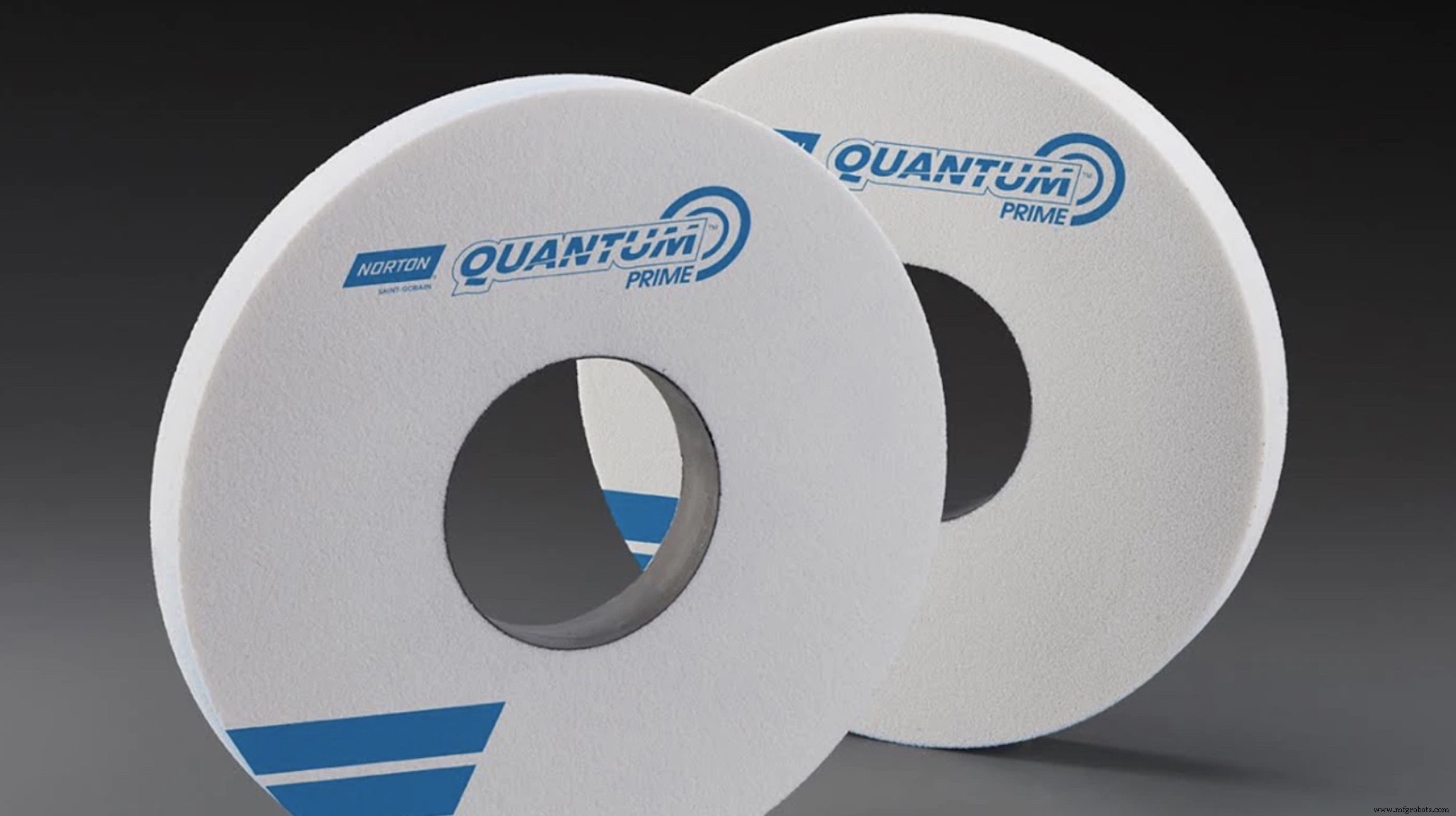
For those with the right grinding equipment, however, superabrasives and ceramic wheels can make a world of difference in terms of productivity and part quality.
Even so, given the huge number of abrasives, bonds, grit sizes and shapes, and other factors, selecting the optimal wheel for any application—superabrasive or not—is rarely a straightforward affair. That’s according to Taqwa Gilani, senior application engineer at Norton Saint-Gobain Abrasives, who points out an obvious fact: This is why she and others like her have a job.
“Norton employs a team of application engineers because grinding is a very complex machining process,” she says. “It’s also why we encourage our customers to work with us on wheel selection, and to send us a drawing and material specifications for their projects. Aside from helping them determine the most productive, cost-effective solution, we’re also able to fine-tune various wheel properties—by adding a lubricating agent to the bond, for example—to optimize throughput and part quality.”
Like Finch, Gilani generally recommends that high-mix/low-volume manufacturers and those who grind a range of materials try to stay with conventional abrasives.
She says aluminum oxide is one of the most versatile abrasives available, this due to its ability to “grind pretty much anything.” Still, she warns that a “one wheel for everything” approach is rarely successful, and that ceramic technology—though more expensive initially—provides shorter cycle times, reduced heat generation and ultimately, a lower cost per part.
“At the end of the day, you’re looking to keep grinding forces low, eliminate rubbing due to material buildup, and minimize wheel deterioration,” she says. “This helps assure dimensional accuracy while eliminating metallurgical damage to the workpiece.”
Take the Deep Dive
Richard Crowley, technical service engineer at 3M’s Abrasive Systems Division, and application engineering leader Daniel Billig see things much the same way.
“We understand why shops might want to minimize their grinding wheel investment, but if you have a lot of different projects and materials coming through and want to try using one wheel for all of them, the results are often less than desirable,” Billig says.
Crowley agrees, noting that machine operators will sometimes attempt different dressing techniques to alleviate specific problems—for instance, trying to improve surface finish by using a very fine dress on a coarse wheel.
In this example, at least, such an approach would only lead to the rubbing that Norton’s Gilani mentioned earlier: “It’s almost always better to get the correct abrasive and grit size and then dress it in an open manner than to attempt to make one wheel do many different things.”
Here again, wheel selection is a deep subject, which is why grinding shops are well-advised to partner with knowledgeable suppliers and to stay abreast of the latest technologies. And despite what was stated at the beginning of this article about changeover times and wheel expense, Billig is quick to point out that grinding wheels represent but a small fraction of any machined part’s total cost.
“That’s why we like to work closely with customers and show them the benefits or drawbacks of making certain wheel choices,” he says. “That means spending time on the floor with you, looking at your various jobs, and consuming the attention of your operators for a day or two. It’s an intensive process that can be fairly time-consuming, so not everybody out there is going to accept the offer, but those that do find that they can save a lot of money over the long run.”
What techniques are you using to get the most out of your shop’s grinding operation? Share your thoughts and insights in the comments below.
Industrial Technology
- How to Select Premium Solvent Dyes for Optimal Performance
- Hire the Best Wheel Loader Operators: 4 Proven Tips for Success
- Choosing the Ideal Gas for MIG Welding: Tips for Strong, Consistent Results
- Premium Stainless Steel Solutions for Cutting, Grinding, and Finishing
- Expert Guide: Selecting the Optimal Abrasive Machining Technique for Portable Grinding
- How to Select the Right Grinding Wheel for Precision Gear Manufacturing
- Choosing the Right 3D Modeling Technique: A Guide for Designers
- Mechanical vs Hydraulic Shears: Which Wins for Metal Cutting?
- How to Pick the Ideal Wheel Loader for Your Waste Management Facility
- Maintaining Your Grinding Wheel: Essential Care Tips for Longevity