



Fiber Laser Cutting: The Optimal Choice for Modern Metal Fabrication Projects
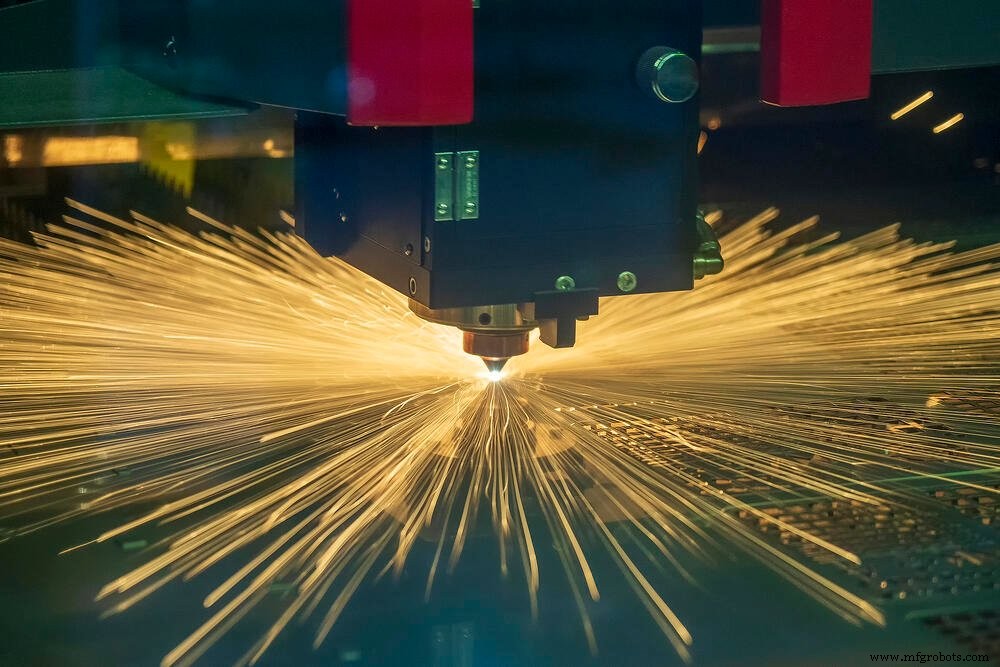
CO2 Vs. Fiber Laser Cutting
In recent years, laser cutting of sheet metals has been dominated by the use of fiber laser cutting machines. The main reasons include process reliability-- there's no cut degradation due to the misalignment or contamination of mirrors-- higher cutting speeds, the ability to cut reflective metals such as copper and brass, freedom from maintenance, and lower cost of ownership. CO2 lasers, however, have shown a smoother cut edge for some thicker materials (typically > 0.25” [6 mm]). That being said, this advantage is diminishing as advances in the high power fiber lasers and beam/gas delivery techniques are showing promises to close this gap.
Is Fiber Laser Cutting the Right Solution for Your Application?
Fiber laser systems have established their capability to cut metals at high quality and accommodate intricate geometries of parts, which are challenging to other processes. However, when it comes to final decision to use a fiber laser cutting machine for their project, customers usually focus on the additional aspects that are specific to their case, including is a specific system is able to handle their parts’ tolerances and the question on if it is economical to use a specific fiber laser systems to product their parts. Below we discuss these two questions at a top level.
Can Fiber Laser Cutting Handle Your Part's Tolerances?
Factors such as kerf size, taper, surface roughness, heat input of the process, and the variability of the process during the long production runs eventually determine in practice if you can hold parts within a tight tolerance. Combination of small kerf, low heat input, good surface finish, and stable cutting makes fiber lasers a safe choice when it comes to cutting precise parts. The cutting precision partly depends on the motion system of the cutting machine.
Is Fiber Laser Cutting Economically Viable for Your Next Project?
The capital costs and running costs of cutting processes are very different. Given the high speed and reliability of fiber lasers, and depending on the dosage of sheet metal cutting, they typically come ahead of other processes in terms of cost per part. In addition, fiber lasers have made economical parts that were not possible before (when using older generation of lasers or any other technique.) Availability of increasing laser power at a lower cost year after year will shift the cost calculation in favor of fiber laser cutting even more in the foreseeable future.
Industrial Technology
- WiFi-Based Real-Time Location Tracking: Is It the Right Choice for Your Asset Management?
- Waterjet vs. Laser Cutting: Selecting the Ideal Metal Cutting Technique
- Choosing the Right Flow Meter: A Practical, Foolproof Guide
- Choosing the Ideal Abrasive for Precise Waterjet Cutting
- Choosing the Right Laser Cutting System for Maximum ROI and Precision
- Should You Automate Your Laser Cutting System? A Strategic Guide for Success
- How to Choose the Ideal Industrial Pressure Regulator for Your Application
- Choosing the Ideal Electrode Material for Resistance Welding Success
- Choose the Perfect Positioner for Your Welding Application
- Laser Cutting: The Ultimate Solution for Precise Metal Fabrication