



The 2024 Ultimate Guide to Buying an EPS Foam CNC Router
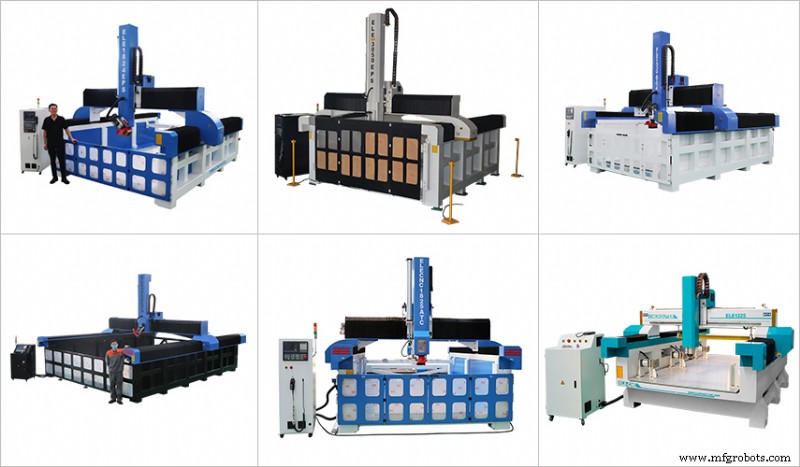
Blue Elephant Foam CNC Router Working Video
What Are the Core Functions of a Foam CNC Router?
Foam CNC machines—often referred to as foam‑cutting routers, 3‑D foam carving units, or simply foam CNC routers—are precision tools engineered to cut and shape expanded polystyrene (EPS) and other foam materials with remarkable accuracy. Below are the key capabilities these machines deliver:
Precision Cutting
By combining high‑torque motors with finely tuned tool‑path algorithms, an EPS foam CNC router can produce clean, smooth edges even on complex geometries. This level of precision is essential for prototypes, signage, and detailed architectural models.
2D & 3D Shaping
Whether you need flat panels or fully sculpted forms, the machine’s X‑Y‑Z axis control allows for both 2‑D cutting and full 3‑D carving, giving designers the freedom to explore a wide range of shapes.
Engraving & Detailing
Advanced routers can also engrave logos, lettering, or intricate patterns directly onto foam surfaces, adding a professional finish without extra labor.
Rapid Prototyping
Because the cutting process is computer‑driven, prototypes can be produced quickly and with consistent quality—an essential advantage for iterative design cycles in aerospace, automotive, and consumer‑goods sectors.
Scalable Production
Large‑format routers can handle dozens of foam panels per run, making them suitable for both short‑run custom orders and high‑volume manufacturing.
Industries That Gain the Most From Foam CNC Routing
A foam CNC router can benefit virtually any business that requires precise, repeatable foam shaping. The following sectors are among the most common adopters:
Manufacturing & Tooling
Automotive, aerospace, and electronics manufacturers use these routers to produce lightweight molds, test panels, and tooling components with minimal waste.
Prototyping & Concept Development
Designers and engineers rely on the machine’s speed and accuracy to bring conceptual models to life before committing to costly tooling.
Sign & Display Production
Foam’s light weight and paint‑compatibility make it ideal for indoor/outdoor signage, trade‑show displays, and custom lettering.
Packaging Solutions
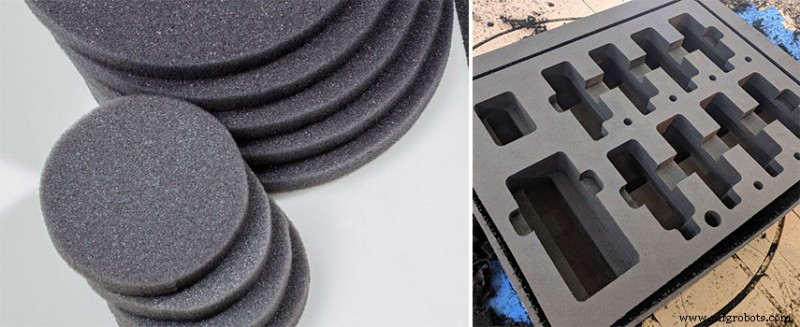
Custom foam inserts created with a CNC router provide snug, protective fits for fragile products during shipping, reducing damage rates.
Entertainment & Set Design
Film, television, and theatrical productions frequently use foam CNC routing to build lightweight props and elaborate set pieces that can be painted or molded on site.
Art & Sculpture
Artists leverage the machine’s versatility to craft intricate sculptures, installation art, and architectural facades with precision.

Typical Foam CNC Projects You Can Build
From functional inserts to creative displays, a foam CNC router can produce:
Custom Packaging Inserts
Shape foam to fit specific product dimensions, safeguarding items during transit.
Signage and Logos
Cut letters, logos, and pictograms for indoor/outdoor applications.
Event Props and Displays
Create 3‑D figures, stage backdrops, or interactive displays for trade shows and exhibitions.
Architectural Models
Generate accurate scale models of buildings, landscapes, and urban plans.
Costume Elements
Produce lightweight armor, helmets, or prosthetics for film and live performance.
Automotive & Aerospace Components
Prototype lightweight structural parts before transitioning to mass production.
Furniture Accents
Cut foam cushions, seats, or decorative panels for custom furniture.
Artistic Sculptures
Design and fabricate detailed foam art pieces with minimal manual labor.
With the right CAD/CAM workflow and tooling, the possibilities are virtually limitless.
Key Advantages of Using a Foam CNC Router
Exceptional Precision
Computer‑controlled motion delivers cuts that match the digital design down to the millimeter.
Material Versatility
Beyond EPS, the same hardware can handle polyurethane foam, foam rubber, and other soft composites.
Speed & Efficiency
Rapid feed rates reduce cycle time, allowing you to produce more parts in less time.
Consistent Quality
Repeatable tool paths guarantee uniformity across batches, essential for quality‑critical industries.
Customizability
Users can modify tool paths or design files on the fly, tailoring each piece to exact specifications.
Waste Reduction
Optimized cuts and tool‑path planning minimize scrap, lowering material costs and environmental impact.
Collectively, these benefits translate to higher productivity, lower operating costs, and a stronger competitive edge.
Understanding Foam CNC Machine Components
Frame
Constructed from aluminum extrusions or steel tubes, the frame provides a rigid foundation that stabilizes the machine during high‑speed cuts.
Motors
Stepper or servo motors control movement along the X, Y, and Z axes, delivering the precision required for fine cuts.
Controller
Acting as the machine’s brain, the controller translates computer commands into motor movements. Options range from dedicated embedded systems to PC‑based control software.
Cutting Tool
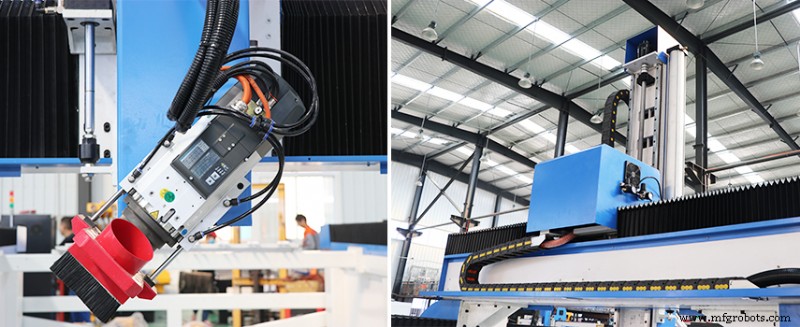
Depending on foam type and desired finish, the router may use a traditional spindle, a dedicated foam cutter, or a hot‑wire system.
Workholding
Clamps, vacuum tables, or custom fixtures secure the foam in place, preventing drift and ensuring dimensional accuracy.
Power Supply
A reliable AC or DC supply feeds the motors, controller, and ancillary electronics, keeping the machine operational and safe.
Choosing the Right Foam CNC Router: A Beginner’s Checklist
Purchasing a foam CNC router is a significant investment. Consider the following criteria to find the best match for your needs:
Work‑Area Size & Capacity
Match the machine’s bed dimensions and weight limits to the largest foam panels you’ll handle regularly.
Spindle Power & Tool Compatibility
Higher spindle wattage translates to faster, cleaner cuts—important if you work with thicker or harder foams.
Software & Control System
Look for intuitive CAM packages that support EPS geometry, tool‑path optimization, and error diagnostics.
Cutting Speed vs. Accuracy
Balance throughput with precision; some models offer adjustable feed rates and programmable passes.
User‑Friendly Interface
Touchscreens, clear labeling, and comprehensive manuals make the learning curve gentler for new operators.
Durability & Maintenance
Robust components and a solid warranty ensure long‑term reliability and ease of upkeep.
Cost & Total Ownership
Factor in initial purchase price, consumables, and maintenance costs when evaluating ROI.
Manufacturer Support
Reliable customer service, training resources, and spare parts availability can be decisive factors in a long‑term partnership.
By systematically evaluating these factors, you can secure a foam CNC router that delivers value, performance, and peace of mind.
Typical Price Range for CNC Foam Cutting Machines
Cost varies based on size, features, and performance. Entry‑level models start around $3,000–$5,000, while advanced units can exceed $50,000.
Factors That Drive Pricing
Machine Size
Greater bed dimensions and heavier build capacity command a premium.
Cutting Speed
Higher feed rates and spindle power elevate the price tag.
Cutting Quality
Precision engineering and advanced tool‑path algorithms add to the cost.
Additional Features
Automated tool changers, dual‑head systems, or specialized software suites contribute to a higher price.
While a high‑end machine offers advanced capabilities, many users find that a mid‑range model delivers sufficient performance for most applications—balancing cost with functionality.
CNC Machine
- Download the Official Haas CNC Lathe Operator’s Manual – Comprehensive Guide & Programming Examples
- 5 Key Traits That Set Expert Mold Makers Apart
- Choosing the Right Edge Banding Thickness for Furniture Projects
- CNC Machine Tools: 10 Common Problems & Expert Fixes – A Practical Checklist
- Introducing Mantech Parts: Your One-Stop Source for CNC, Laser, and Plasma Components
- Fiber Laser Cutting: Boosting Precision, Speed, and Cost‑Efficiency for Modern Metal Fabricators
- Stored Stroke Check Explained – CNC Dictionary Definition
- ELECNC1212 CNC Router Shipping to Netherlands: High-Precision Woodworking Solution
- CNC Laser Cutting Explained: Process, Types, and Key Benefits
- Mastering Jewellery 3D Printing: A Complete Beginner’s Guide