



How AI is Revolutionizing CNC Machining: Boosting Efficiency, Accuracy, and Profitability
Artificial Intelligence is already woven into our daily lives, from driver‑assist systems to airport facial recognition. While some embrace it and others voice concerns about privacy, regulation, and transparency, one fact remains: AI is here to stay. When harnessed correctly, AI can streamline both personal and professional workflows. In the CNC machining sector, the past few years have seen a tangible shift—now and in the near future—toward faster production, fewer errors, higher efficiency, lower costs, and ultimately greater profitability for shops that adopt the technology. AI’s influence begins even before the first cut. Modern CAM software already predicts cycle times, but AI‑powered platforms take this further by crafting machining strategies based on your shop’s own historical data. By estimating material, set‑up, and machining times from real shop performance, AI delivers quicker, more accurate, and more competitive quotes. It reduces the risk of underquoting jobs that could erode margins, while faster quoting boosts your chances of winning work and builds customer confidence in on‑time delivery. Dynamic scheduling is another benefit. AI learns how your shop operates and automatically rebalances the production calendar when conditions shift on the shop floor—an improvement that is nearly impossible to achieve manually. Identifying high‑risk features early in the programming process is critical. Experienced programmers spot potential problems in pockets, holes, or contours; novices often miss them. AI builds a library of proven machining strategies from past jobs, reducing repeat mistakes. It flags problematic geometries that may require special tooling or are non‑machinable, preventing delays, protecting schedules, and trimming costs. More importantly, AI captures institutional knowledge, allowing seasoned programmers to onboard new staff faster and lessen dependence on expensive expertise. Creating an efficient toolpath demands deep knowledge of cutting tools, feeds, speeds, and machine behavior—knowledge typically gained over years. AI‑enhanced CAM captures this “tribal knowledge” and automates the optimization of feeds, speeds, stepovers, and depths of cut based on your specific machines and preferred methods. The result? Shorter cycle times, less air cutting, superior surface finish, reduced chatter, and minimal tool deflection. Optimized toolpaths also extend tool life by easing stress on cutting edges, lowering long‑term tooling costs. Machining conditions evolve during production: tools wear, materials behave differently, and surface quality can degrade. AI‑enabled systems adjust parameters in real time. For instance, DATRON models that track tool usage—total run time or cutting distance—can alert operators or automatically modify feed rates to curb chatter while preserving tolerances. This hands‑off adjustment is invaluable for long‑cycle jobs such as molds or intricate engraving, where even minor deviations can trigger scrap. AI is pivotal for preventive maintenance. Sensors that monitor operating hours, spindle load, and cutting time can trigger maintenance before a failure, cutting unplanned downtime and costly repairs. Error codes and sensor data are logged onboard, enabling technicians to employ AI tools for rapid diagnosis. Manufacturers are building extensive knowledge bases of error codes, symptoms, and resolutions. AI sifts through this data to detect patterns faster than manual analysis, allowing swift resolution and minimal production disruption. AI transforms inspection and quality control. Inspection programs can be generated directly from CAD models, selecting the most efficient probing paths and focusing on critical, high‑tolerance features. AI prioritizes features that are most prone to tolerance drift and correlates inspection outcomes with machining data—identifying root causes such as tool wear, thermal expansion, spindle load, or offset errors. This approach accelerates troubleshooting, shortens workflow time, and enhances consistency and repeatability in quality results. As seasoned machinists and programmers become scarce, AI mitigates the labor gap. It lowers the skill threshold required to manage complex workflows, enabling less‑experienced operators to deliver high‑quality parts more quickly and consistently. AI does not replace machinists; it empowers them to focus on advanced jobs, process optimization, and mentorship instead of routine tasks. AI also lowers the barrier for companies that wish to bring CNC machining in‑house but lack experienced staff. User‑friendly interfaces, such as DATRON Next Control, coupled with intelligent software, allow non‑machinists to move from concept to finished part without hiring costly specialists. We are still far from AI or robots fully automating machining operations. Nevertheless, AI is already delivering measurable gains in productivity, quality, and efficiency—and its impact will only intensify. Early adopters of AI position themselves to ride the wave of evolving capabilities. They already enjoy reduced costs, less downtime, and improved workflows, while building rich databases of strategies and best practices that keep delivering value across thousands of future parts. AI isn’t replacing CNC machining—it’s making it smarter. Contact DATRON to learn how intelligent CNC technology can improve your operations.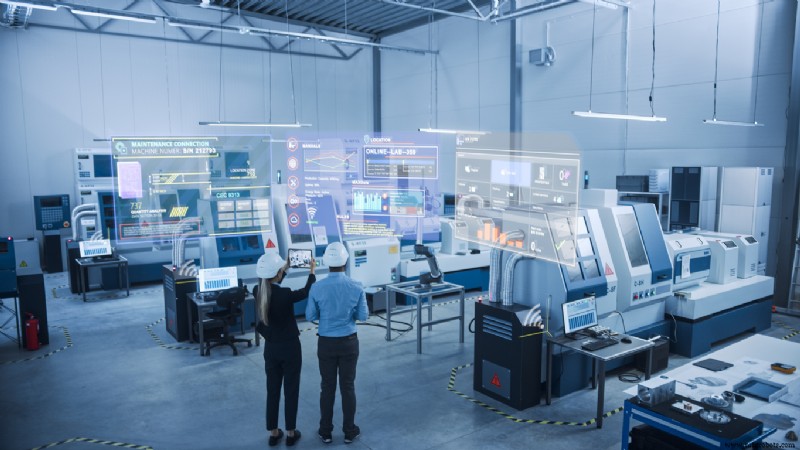
Seven Ways AI Enhances CNC Machining
1. Costing, Quoting, and Scheduling
2. Planning the Machining Approach
3. Optimizing Toolpaths
4. Adaptive Machining
5. Maintenance and Machine Diagnostics
6. Quality and Inspection
7. Labor, Expertise, and Efficiency

Ready to machine smarter?
CNC Machine
- 1515 ATC CNC Router & 1212 ATC Woodworking Machine Delivered to Germany
- 2160 mm ATC CNC Router with Aggregate and 9+4 Drill Head Delivered to Surabaya – Ideal for Furniture & Cabinet Production
- Mastering Deep Hole Tapping on Haas CNC: Chip Breaking & Peck Techniques
- Lightburn Laser Software Now Bundled With Mantech Laser Machines
- M01 Optional Stop in CNC Programming – How and Why It Works
- Essential Skills for Operating CNC Milling Machines
- Mastering ABS Injection Molding: Material, Process, and Design Excellence
- Kennametal Innovations iPad App: Free Interactive Tooling Demo Experience
- 3D-Printed Buildings: From Concept to Construction—Fact or Reality?
- Understanding G‑Code & M‑Code: Key Commands for CNC Machining Success