



Rapid Tooling 101: Process, Benefits, and Applications for Modern Manufacturing
Rapid tooling is an advanced manufacturing technique that blends rapid prototyping with conventional tooling to create molds and dies quickly and cost‑effectively. By cutting lead times from 4–8 weeks to as little as 24 hours, it enables production runs ranging from a single part to 10,000 units while delivering significant savings in both time and cost.
Why Rapid Tooling Matters
Rapid tooling bridges the gap between concept and mass production, allowing manufacturers to:
- Reduce lead times by 75% or more.
What Is Rapid Tooling?
Also known as “soft tooling” or “prototype tooling,” rapid tooling uses additive manufacturing and CNC machining to produce molds, patterns, and dies at a fraction of the time and cost of traditional methods. Common materials include aluminum, soft steel, high‑temperature polymers, and heat‑resistant resins that can withstand injection molding temperatures up to ~240 °C.
Key Distinctions from Conventional Tooling
| Factor | Conventional Tooling | Rapid Tooling |
|---|---|---|
| Lead Time | Up to 8 weeks | Days to a few weeks |
| Cost | High upfront cost | Lower initial expense |
| Volume | 5,000+ parts | 1–10,000 parts |
| Material Hardness | Steel | Aluminum, soft steels |
| Mold Lifespan | Hundreds of thousands of cycles | A few thousand cycles |
| Complexity | Limited by cost and time | Greater flexibility |
Rapid Tooling Workflow
The process can be performed in‑house or outsourced and typically follows these five steps:
- Design – Detailed CAD modeling that includes gating, ejection, and cooling channel design.
- Material Selection – Choosing resins, aluminum, or steel based on volume, durability, and thermal requirements.
- Manufacturing – Direct 3D printing, CNC machining, or indirect master pattern creation.
- Post‑Processing – Finishing, adding cooling channels, and surface treatments.
- Testing & Validation – Low‑volume runs to verify dimensional accuracy and part quality.
Direct vs. Indirect Tooling
- Direct – Builds the mold directly from CAD, eliminating the master pattern step and shortening turnaround to 24–72 hours.
- Indirect – Creates a master pattern first; the pattern is then used to produce one or more molds. This method is ideal for complex geometries and material testing.
Rapid Tooling Technologies
Direct Rapid Tooling
- 3D Printing (SLA, SLS, DMLS) – Produces high‑temperature inserts that can handle injection pressures up to 0.45 MPa.
- CNC Machining – Rapidly fabricates aluminum or soft steel inserts with excellent heat dissipation.
- Direct Metal Deposition (DMD) – Adds metal layers onto a base, allowing quick tooling iteration and repair.
- Binder Jetting – Creates sand or metal molds that can be infiltrated for increased strength.
- Electroforming – Deposits thin metal shells over a master pattern, yielding high surface finish and dimensional accuracy.
Indirect Rapid Tooling
- Silicone Mold Casting – Low‑cost, ideal for 10–100 parts; suitable for lost‑wax and other casting methods.
- Vacuum Casting – Produces bubble‑free plastic parts with excellent surface detail.
- Sand Casting – Uses 3D‑printed patterns to create cost‑effective sand molds for small‑to‑medium metal parts.
- Investment Casting – Offers high‑precision metal parts with excellent finish; 3D‑printed wax patterns speed up the process.
- Injection Mold Casting with 3D‑Printed Patterns – Streamlines short‑run injection molding and can even produce final metal molds.
Choosing the Right Rapid Tooling Approach
- Budget & Timeline – Direct methods (SLA, CNC) deliver lower upfront costs and faster lead times.
- Part Size & Complexity – Complex geometries benefit from additive techniques; larger parts may require CNC machining.
- Volume & Durability – Polymer inserts suit <1,000 parts; aluminum or steel molds support up to 10,000 parts.
- Direct vs. Indirect – Direct saves time; indirect offers a reusable master pattern and is ideal for testing multiple materials.
Advanced Techniques & Hybrid Approaches
Hybrid manufacturing—combining CNC machining for external geometry with 3D printing for internal features—delivers the best of both worlds. Conformal cooling, where channels follow the mold’s contour, can cut cooling times by up to 66%.
Equipment Overview
Typical rapid tooling setups include:
- 3D Printers (SLA, SLS, DMLS)
- CNC Milling Machines (5‑axis for tight tolerances)
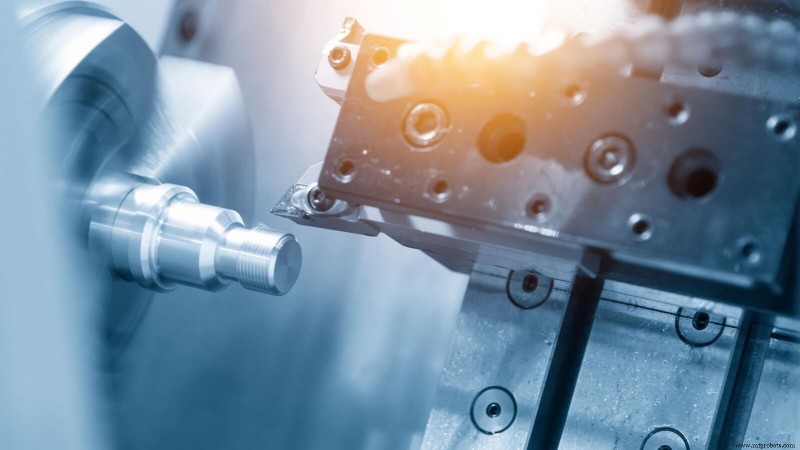
- Lathes for cylindrical features
- Injection Molding Presses (desktop to industrial grade)
- Vacuum Casting Chambers
- Binder Jetting Systems with post‑infiltration furnaces
- Electroforming Stations
Rapid Tooling vs. Rapid Prototyping
| Factor | Rapid Tooling | Rapid Prototyping |
|---|---|---|
| Primary Purpose | Low‑ to medium‑volume tooling | Design validation & testing |
| Materials | Aluminum, soft steel, production‑grade plastics | Photopolymers, resins, thermoplastics |
| Volume | Up to 10,000 parts | Typically <100 parts |
| Lead Time | 1–3 weeks | 1–7 days |
| Cost | Higher upfront, lower per‑part | Lower upfront, higher per‑part |
| Durability | Hard tooling for multiple runs | Limited durability, concept use only |
Benefits of Rapid Tooling
- Accelerated product cycles: 24‑48 hour mold turnaround.
- Cost savings: 40%–50% lower upfront investment.
- Design freedom: Complex geometries and cooling channels are readily achievable.
- Resource efficiency: Less material waste compared to subtractive methods.
- Short‑run suitability: Ideal for prototypes, market testing, and small production runs.
- Process optimization: Enables fine‑tuning of injection parameters before full‑scale production.
Cost Considerations
- Materials: Soft tooling (silicone, polymer) $1,000–$5,000; hard tooling (aluminum) $5,000–$20,000; conventional steel molds >$20,000.
- Complexity: Intricate designs increase machining and post‑processing time.
- Volume: Low‑volume runs favor rapid tooling; high‑volume runs may justify conventional tooling.
- Labor & Post‑Processing: CNC machining and finishing add to cost but reduce overall cycle time.
Getting Started
- Develop a precise CAD model.
- Select the appropriate tooling method (direct or indirect).
Design for Rapid Tooling
- Incorporate draft angles (1–3°) to ease demolding.
- Maintain uniform wall thickness to prevent sink marks.
- Optimize gate placement for even material flow.
- Design effective cooling channels, especially conformal ones.
- Simplify geometry to reduce machining time and cost.
- Use DfM analysis early to confirm manufacturability.
Applications
Rapid tooling is widely used in:
- Medical – custom prosthetics, dental aligners, surgical guides.
- Automotive – functional prototypes, replacement parts, short‑run production.
- Aerospace – lightweight structural parts, custom fixtures.
- Consumer Goods – packaging prototypes, custom products.
- Electronics – enclosures, protective casings.
- Dental – custom molds and alignment tools.
Environmental Impact
Rapid tooling reduces material waste, supports on‑demand production, and often uses recyclable materials like aluminum and certain polymer powders. However, some resins are less recyclable, so material selection can influence sustainability.
Common Issues & Prevention
- Warping – Use heat‑resistant materials and design proper cooling.
- Flashing – Ensure proper clamping force and alignment.
- Sink Marks – Balance injection speed and wall thickness.
- Premature Wear – Choose harder materials or reinforce critical areas.
- Surface Finish – Apply polishing or CNC finishing as needed.
Conclusion
Rapid tooling empowers manufacturers to bring products to market faster, with lower costs and greater design flexibility. Whether you’re prototyping, testing new materials, or producing small batches, rapid tooling delivers reliable performance without the long lead times of traditional methods.
Frequently Asked Questions
1. How quickly can parts be produced?
Simple molds can be ready within 24 hours; more complex designs may take a few days. This is a significant improvement over the weeks required for conventional tooling.
2. How many parts can a mold handle before wear?
Soft tooling typically supports hundreds of shots, while aluminum molds can handle thousands. Tool steel can sustain tens of thousands of cycles.
CNC Machine
- How to Switch Language Settings on the NK105 G2 – A Step‑by‑Step Guide
- Precision CNC Milling of a PVC Pickguard by DATRON: A Showcase of Advanced Manufacturing
- 5 Essential Questions to Evaluate a Professional Mold Supplier
- The Role of CNC Operators: Driving Precision and Efficiency in Manufacturing
- Canadian Client Acquires 1325 Woodworking & 1390 Laser Machines – Real‑World Feedback
- Sherline CNC Mill: Key Parts & Functions Explained
- Unveiling the Mechanics of High-Feed End Mills for Superior Milling Performance
- Milling Machines: Types, Functions, and Applications in CNC Manufacturing
- Custom 2040 Wood CNC Machine Delivered to Belgium – Trusted Precision & Support
- Mastering Machining of Gummy Materials: Proven Tips for Superior Finish and Tool Life