



23 Powerful Benefits of 3D Printing – Faster Prototyping, Cost Savings, Design Freedom and Sustainable Production
Imagine turning an idea into a physical object in hours, without costly molds or offshore manufacturing. 3D printing delivers exactly that, empowering designers, engineers and small businesses to prototype, iterate, and produce low‑volume parts right on site.
Unlike injection molding or CNC machining, additive manufacturing builds objects layer by layer directly from a digital file—no tooling, no wasteful cutting, and no need for expensive molds. The result is a rapid, flexible workflow that unlocks complex geometries and lightweight structures impossible with traditional methods.
From aerospace to consumer goods, more organizations are adopting 3D printing to accelerate product cycles, reduce costs, and stay agile in a fast‑moving market.
In the sections below we explore how this technology is reshaping manufacturing and why it might be the next step for your business.
Accelerates Production Timelines
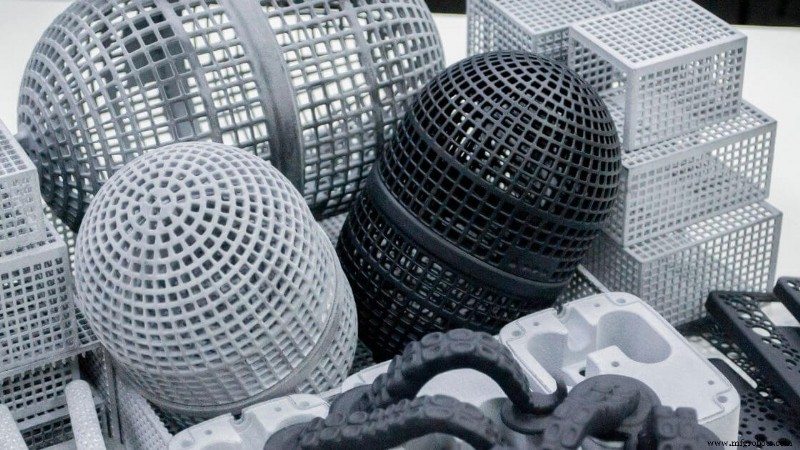
Speed is a cornerstone advantage of 3D printing. Traditional prototyping can take weeks or months because of tooling, mold fabrication and machine setup. Additive manufacturing eliminates those bottlenecks, allowing you to create functional parts directly from a CAD file.
Prototypes can be printed in hours, giving teams the agility to respond quickly to design changes or client feedback. Early-stage iterations often cut lead times by up to 80% compared with conventional methods.
If a flaw or improvement is identified, the model can be updated and reprinted without costly mold revisions or equipment reconfiguration. This makes rapid iteration possible even for startups that cannot afford long lead times.
Some 3D printing operations now complete complex builds within a single workday, drastically reducing the product development cycle and enabling real‑time testing of tolerances and geometries.
Cost‑Efficiency in Manufacturing
Conventional methods like CNC machining or injection molding involve steep upfront costs—molds can exceed $10,000. For short runs or iterative design, those costs quickly become prohibitive.
With additive manufacturing you only need a 3D printer, CAD software and suitable materials, dramatically lowering financial risk and the barrier to entry.
Material waste is virtually eliminated; printers build only what is required, leading to significant savings when working with high‑value polymers or metals.
Labor is also reduced—one operator can manage several print chambers, and on‑demand production eliminates warehousing costs and overproduction risks.
Because the cost per part remains stable whether you print one unit or fifty, short runs of spare parts, custom applications or limited‑edition goods become economically viable. Studies show 3D‑printed prototypes can be up to ten times cheaper than CNC‑machined equivalents.
Versatile Design Capabilities
Additive manufacturing removes many design constraints inherent in traditional manufacturing. There are no minimum wall thicknesses, tool‑access limits, or draft‑angle requirements.
Complex geometries—internal cavities, lattice structures, organic curves—can be printed in a single build, offering functional benefits such as weight reduction while maintaining strength.
Parts that once required multiple components can be consolidated into one structure, simplifying assembly, reducing points of failure, and streamlining the supply chain.
Design changes are implemented digitally, allowing you to revise a CAD file and reprint within the same day, often within an hour.
Customization becomes effortless. In a run of 100 parts, each can differ slightly without extra cost—ideal for prosthetics, implants, or personalized consumer goods.
Because geometric complexity is virtually cost‑free, additive manufacturing encourages creativity without penalizing you for non‑standard forms.
Gaining a Market Edge
Speed and flexibility translate directly into competitive advantage. Rapid iteration, low upfront costs, and the ability to test limited‑edition products enable businesses to respond to market demand in real time.
Physical prototypes built in-house reduce miscommunication, strengthen stakeholder buy‑in, and showcase a tangible concept that outperforms virtual renderings.
Adopting additive manufacturing signals innovation, attracting tech‑savvy consumers and investors. It also allows companies to stay ahead of trends, moving from concept to production with minimal lag.
Physical Prototyping and Real‑Time Testing
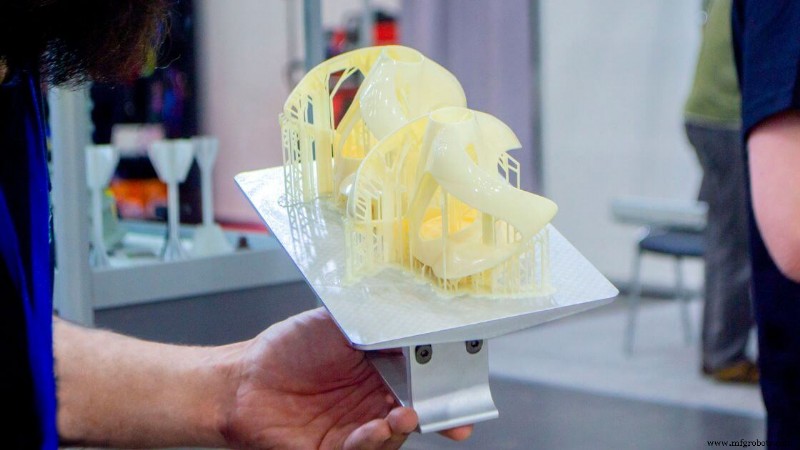
In‑house prototyping with 3D printing can produce a functional part within a single day, bypassing outsourcing delays and high costs.
Hands‑on evaluation reveals issues with tolerances, surface finish, or ergonomics that may not be apparent in digital models. Early detection prevents costly revisions later.
Iterative prototyping is seamless: a CAD update and reprint can occur almost instantly, fostering a fast feedback loop that traditional manufacturing cannot match.
Advanced materials—engineering‑grade polymers or composites—enable real‑world mechanical or environmental testing, while multi‑material printers allow for flexible and rigid sections in a single build.
Reducing reliance on external vendors cuts time, labor costs, and coordination complexity, giving you full control over the design‑to‑prototype pipeline.
High‑Quality Output
Modern systems—SLS, SLA, industrial‑grade FFF—deliver consistent surface finishes, strong mechanical properties, and tight tolerances.
Real‑time monitoring corrects issues like under‑extrusion or thermal drift, minimizing internal voids and ensuring part integrity.
While CNC machining can achieve ±0.005 mm, additive manufacturing now delivers ±0.2 mm—adequate for most industrial applications.
Standardized material profiles and controlled print chambers further enhance repeatability, even when fine post‑processing is required.
Reliable Reproducibility
Additive manufacturing relies on digital files and fixed parameters, eliminating human error and physical inconsistencies.
Each part originates from the same 3D model processed through standardized slicing software with predetermined settings, enabling identical production across multiple chambers or facilities.
Regulated sectors—healthcare, aerospace, defense—require traceability; additive manufacturing provides digital logs, material batch data, and machine status for audit compliance.
Anomalies are detected early, reducing waste and preserving timelines. The reproducibility of each part builds confidence in scaling production when demand increases.
Mitigating Production and Investment Risk
Traditional manufacturing demands significant tooling investment before revenue is realized, making product launch risky.
3D printing allows validation of demand with limited production runs—prototypes, early user tests, and feedback—before committing to mass production.
Adjustments are quick and inexpensive: a CAD file update and reprint are far cheaper than retooling molds or CNC setups.
Startups and small businesses can outsource to local service providers, eliminating the need for equipment ownership and reducing risk.
Wider Accessibility to Technology
Entry‑level 3D printers are now affordable—often less than a laptop’s price—making prototyping accessible to small businesses, educators, and hobbyists.
User‑friendly software and cloud‑based collaboration platforms simplify design, reduce CAD training needs, and enable remote iteration.
Local service bureaus and print farms allow production runs without upfront investment, ideal for low‑volume or test iterations.
Open‑source communities provide shared files, troubleshooting, and DIY guides, further lowering technical barriers.
Eco‑Conscious and Sustainable Solutions
Layer‑by‑layer printing uses only the material required, dramatically reducing waste.
On‑demand production eliminates over‑stocking and unsold inventory, supporting lean manufacturing and sustainability goals.
Printing near the end user cuts long‑distance logistics, reducing transportation emissions and warehousing costs.
Biodegradable filaments and recyclable polymers offer environmentally friendly material choices; powder‑based processes can reclaim up to 99 % of unused material.
Consolidating components into single parts reduces fasteners, adhesives, and packaging, further lowering material use and environmental impact.
On‑Demand Manufacturing
Digital designs can be stored indefinitely and printed only when needed, shifting from forecast‑based to true on‑demand production.
This reduces inventory overhead, frees capital, and allows rapid fulfillment of spare parts, seasonal goods, or fluctuating demand items.
Many 3D printing technologies produce functional components within hours, enabling quick response to urgent orders without retooling.
Regional print hubs or local partners shorten delivery times and reduce shipping costs, enhancing supply‑chain responsiveness.
Industries with frequent design updates—fashion, consumer electronics, medical devices—benefit most from localized, on‑demand manufacturing.
Companies like 3ERP provide FDM, SLA, SLS and SLM services with global delivery in as little as three days.
Streamlined Supply Chain Management
3D printing decentralizes production, reducing reliance on international freight routes, customs delays, or geopolitical disruptions.
Fewer supply‑chain steps lower transport costs, warehousing fees, and the carbon footprint of operations.
The digital warehouse concept eliminates the need for physical spare‑part inventories, printing only when a part is required.
Connected 3D printing systems synchronize print jobs, monitor performance, and adjust output in real time from a central dashboard.
Supply‑chain flexibility becomes a strategic advantage, enabling rapid response to demand spikes without scrambling for suppliers.
In‑House Production for Enhanced Confidentiality
Keeping production in-house protects proprietary designs and reduces IP breach risk—critical for defense, medical devices, and advanced automotive manufacturing.
Rapid internal iteration eliminates external file transmission, reducing vulnerability to counterfeiting and ensuring design integrity.
In‑house printing enables consistent quality control, monitoring of build parameters, and application of post‑processing standards.
End‑to‑end traceability—machine logs, material batch data, file version history—is maintained internally, simplifying ISO or FDA compliance.
Material Versatility and Range
3D printing now offers engineering‑grade polymers, high‑performance composites, and industrial metals—beyond basic PLA or ABS.
Polymers such as nylon, polycarbonate, and polypropylene provide strength, flexibility, and heat resistance, ideal for aerospace, automotive, and tooling applications.
Powder‑bed fusion and direct energy deposition enable titanium, stainless steel, and aluminum parts that rival CNC‑machined counterparts.
Composite filaments with carbon or glass fiber deliver lightweight yet structurally strong parts used in drone frames, bike components, and fixtures.
Multi‑material printers integrate rigid and flexible zones or conductive and insulating materials in a single build—an impossible feat for many traditional methods.
Producing Strong and Lightweight Components
Internal lattice structures, hollow cores, and strategic voids reduce weight while maintaining strength—critical in aerospace, automotive, and sporting equipment.
Carbon‑fiber reinforced polymers are commonly used in 3D printing to achieve exceptional strength‑to‑weight ratios, improving fuel efficiency and performance.
Topology‑optimization software designs load‑path‑optimized geometries that would be impossible with subtractive manufacturing.
Some 3D‑printed components achieve up to 50 % weight reduction compared to legacy methods without compromising mechanical integrity.
Personalized Products and Mass Customization
3D printing enables one‑of‑a‑kind or niche‑market products without retooling—perfect for smartphone accessories, wearables, or custom‑fit earbuds.
In healthcare, patient‑specific implants, orthotics, and dental aligners are fabricated with precise fit and function.
Because no new mold is required, production is swift and waste is minimal, even for one‑off orders.
The fashion industry uses 3D printing for custom‑fit shoes, accessories, and garments that reflect individual taste while remaining part of a coordinated production run.
Capable of Manufacturing On‑Demand Spare Parts and Digital Inventories
Digital inventories replace physical spare‑part stock. Parts are printed only when needed, eliminating warehouse costs and material waste from obsolete inventory.
Lead times shrink dramatically, as production can occur locally. Updated designs are printed immediately, ensuring customers receive the latest iteration.
Industries such as medical devices and automotive repair benefit from reduced downtime and improved service quality.
By avoiding overproduction, companies can focus resources on critical components rather than bulk inventory.
Supports Part Integration
Additive manufacturing consolidates multiple components into a single part, eliminating bolts, adhesives, or welds. This reduces assembly steps, points of failure, and material waste.
Internal features—fluid channels, structural contours—are printed in one pass, ensuring perfect alignment and improved mechanical performance.
In aerospace or defense, integrated parts reduce weight and enhance reliability compared to multi‑component assemblies.
Provides Faster Assembly and Easier Maintenance
Fewer components shorten assembly times and reduce reliance on skilled labor.
Modular 3D‑printed parts can be swapped quickly during maintenance, minimizing downtime and simplifying field repairs.
In‑house jigs and fixtures printed with 3D technology accelerate production and maintain consistency across units.
High‑mix, low‑volume lines benefit from this agility, improving throughput and serviceability.
Sustains Small Batch and Localized Production
3D printing removes the volume barrier that favors injection molding or CNC machining. No costly molds or retooling is needed for each variation.
Print exactly what you need, when you need it, reducing storage, surplus, and sunk costs.
Local print hubs eliminate long‑distance shipping, enhancing responsiveness to customer demands and market feedback.
In regions with limited infrastructure, local production empowers small businesses and supports rural innovation.
Enhances Creativity and Innovation
Free from tooling constraints, designers can explore unprecedented shapes, internal structures, and biomimetic features.
Rapid prototyping enables a “fail fast, learn quickly” approach—printing, testing, refining, and printing again within days.
Advanced materials—biodegradable plastics, heat‑resistant composites, rubber‑like filaments—unlock new mechanical and environmental performance thresholds.
Interdisciplinary collaboration thrives, as engineers, architects, and artists share a common language of digital fabrication.
Provides Educational and Skill‑Building Applications
3D printing is now a staple in classrooms, training programs, and workshops across the country, bridging the gap between theory and tangible outcomes.
Students design and build working models, learning CAD, problem‑solving, and critical thinking through hands‑on experience.
Colleges feature additive manufacturing labs where future engineers master production processes, material properties, and tolerance design.
Makerspaces and community centers introduce people of all ages to digital fabrication, fostering innovation and entrepreneurship, especially in underserved areas.
Collaborative design challenges sharpen technical skills, communication, and project management.
Requires Lower Barriers to Entry for New Ventures
Startups no longer need to invest in heavy tooling, molds, or factory space. A few hundred dollars for a desktop printer or a partnership with a local additive provider is often enough to begin.
Iterate quickly, test design performance, gather customer feedback, and pivot before committing to large‑scale production.
Digital file‑driven manufacturing allows exploration of variants and niche markets without retooling, a valuable asset when pitching investors.
Many founders launch crowdfunding campaigns, showcasing working prototypes to demonstrate feasibility and gain trust.
When scaling modestly, outsourcing to local print farms keeps costs manageable while preserving control.
What Are Different Industry‑Specific Benefits of 3D Printing?
Additive manufacturing fuels innovation across diverse sectors—from automotive speed and flexibility to aerospace precision and sustainability.
Its adaptability to industry needs delivers measurable gains in performance, cost, and design freedom.
Automotive Innovations
Speed and customization are paramount. 3D printing validates prototypes of body panels, dashboards, and engine mounts, shortening the product development cycle.
Specialty vehicles or performance trims benefit from one‑off or limited‑run parts without tooling costs.
Carbon‑fiber reinforced polymers create structurally optimized, lightweight components, directly impacting fuel efficiency.
On‑demand printing of rare or discontinued parts reduces inventory and streamlines logistics.
Custom jigs and fixtures printed in-house save time and cost compared to outsourcing.
Aerospace Advancements
Weight matters. Additive manufacturing produces lighter, stronger, and more complex components—hollow geometries, lattice infills, and compound surfaces—improving fuel efficiency and performance.
Metal printing with titanium or Inconel meets extreme thermal and mechanical demands of aerospace parts.
Consolidating multiple parts into a single print reduces failure points and simplifies assembly.
Lightweight 3D‑printed parts can cut up to 50 % of weight versus legacy methods without compromising integrity.
Fashion and Jewelry Customization
Designers push artistic boundaries with intricate meshes and unconventional structures that traditional manufacturing cannot accommodate.
Rapid prototyping aligns with fast‑changing trends, enabling near‑real‑time adjustments based on consumer feedback.
Materials range from plastics to metal powders, delivering high‑resolution detail for commercial quality.
Biomedical Engineering Progress
Patient‑specific implants, orthotics, and dental structures are fabricated with precise fit and function.
3D‑printed anatomical models enable pre‑operative planning, shortening surgery time and reducing complications.
Bioprinting continues to evolve, aiming for functional tissue or organ fabrication.
In‑house 3D printing in hospitals accelerates treatment timelines and customizes prosthetics in days, improving patient outcomes.
What Are the Potential Disadvantages of 3D Printing?
While transformative, additive manufacturing has limitations that must be weighed:
- Limited build size; large parts require segmentation and bonding.
- Post‑processing—support removal, sanding, or chemical treatment—adds time and cost.
- Material constraints; not all polymers, composites, or metals are printable or cost‑effective.
- Layer bonding can lead to anisotropic strength and delamination.
- For large production runs, traditional methods (e.g., injection molding) remain faster and cheaper.
- High‑end industrial machines demand significant investment, maintenance, and training.
- Operating professional printers requires specialized skills in slicing, calibration, and CAD.
- Digital file security is essential to protect IP and prevent counterfeiting.
- Some processes offer only ±0.2 mm tolerance, not suitable for ultra‑tight components.
- Sustainability concerns: non‑recyclable thermoset resins in certain technologies.
- Large, high‑resolution prints can take hours or days, limiting throughput for mass production.
Conclusion
Manufacturing is evolving, and 3D printing is a leading catalyst. Whether you’re an engineer, designer, entrepreneur, or curious innovator, this technology gives you unprecedented control, speed, and creativity.
It eliminates the wait for molds, the expense of low‑volume tooling, and the risk of overproduction.
While not perfect—large prints can be slow, some materials are pricey, and post‑processing can be tedious—additive manufacturing is rapidly improving with smarter machines, stronger materials, and faster workflows.
If you’re building something new or seeking to do more with less, 3D printing is becoming the smart standard. If you haven’t adopted it yet, now is the time to explore its possibilities.
CNC Machine
- Precision CNC Machining for High-Performance Vehicles: Elevate Durability & Efficiency
- Rapid Tooling: Fast, Cost‑Effective Solutions for Industrial Manufacturing
- Premium Fiber Laser Cutting Machine for Tubes & Sheets with Exchange P
- Sinumerik CYCLE97 Threading Example – M42×2 Process Overview
- Blue Elephant CNC: 5-Axis Router, Nesting CNC & Edge Banding Machines Reviewed by Palestine PLE
- Fiber vs. CO₂ Laser Cutters: Choosing the Right Machine for Your Needs
- Spartan CNC Router: Affordable Industrial Power for Start‑ups & Growing Workshops
- Enhance CNC Drilling & Cutting Lines with Intelligent Material Silo Labeling
- Canadian Clients Tour Our Advanced 1530 Pneumatic CNC Factory – Inside the 3-Spindle Router
- Laser Cutting: Precision CNC Machining for High-Quality Production