



Understanding CNC Axis Configurations: How Many Axes Do You Need?
I still remember the moment a CNC machine stalled mid‑cut, not because of a mechanical fault but because I misread its axis limits. That costly lesson taught me that every CNC setup—whether 3‑axis or 5‑axis—has a distinct capability that must match your design needs. In this guide, I’ll walk you through the essential concepts of CNC axes, compare common configurations, and help you decide when an upgrade is worthwhile.
1. What Exactly Is a CNC Axis?
CNC (Computer Numerical Control) machines replace manual hand‑steering with computer‑driven precision. G‑code instructions dictate where the tool moves, how fast, and what action to perform—cut, drill, mill, or rotate. This automation yields repeatability, complex geometry, and consistency across multiple parts.
The motion a CNC machine can execute is defined by its axes. Each axis represents a degree of freedom: linear (X, Y, Z) or rotary (A, B, C, etc.). Understanding these movements is key to selecting the right machine for your projects.
Key Components of CNC Machines
- Controller – The brain that translates G‑code into motor signals.
- Machine Tool – Includes the spindle (high‑speed rotation) and the cutting tools (end mills, drills, lathes).
- Motors & Drive System – Servo or stepper motors precisely control each axis.
- Workholding Devices – Clamps, vises, and fixtures secure the part during machining.
- CAD/CAM Software – CAD creates the design; CAM converts it to G‑code.
These components must work in harmony, and the number of axes directly influences the machine’s versatility.
2. Common CNC Axis Configurations
Choosing the right axis count depends on your part geometry, production volume, and budget. Below is a quick comparison of the most frequently used setups.
3‑Axis CNC Machines
- Movement: X, Y, Z (linear only)
- Typical Uses: Woodworking, furniture carving, sign making, basic mold production.
- Pros: Simple, affordable, widely available, ideal for flat or shallow cuts.
- Cons: Cannot machine undercuts or curved surfaces without repositioning; limited to three linear axes.
4‑Axis CNC Machines
- Extra Axis: A‑axis (rotary around X)
- Typical Uses: Curved engraving, cylindrical parts (chair legs, pipes).
- Pros: Enables side cutting without manual re‑clamping; increased precision.
- Cons: Higher cost, steeper learning curve.
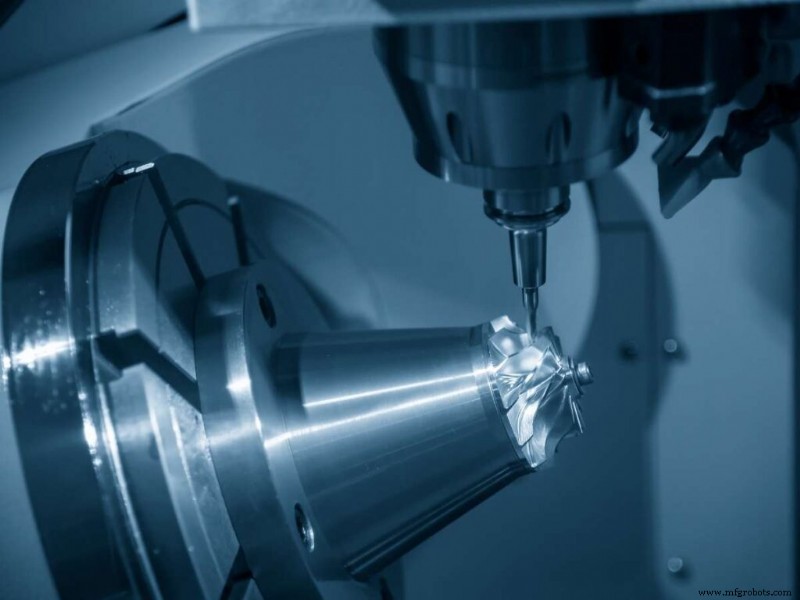
5‑Axis CNC Machines
- Extra Axes: A‑axis & B‑axis (rotary around X and Y)
- Typical Uses: Aerospace, automotive, medical implants, high‑precision molds.
- Pros: Eliminates multiple setups, boosts accuracy, cuts complex parts in one pass.
- Cons: Expensive, requires advanced programming and maintenance.
6‑Axis & Beyond
- Extra Axes: Continuous rotation or tilt (C‑axis, D‑axis, etc.)
- Typical Uses: Ultra‑high precision metal cutting, turbine blades, industrial robotics.
- Pros: Maximum flexibility and accuracy for the most complex tasks.
- Cons: Very costly, demands specialized expertise.
3. When to Upgrade from 3‑Axis to Multi‑Axis
As your workload evolves, the limitations of a 3‑axis machine become apparent: repeated repositioning, alignment errors, and lost jobs. Consider upgrading if you notice any of the following:
- Frequent Manual Repositioning: Wasting time and risking misalignment.
- Complex or Curved Designs: Your current machine can’t meet client expectations.
- Competitive Pressure: Competitors win projects that require multi‑axis capability.
- Production Volume Limits: The machine can’t handle larger orders efficiently.
Cost vs. ROI of Upgrading
Investing in a higher‑axis machine is significant, but the long‑term benefits often justify the expense:
- 4‑Axis: 30‑50% more than a 3‑axis, but eliminates manual re‑clamping.
- 5‑Axis: Higher upfront cost, but saves labor and material waste by machining all sides in one setup.
For instance, a shop that upgraded to a 5‑axis CNC for custom aerospace parts doubled its production capacity within a year and secured higher‑value contracts.
Operational Cost Considerations
- 3‑axis: Lower initial cost, but higher labor and longer machining times.
- 4‑axis: Mid‑range cost, improved efficiency, reduced setup time.
- 5‑axis: Higher cost, minimal human intervention, lower waste.
4. Common Issues by Axis Count
| Axis Count | Common Problems | Solutions |
|---|---|---|
| 3‑Axis | Limited to linear cuts; multiple setups increase errors and labor. | Upgrade to 4‑axis for rotary movement; use jigs to reduce repositioning. |
| 4‑Axis | Software complexity and higher maintenance needs. | Invest in operator training and simulation tools; schedule preventive maintenance. |
| 5‑Axis | Calibration and alignment challenges; higher cost and downtime risk. | Use laser calibration and probing systems; focus on staff training and preventive upkeep. |
| 6‑Axis+ | Extensive programming; high operating costs. | Implement digital twin and collision detection; reserve for high‑margin jobs. |
5. Key Factors When Choosing a CNC Machine
Primary Application
Match the machine to your typical work: basic woodworking → 3‑axis; complex molds → 4‑ or 5‑axis; aerospace or medical → 5‑ or 6‑axis.
Budget
3‑axis offers the most affordable entry point; 4‑axis adds flexibility without overwhelming cost; 5‑axis and beyond come at a premium but can pay off through reduced labor and faster turnaround.
Software & Programming
Higher‑axis machines require advanced CAD/CAM software and skilled operators. Consider training costs and vendor support when making your decision. For example, Blue Elephant’s user‑friendly machines come with pre‑configured software and training resources.
Maintenance & Repair
More axes mean more moving parts. 3‑axis machines are simpler to service, whereas 5‑axis machines demand regular rotary calibration and may need specialized technicians for 6‑axis units.
Conclusion
Choosing the right CNC machine is both a technical and a business decision. The right axis count saves time, cuts costs, and unlocks new production capabilities. If you’re unsure which machine fits your needs, contact Blue Elephant. Our experts will recommend the best system, provide training videos, and offer ongoing support.
Explore More of Our Resources
Looking for specific models? We have options that might be the perfect fit:
Still can’t find what you need? Reach out anytime—our team is available 24/7 to assist you.
CNC Machine
- Master the Fanuc G75 Grooving Cycle for Precise CNC Operations
- Key Factors Driving Pricing in Precision CNC Machining
- Mastering Efficient Laser Cutting of Stainless Steel: Best Practices & Machine Selection
- Toolpath Filtering: Achieve Flawless Surface Finishes on CNC Machined Parts
- High‑Performance 1530 Plasma Cutting Machine Delivered to Yemen – Trusted CNC Solutions
- Precision Milling & Turning Services for Contract Manufacturing
- Master Taper Turning Using G90 Modal Cycle: CNC Programming Guide
- Discover How 5-Axis CNC Machining Enhances Precision and Efficiency in Modern Manufacturing
- Fanuc G87 Side Drilling Canned Cycle: Efficient CNC Lathe Operation
- Understanding OSAI 10 Series CNC Error Messages: Causes & Quick Fixes