



2024 Aluminum Alloy: Key Properties, Machining Techniques, and Industry Applications
Aluminum 2024 is the industry’s go‑to material for high‑performance aerospace components, thanks to its superior strength‑to‑weight ratio and versatile processing options. Understanding its composition, physical and mechanical characteristics, and optimal manufacturing methods is essential for achieving reliable, high‑quality parts.
What Is 2024 Aluminum Alloy?
Aluminum 2024 is a wrought alloy whose performance derives from its unique chemistry. Copper is the primary alloying element (4.3–4.5 % by weight), while small additions of manganese, magnesium, silicon, nickel, bismuth, lead, zinc, and chromium enhance its strength, machinability, and corrosion behavior.
The alloying table below shows the typical weight percentages of each element:
| Alloying Element | Percentage by Weight |
|---|---|
| Silicon | Maximum 0.5 % |
| Iron | Maximum 0.5 % |
| Copper | 3.8 % – 4.9 % |
| Manganese | 0.3 % – 0.9 % |
| Magnesium | 1.2 % – 1.8 % |
| Chromium | Maximum 0.1 % |
| Zinc | Maximum 0.25 % |
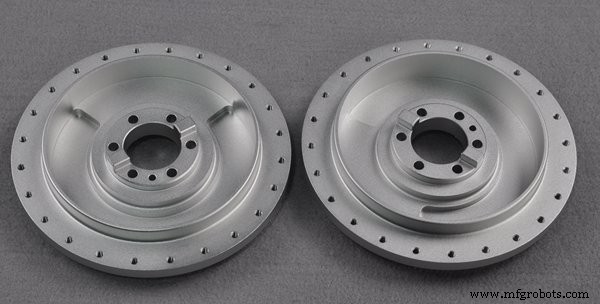
Physical Properties
- Density: 2.78 g/cm³ – a slight increase over pure aluminum but still exceptionally lightweight.
- Thermal Conductivity: ~120 W/(m·K) – suitable for heat‑dissipating aerospace engine parts.
- Electrical Conductivity: 30 % IACS, reflecting the copper content.
- Coefficient of Thermal Expansion (CTE): 23.2 µm/m°C – predictable dimensional changes under temperature swings.
- Machinability: High workability facilitates efficient cutting, drilling, and extrusion.
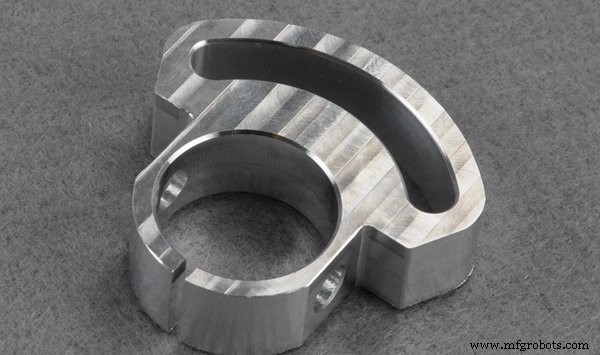
Mechanical Properties
- Tensile Strength: 290–450 MPa (42,100–65,300 psi).
- Yield Strength: 195–415 MPa (28,300–60,000 psi).
- Hardness: 50–120 HB, varying with temper.
- Fatigue Strength: 138 MPa (20,000 psi) for 5×10⁸ cycles.
- Shear Strength: 283 MPa (41,000 psi).
Below is a concise summary of properties across common tempers:
| Property | 2024‑T3 | 2024‑T4 | 2024‑T851 |
|---|---|---|---|
| Density | 2.78 g/cm³ | 2.78 g/cm³ | 2.78 g/cm³ |
| Solidus | 502 °C | 502 °C | 502 °C |
| Liquidus | 638 °C | 638 °C | 638 °C |
| Thermal Conductivity | 121 W/m·K | 121 W/m·K | 151 W/m·K |
| Tensile Strength | 483 MPa | 469 MPa | >455 MPa |
| Yield Strength | 345 MPa | 324 MPa | >400 MPa |
| Hardness (HB) | 120 | 120 | 128 |
| Fatigue Strength | 138 MPa | 138 MPa | 117 MPa |
| Shear Strength | 283 MPa | 283 MPa | 296 MPa |
Processing and Manufacturing Methods
Alloying & Casting
Production begins by melting aluminum ingots and alloying elements in a furnace. The molten alloy is then cast—either continuously or in ingots—into preliminary shapes that match the desired final geometry.
Heat Treatment
- Solution Heat Treatment: 480–495 °C to dissolve alloying elements into the matrix.
- Quenching: Rapid cooling to lock in a supersaturated solid solution.
- Artificial Aging: 120–205 °C to precipitate fine particles that boost strength.
- Cold Working: Rolling, extrusion, or drawing to increase strength through strain hardening.
Tempers are designated “T x” where the first digit indicates the primary treatment and subsequent digits encode additional processing. Common tempers include T3, T4, T6, T62, and O.
2024‑T3
Solution‑treated, cold‑worked, then naturally aged. Ultimate tensile strength 400–430 MPa; yield 270–280 MPa. Ideal for complex, high‑strength components.
2024‑T4
Solution‑treated and naturally aged. Offers improved ductility and formability while maintaining respectable strength.
2024‑T6
Solution‑treated followed by artificial aging at 190–205 °C. Provides the highest strength and hardness for critical structural parts.
2024‑T62
Post‑treats T6 with stabilization heat to enhance stress‑corrosion resistance—suitable for harsh environments.
2024‑O
Fully annealed; low strength (140–210 MPa) but excellent formability, useful for flexible parts.
Cold Working & Machining
Cold rolling, extrusion, and drawing further strengthen 2024 and shape it into precise forms. The alloy’s excellent machinability allows milling, turning, drilling, and other conventional operations with minimal tool wear.
Welding
Due to a tendency for micro‑cracking, welding 2024 is challenging. TIG, resistance spot, and friction‑stir welding are possible but require meticulous control. Riveting or adhesive bonding are often preferred in aerospace assemblies.
2024 Aluminum in CNC Machining
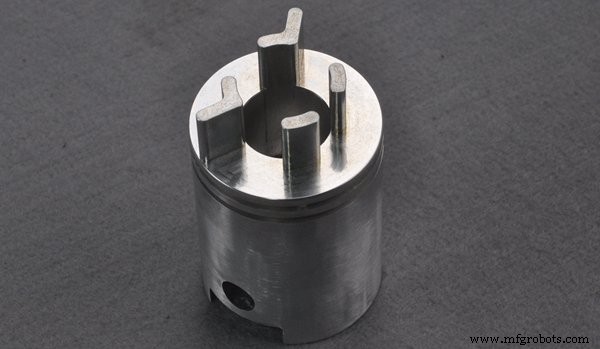
Computer‑Numerical‑Control (CNC) machining delivers high precision and repeatability for 2024 parts. Milling, turning, and drilling can be performed with tight tolerances, excellent surface finish, and automated production flows.
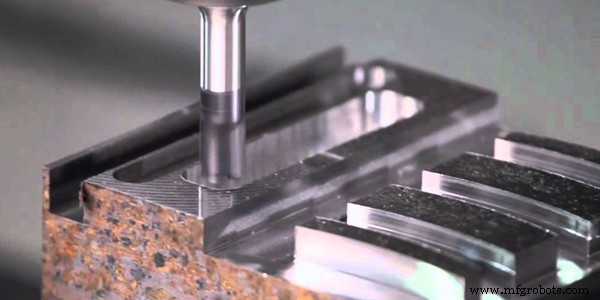
- Precision: Achieve micron‑level tolerances across multiple units.
- Surface Finish: Fine finishes reduce the need for secondary finishing.
- Versatility: Handle a wide range of part sizes and geometries in a single setup.
- Automation: Consistent, rapid production without manual intervention.
Comparative Advantages of 2024 Alloy
- Strength‑to‑Weight: Superior to 6061 and 7075, making it the preferred choice for load‑bearing aerospace components.
- Fatigue Resistance: Outperforms 6063, ensuring durability under cyclic loads.
- Machinability: Easier to machine than 7075; better for precision parts compared to 6063’s limited formability.
Limitations
- Stress‑Corrosion Cracking: Susceptible in harsh environments unless protected by galvanization or coating.
- Weldability: Prone to cracking; requires careful technique or alternative joining methods.
- Formability: Less suited for deep‑forming; 3003 or 5052 alloys are preferable for sheet‑metal work.
Industry Applications
Aerospace
Primary structural material for wing skins, fuselage panels, and fasteners—providing high strength with minimal weight.
Automotive
Used in suspension arms, steering components, and high‑performance parts to improve fuel economy and handling.
Sports Equipment
Favored for durable frames and components like bicycle frames, baseball bats, and climbing gear.
Marine
After galvanization or cladding, 2024 is suitable for hulls, masts, fittings, and fasteners exposed to saltwater.
Conclusion
Aluminum 2024 delivers a winning combination of lightweight strength and manufacturability, making it indispensable for aerospace and other high‑performance sectors. Mastering its properties and processing steps is key to unlocking its full potential.
Ready to explore 2024 aluminum for your next project? WayKen offers turnkey CNC machining services— from rapid prototyping to volume production—ensuring precision and quality every step of the way.

FAQs
What is the operating temperature range for 2024 aluminum?
Operating temperatures depend on temper and application; consult material data sheets for specific limits.
Is 2024 aluminum suitable for welding?
Welding can cause micro‑cracking; it is generally avoided in favor of riveting or adhesive bonding.
How strong is 2024 aluminum?
Typical tensile strength ranges from 290 to 450 MPa (42,100 to 65,300 psi), depending on temper.
What are the common trade names for 2024 aluminum?
- UNS A82024, UNS A92024
- Al2024‑O, Al2024‑T4, Al2024‑T3
- AA2024‑T3, Alclad 2024‑T3, Alclad 2024‑T4/T351, Alclad 2024‑T851, Alclad 2024‑O
CNC Machine
- The Spindle: Key to Engraving Machine Performance
- Italian Clients Tour Blue Elephant: CNC Learning, 3‑Axis Router Order, Shandong Adventure
- Australian Customers Visit Blue Elephant Factory: Experience Top-Quality Machines and Excellent Service
- Proven Strategies to Optimize Your Cabinet Production Line
- Top 22 CNC Router Issues & Expert Fixes
- Premium 1325 CNC 4’×8’ Wood Router Delivered to St. Johns, Antigua
- Intelligent Automated Industrial Fabric Cutting Machine
- From Scout Camp to Boardroom: How a Hiking Trip Transformed My Leadership
- Essential Plasma Cutting Tips for DIY Crafters: 7 Expert Guidelines
- 4×4 Small Rotary Axis CNC Woodworking Machine – Ready for Delivery to San Juan, Puerto Rico