



CNC Routers vs CO2 Laser Machines: Choosing the Right Tool for Your Production
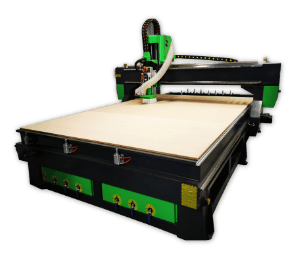
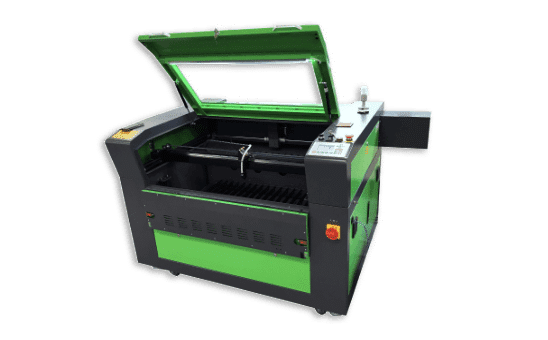
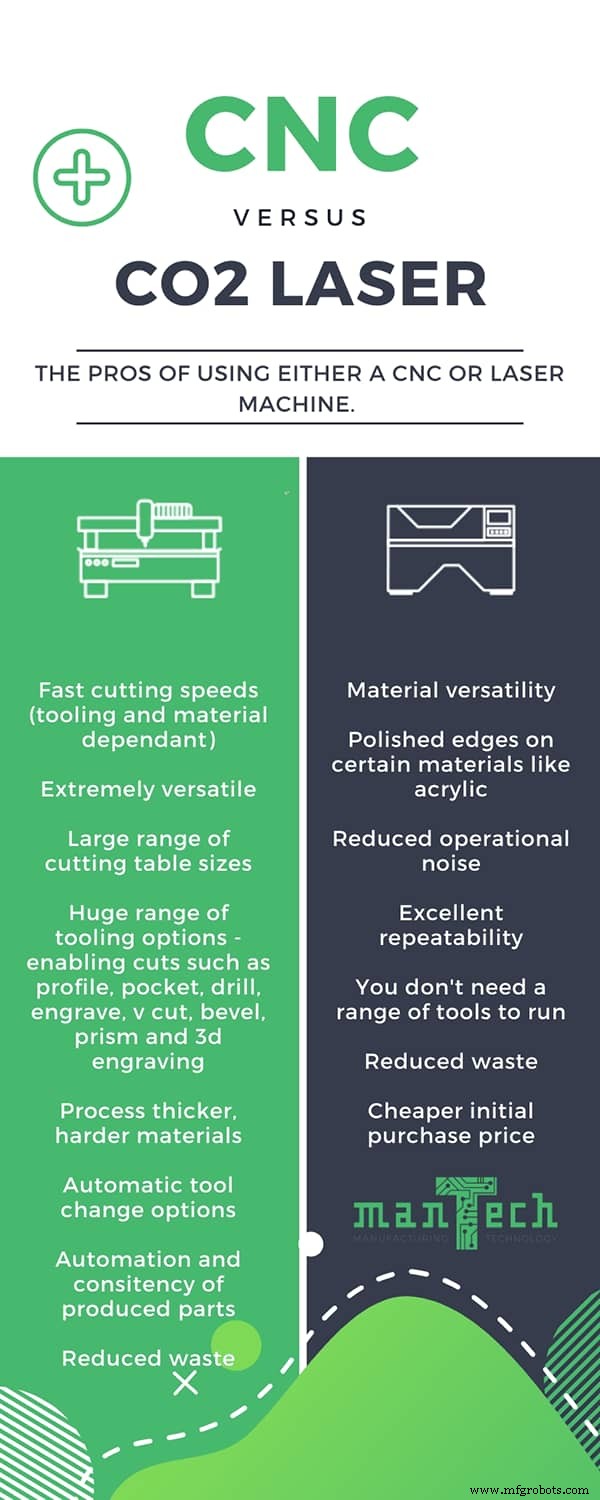
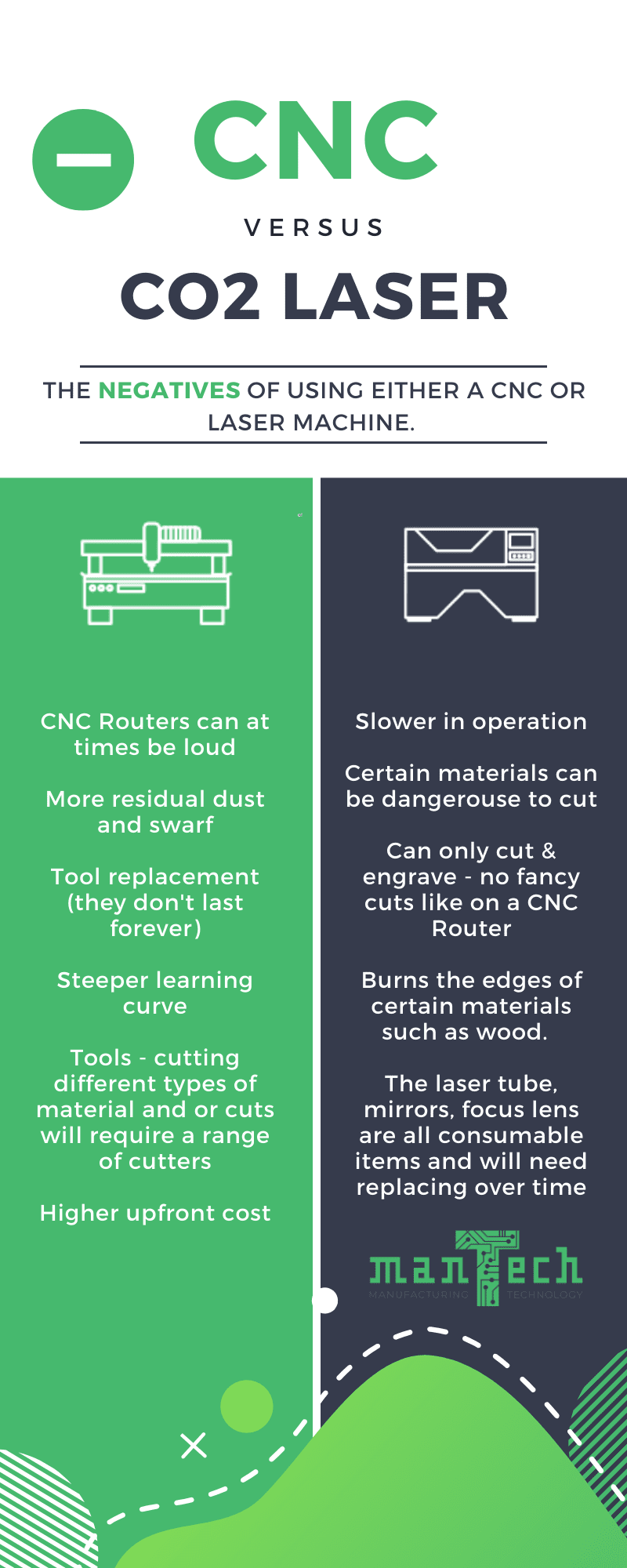
Many of our clients ask which machine is best for their shop. In some cases, owning both is optimal, but here we focus on the core differences between CNC routers and CO2 laser cutters. Whether you’re new to these technologies or just need a refresher, this guide explains how each machine works and helps you decide which will deliver the best value for your specific needs. A CNC router is built around a robust metal frame that has been stress‑tested to ensure rigidity and durability. The structure typically features a phenolic worktable with a lattice or honeycomb pattern, and a vacuum system that holds the material in place during cutting. Most routers use a gantry or bridge that moves along linear rails in the X‑Y plane, while the spindle—attached to a Z‑axis rail—provides vertical motion. This three‑axis configuration allows the tool to move in any direction and depth. Power options range from three‑phase to single‑phase motors, with stepper, hybrid or servo drive options for high‑speed movement. Cutting speed depends on material thickness, type, and the tooling you select. CNC routers handle a wide variety of materials, including: Most units come with a dust extraction system to remove chips and debris from the work area. Controls can be manual or PC‑based. A CAD/CAM workflow is essential: you design the part, generate toolpaths, and export G‑code that the machine interprets. Training is recommended to master both the software and safe machine operation. CO2 laser cutters are highly versatile for cutting and engraving a range of materials: acrylic, wood, cardboard, paper, fabric, leather, rubber, and more. However, certain substances should never be laser‑cut due to hazardous fumes or poor performance: These materials can generate dangerous dust or gases, so always verify safety with the supplier. The laser’s body is usually a movable table—either a slot‑type or honeycomb bed—while the laser head travels on X‑Y rails and the table can be lowered for Z‑axis control. The laser itself is powered by a high‑voltage supply that energizes a sealed glass tube. Cooling water circulates through a heat exchanger, and a series of mirrors focus the beam onto the material. Adjusting power and speed determines whether you’re engraving or cutting. Laser cutters feature a protective enclosure to shield operators from reflected beams. When the enclosure is opened, the laser tube must be shuttered to prevent accidental exposure. Ventilation is critical: many units use an exhaust system or an integrated air‑purifier with charcoal filters, especially important in confined spaces like offices or classrooms. The decision isn’t black and white. It depends on your production volume, material mix, budget, and workplace constraints. Both CNC routers and CO2 laser cutters are valuable additions to a modern workshop. Your choice hinges on the types of parts you produce, the materials you use, and any operational constraints like noise or space. In most scenarios, a CNC router will deliver faster throughput, but you’ll need a variety of tools. A CO2 laser offers simplicity and lower upfront cost but may be slower and limited to certain materials. Many businesses find a dual‑machine setup the most effective, leveraging the strengths of each system for different job types. At Mantech Machinery UK, we help you assess your shop’s needs and recommend the ideal machine—whether a CNC router or a CO2 laser cutter. All our CNC and laser equipment is available through flexible financing options. Contact us for details. Explore our full range of CNC routers—including Merlin CNC routers, Apollo ATC (automatic tool changer) CNC machines, and our entry‑level CNC line.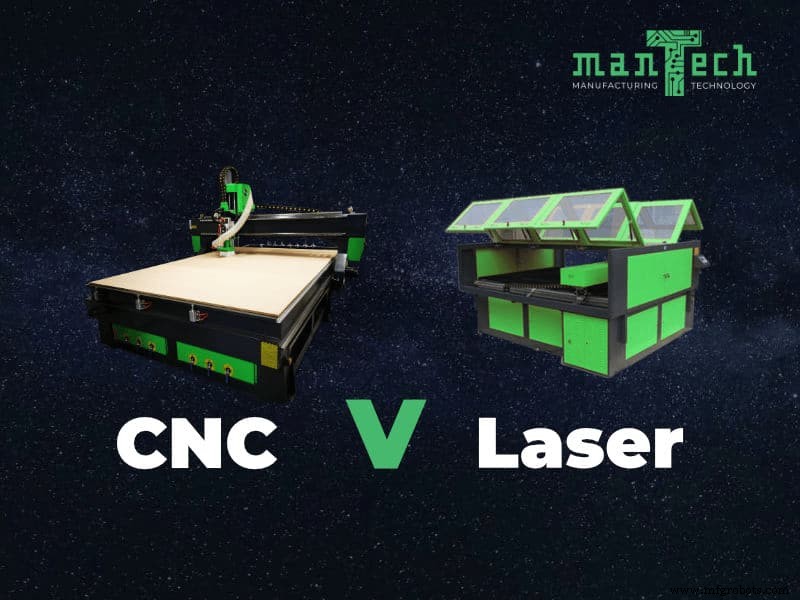
What Is a CNC Router?
What Is a CO2 Laser Cutter?
Choosing Between a CNC Router and a CO2 Laser Cutter
Benefits of CNC Routers
Benefits of CO2 Laser Cutters
Potential Drawbacks
CNC Router Challenges
CO2 Laser Challenges
Conclusion
CNC Machine
- 3D Printing vs CNC Machining: Choosing the Right Tool for Your Project
- The Evolution of CNC Machines: From 18th Century Origins to AI-Driven Precision
- CNC Machines: Boosting Production, Cutting Costs, and Ensuring Precision
- Fibre Laser vs CO₂ Laser: Choosing the Right Cutting Technology for Your Business
- Comparing CNC Routers and Laser Engravers: Which Tool Suits Your Precision Needs
- A Comprehensive Guide to CNC Machine Types and Their Applications
- Top 5 CNC Machine Types Every Manufacturer Should Know
- Precision Laser Cutting Machines for Industrial & Workshop Applications
- Explore the Key Types of CNC Machines for Precision Manufacturing
- The CNC Machinist: Key to Precision & Certified Excellence