



Key Safety Guidelines for Deploying Collaborative Robots in Manufacturing
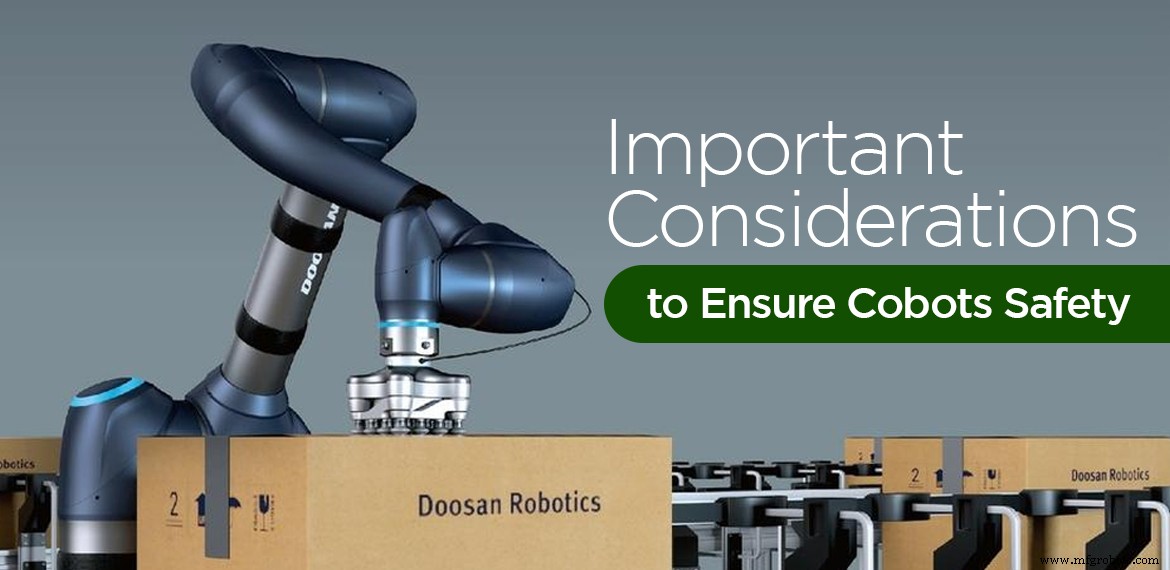
Collaborative robots can bring major improvements to any manufacturing facility. These hardworking machines can do their part in completing complicated tasks. Cobots have the ability to share tasks with humans and are flexible enough to adapt to the requirements of various applications. Through them, the speed of production is enhanced and the accuracy rate is improved.
However, those benefits can only be fully appreciated if cobots safety can be assured in any facility. While cobots are designed with safety standards in mind, there is still a need for strict measures to be implemented to reduce risks and ensure a smooth flow of operations.
Features that Promote Cobots Safety
On their own, collaborative robots are equipped with features that are intended to ensure that risks for injuries and hazards will be reduced while cobots are at work. Some of the most common safety features of collaborative robots include:
- Lightweight frames
- Collision detection technology
- Rounded edges
- Minimized pinch points
- Power, force and toque limitations
- Speed limits
- Several levels of stop modes
- Speed and separation monitoring
- Ergonomic design
There are other features that further establish cobots safety. However, it is still crucial to ensure that how it will be used will still be based on safety guidelines. So how do you ensure that cobots will not pose risks in your facility? Here are some of the steps that you need to implement to be free from concerns regarding cobots safety.
How to Ensure Cobots Safety
1. Train Your Employees
One of the keys to cobots safety is to ensure that implementers are skilled and knowledgeable to be capable of managing the risks that may come with collaborative robots. Train your employees so they can work smoothly with cobots and know the mistakes that they should not commit to avoid being in dangerous situations.
2. Conduct Risk Assessment
In any environment, risk identification is very crucial that’s why it is ideal for workplace managers to conduct risk assessments and revisit them regularly. Keep in mind that there are different factors that may come into play so what used to be safe may no longer be safe after another round of risk assessment is performed.
3. Employ Best Practices
Cobots safety is further amplified by employing best practices that can make your facility a safe place for cobots and humans to work together. Follow strict safety protocols from the start. Train cobots operators on how robotics can be managed safely. Install safety area scanners and mats that will help in the detection of humans and equipment. These are some of the best practices that can safeguard your employees and equipment.
In general, cobots are designed for safe and worry-free use. However, with the integration of other safety measures within the workplace, cobots safety is further amplified and human operators are given added protection. Overall, these will have an impact on workplace efficiency and productivity to benefit your bottom line.
If you are planning to integrate collaborative robots into your processes, choose those that can handle complex tasks without compromising precision and accuracy. Doosan Robotics has a range of collaborative robots including the A-Series, H-Series, and the M-Series that use industry-leading technology and offers an ultra-intuitive user experience.
Contact Elixir today for more information about Doosan Collaborative Robots.
INQUIRE NOW!
Industrial equipment
- 4 Key Design Principles for Successful 3D Printing
- Top Excavator Safety Practices: Protect Your Crew and Equipment
- 4 Essential Considerations When Choosing a Keyseat Cutter
- Gear Motor Safety: Key Considerations for Industrial Reliability
- Top 4 Considerations for Reliable Conveyor Belt Repairs
- 7 Essential Tips for Safe Dust Collector Operations: Protecting Workers & the Environment
- Key Safety Devices & Considerations for Manufacturing Systems
- Top 5 Essential Crane Safety Guidelines for Safer Operations
- Ensure Safety: Thorough Inspections for Rental Equipment
- Are Collaborative Robots Truly Safe? Expert Insights