



Automotive Shop Safety Rules: Expert Guidance for Technicians
Automotive Shop Safety Rules: Expert Guidance for Technicians
For those who thrive on precision and speed, a career as an automotive technician offers both excitement and opportunity. By 2030, the industry is projected to employ over 1.7 million technicians worldwide38, making it one of the fastest‑growing sectors in the automotive trade. To seize these prospects, technicians must prioritize safety as a core competency.
OSHA Mechanic Shop Regulations
The U.S. Department of Labor and the Occupational Safety and Health Administration (OSHA) set the gold standard for shop safety. These regulations guarantee that technicians have the right tools, protective gear, and training to perform their jobs safely. Exposure to chemicals, sharp tools, and high‑voltage equipment makes compliance essential—failure to adhere can lead to hefty fines or even permanent closure.
OSHA’s standards evolve with industry advances, ensuring that new hazards—such as newer battery chemistries and hybrid powertrains—are addressed promptly. Shops are required to provide personal protective equipment (PPE) and clear signage for chemical handling, ventilation, and emergency procedures. For a complete overview, visit the OSHA website.
General Auto Repair Safety
- Wear Appropriate PPE: Goggles, heat‑resistant gloves, and steel‑toe boots are non‑negotiable for every task.
- Handle Chemicals Responsibly: Dispose of oils, solvents, and batteries in accordance with state and federal rules. Keep the shop well‑ventilated and prohibit eating or drinking on the floor to avoid contamination.
- Keep Work Areas Organized: A tidy floor and clear walkways enable quick evacuation in emergencies. Fire extinguishers and spill kits should be within arm’s reach.
- Secure the Vehicle: Always jack up the car, lock the jack stands, and engage the parking brake before beginning any work beneath the vehicle.
- Use Tools Correctly: Tools are designed for specific jobs. Avoid leaving them near running engines or moving parts, which can cause serious injuries.
Shop Safety at Universal Technical Institute (UTI)
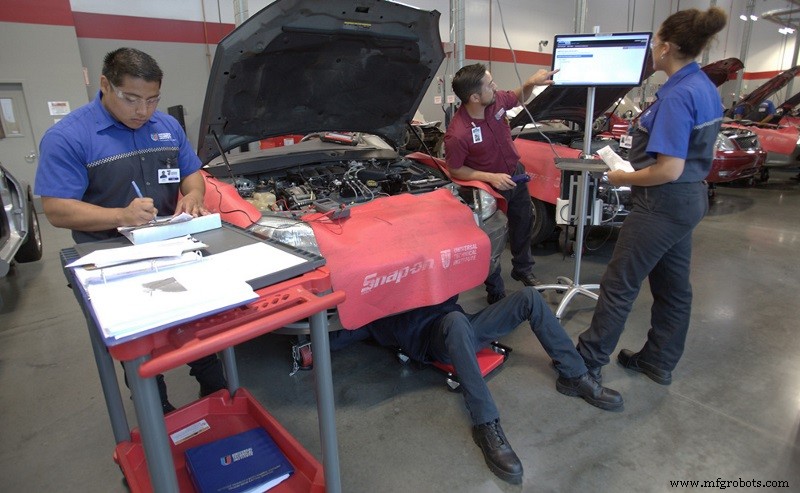
UTI’s Automotive Technology program blends online instruction with hands‑on labs, giving students real‑world shop experience. Safety is woven into every lesson; lab sheets list essential rules and precautions. Download the UTI shop and machine safety rules PDF to review before you begin training.
Practice Safety While Training for a Career at UTI
Gaining hands‑on experience at UTI not only builds the skills employers crave1, it also instills a culture of safety that lasts a lifetime. Our curriculum includes modules on welding safety and CNC machining protocols, ensuring you’re ready for any shop environment.
Ready to start a safe, rewarding career? Request more information today and take the first step toward doing what you love.
Industrial equipment
- What Is an Automotive Oscilloscope? – A Technician’s Essential Diagnostic Tool
- NSITEXE Launches NS31A, a RISC‑V 32‑bit CPU Meeting ISO 26262 ASIL D for Automotive Safety
- Radar Interference Threatens Automotive Safety: Industry Urges Collaboration
- CNC Machinist Safety: Best Practices for a Secure Workshop
- 7 Proven Strategies to Elevate Safety on Your Manufacturing Floor
- The True Asset: Human Capital in Retail Operations
- Advanced Safety Protocols for Precision CNC Machine Shops
- High-Precision Metal Tubing Enhances Automotive Safety Systems
- Essential Machine Shop Safety: A Practical Guide for Operators
- Optimizing Compressed Air Use in Automotive Paint & Body Shops