



Throttle Body Explained: The Engine's Airflow Control System
The heart of a vehicle’s performance lies in its engine’s breathing system—commonly called the air intake system. Within that system, the throttle body serves as the engine’s “air valve,” controlling the volume of air that enters the combustion chambers.
Understanding how the throttle body works, where it sits in modern engines, and how it affects both power and efficiency can help you diagnose performance issues and keep your car running smoothly.
How the Throttle Body Controls Engine Power
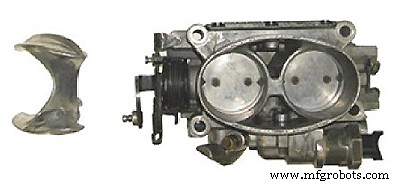
At its core, the throttle body houses a throttle plate, also known as a butterfly valve, that rotates on a shaft. When the driver presses the accelerator, the plate opens, letting more air flow into the engine; when the pedal is released, the plate closes, restricting airflow and reducing engine speed.
In older carbureted engines, the throttle body is integrated directly into the carburetor. In most modern fuel‑injected vehicles, it sits between the air filter and the intake manifold. Mechanical linkages—such as cables or push rods—connect the throttle plate to the accelerator pedal.
With electronic fuel injection, a throttle position sensor (TPS) sends real‑time data to the engine control unit (ECU). The ECU adjusts the fuel injectors accordingly, ensuring the air‑fuel mixture stays optimal as the throttle plate opens or closes.
Throttle Body Spacer: What It Does and When to Use It
A throttle body spacer is a small, metal ring that is installed between the air filter and the throttle body. By slightly enlarging the airflow path, the spacer can increase the volume of air entering the intake manifold, which in turn can raise horsepower and improve fuel economy.
Because the increased airflow reduces the load on the engine, it can translate to smoother acceleration and a more responsive throttle feel—especially on high‑performance or aftermarket engines.
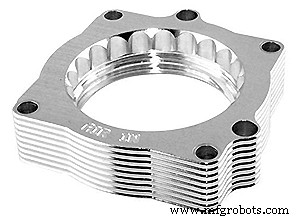
Image credit: Summit Racing Equipment
Signs That a Throttle Body Is Wearing Out
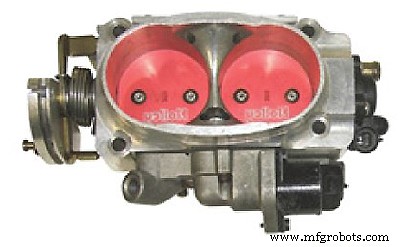
Like any component, a throttle body can deteriorate over time. Pay attention to these warning signs so you can address the issue before it leads to more serious engine problems:
- Dirt & Deposits: Accumulation inside the housing can restrict airflow and disturb the air‑fuel ratio.
- Poor Idling: Rough or low idle, stalling, or hesitation when you press the accelerator may indicate a malfunctioning throttle plate.
- Uneven Acceleration: A delayed response or sluggish acceleration can be a symptom of a worn throttle body.
- Vacuum Leaks: Leaks caused by a warped or mis‑adjusted throttle plate can alter engine idle and performance.
- Electrical Issues: Faulty TPS wiring or sensor failures can prevent proper communication with the ECU, leading to loss of power.
If you notice any of these symptoms, have your vehicle inspected by a qualified technician to diagnose and repair the throttle body promptly.
Get Hands‑On Experience With Air Intake Systems at UTI
Want to learn the skills needed to keep vehicles running at peak performance? The Automotive Technology program at Universal Technical Institute (UTI) offers hands‑on courses that cover the fundamentals of engine airflow, fuel injection, and throttle body maintenance.
Gaining this expertise can open doors to a rewarding career in an industry that boasts over 68,000 annual job openings in the United States. 1 41
Request more information today and start your journey toward becoming an automotive maintenance professional.
Industrial equipment
- Diamond Turning: Precision Machining for Advanced Optics and Beyond
- Understanding the Oxygen (O2) Sensor: Role, Placement, and Failure Signs
- Throttle Body Explained: The Engine's Airflow Control System
- Understanding AS9100: The Aerospace Quality Management Standard
- What Military Body Armor Is Made Of: Materials, Steel Grades, and Design
- How Aluminum Affects the Human Body: Exposure, Health Impacts, and Safety
- What Is A2 Steel? A Versatile, Cost‑Effective Tool‑Steel Grade for Industrial and Woodworking Applications
- Understanding Metal Casting: Process, Benefits, and Applications
- Demystifying 3D Printing: A Clear Guide for Innovators
- Decoding 'N' in Pump Calculations: Its Role and Significance