



Understanding AS9100: The Aerospace Quality Management Standard
Craftech staff recently consulted an industry expert to deepen our knowledge of the AS9100 certification pathway. We began the formal process in early March, building on our existing ISO 9001 certification. By achieving AS9100, we will demonstrate that our products meet the rigorous quality standards required for aviation and defense applications. Below is a concise overview of what we uncovered during this week’s learning session.
What is AS9100?
AS9100 is the globally recognized quality management system (QMS) for the Aviation, Space, and Defense (AS&D) sector.

First established by the International Aerospace Quality Group, AS9100 aligns closely with ISO 9001. The current revision, Rev. C (January 2009), integrates all ISO 9001:2008 requirements plus roughly 80 additional clauses tailored to aerospace and defense needs.
Related Standards
- AS9110 – Maintenance and Repair
- AS9120 – Stocklist Distribution
Designing Your QMS Under AS9100
AS9100 sets out the core principles and objectives of an effective QMS without dictating specific implementation steps. It encourages organizations to craft a QMS that reflects their unique processes while adhering to AS9100’s foundational tenets. Companies are also required to incorporate any additional customer, regulatory, and statutory obligations into their documentation.
The Eight Management Principles
Both AS9100 and ISO 9001 share the same eight guiding principles, applied here with greater rigor:
- Customer Focus
- Leadership
- Involvement of People
- Process Approach
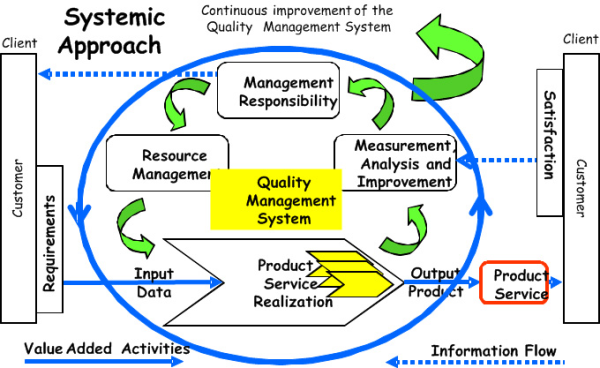
- System Approach to Management
- Continual Improvement
- Factual Approach to Decision‑Making
- Mutually Beneficial Supplier Relationships
Effective application of these principles drives higher value creation, superior quality, enhanced customer satisfaction, and increased profitability.
The Deming Cycle in AS9100
AS9100 relies on the Plan‑Do‑Check‑Act (PDCA) cycle to ensure ongoing process performance improvements.
Core Requirements
AS9100’s fundamental mandate is that an organization:
- Establishes, documents, implements, maintains, and continually improves its QMS.
- Identifies and controls all critical processes, including outsourced activities.
- Addresses customer expectations and applicable statutory and regulatory requirements.
The Federal Aviation Administration defines AS9100 as a comprehensive quality standard that incorporates the essential quality control and assurance elements required by the U.S. Code of Federal Regulations (CFR), Title 14, Part 21. Both the Department of Defense and NASA endorse the standard and provide guidance for subcontractors.
We Want to Hear From You
Is AS9100 relevant to your organization? Have you navigated the certification process before? Share your experiences in the comments below!
Download our free Glossary to Plastic Manufacturing!

Resin
- Diamond Turning: Precision Machining for Advanced Optics and Beyond
- Ultrasonic Machining Explained: Process, Benefits, and Limitations
- Rotational Molding: The Complete Guide to Creating Hollow Plastic Parts
- Chrome Plating Explained: Process, Steps, and Applications
- What Is a Punch Tool? A Woodworker’s Essential Guide
- Understanding the Oxygen (O2) Sensor: Role, Placement, and Failure Signs
- What Is A2 Steel? A Versatile, Cost‑Effective Tool‑Steel Grade for Industrial and Woodworking Applications
- Understanding Metal Casting: Process, Benefits, and Applications
- Demystifying 3D Printing: A Clear Guide for Innovators
- Decoding 'N' in Pump Calculations: Its Role and Significance