



Rotational Molding: The Complete Guide to Creating Hollow Plastic Parts
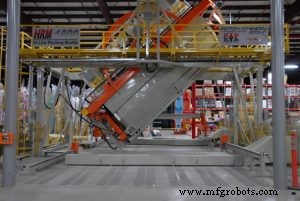
Rotational molding, also known as rotocasting, is a versatile manufacturing process that produces high‑quality hollow plastic parts in a wide range of shapes and sizes. While injection molding excels at creating solid components, it falls short when uniform wall thickness and hollow interiors are required. Rotational molding fills that gap by using heat and rotation to evenly coat the interior of a mold, resulting in parts that are lightweight, strong, and cost‑effective.
The Basics of Rotational Molding
In a typical rotational molding cycle, a dry powder or pre‑formed resin is poured into a hollow, often cylindrical or spherical, mold. The mold is then heated to the resin’s melting temperature while rotating on two perpendicular axes. The heat melts the resin, and the centrifugal force spreads it uniformly across the mold’s interior walls. Once the resin reaches the desired thickness, the mold is cooled, and the finished part is ejected.
The Origins of Rotational Molding
The technique dates back to the mid‑19th century. In 1855, English engineer R. Peters proposed using heat and rotational motion to shape plastics—a concept that was soon adopted by the military and marine industries for items such as tanks and storage drums. By the 1950s, manufacturers began using rotational molding to produce toy dolls and other consumer goods, a trend that has continued to this day.
For a deeper dive into the history, see Wikipedia’s entry on rotational molding.
Benefits of Rotational Molding
- Uniform wall thickness – The rotation ensures that resin is distributed evenly, producing parts with consistent strength and weight.
- Excellent for hollow parts – Unlike many other processes, rotational molding is specifically designed for creating large, hollow items such as tanks, tubs, and containers.
- Cost‑effective – Molds are lightweight, inexpensive, and require minimal tooling. The process also consumes less energy and material waste compared to injection molding.
- Design flexibility – Complex internal geometries, such as voids or integrated handles, can be incorporated without additional machining.
- Durability – Parts produced through rotational molding are resistant to impact, chemicals, and temperature extremes, making them ideal for outdoor and industrial applications.
These advantages make rotational molding a popular choice for manufacturers looking to produce durable, hollow plastic components at scale.
Industrial equipment
- Compression Molding vs Injection Molding: Key Differences & Choosing the Right Process
- Rotocasting vs. Rotational Molding: Key Differences Explained
- Metal Injection Molding: Process, Applications & Advantages
- What Is Extrusion Blow Molding? A Complete Overview
- Transfer Molding Explained: Process, Benefits, and Variants
- Understanding the Oxygen (O2) Sensor: Role, Placement, and Failure Signs
- Reaction Injection Molding (RIM): Process, Benefits, and Applications
- Understanding Cast Molding: Process, Materials, and Applications
- Insert Molding Explained: Boost Efficiency & Cut Costs in Multi-Material Production
- Molding Sand Explained: Composition, Uses, and Benefits in Sand Casting