



Seven Core Machining Operations Executed by Modern Lathes
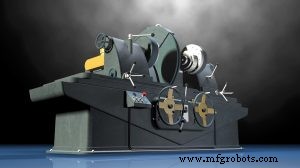
Lathes remain indispensable in precision manufacturing, capable of reshaping a wide array of materials—from hardwoods to high‑strength alloys—by rotating the workpiece against a stationary tool. Below are the seven primary machining processes that modern lathes routinely perform, each grounded in industry best practices and engineering expertise.
1. Cutting
Cutting is the fundamental operation where a sharp blade separates material from the workpiece. With proper tool geometry and feed rates, a lathe can efficiently trim excessive stock, trim taper, or shape cylindrical components with high dimensional accuracy.
2. Drilling
Integrated drill bits allow a lathe to produce clean, concentric holes suitable for fasteners. The lathe’s rotary motion ensures consistent hole depth and alignment, critical for assembly tolerances in mechanical and automotive parts.
3. Sanding (Surface Finishing)
Using an abrasive attachment, lathes perform controlled sanding to achieve smooth, uniform surfaces. This finishing step reduces surface roughness, prepares components for subsequent operations, and enhances aesthetic appeal for finished goods.
4. Knurling
Knurling imparts a textured pattern by forcing a roller with raised facets into the workpiece. The resulting ridges improve grip, provide a keyway, or simply add a decorative finish—essential for components like shafts, bolts, and grips.
5. Deformation (Shaping)
By selectively removing material, a lathe can reshape workpieces to achieve specific geometries—be it a bent flange, a custom taper, or a precision slot—while maintaining structural integrity.
6. Turning
Turning is the hallmark of lathe work: a stationary cutting tool removes material from a rotating part to produce cylinders, cones, or threaded sections. Accurate tool alignment and feed control ensure smooth surfaces and tight tolerances.
7. Facing
Facing establishes a flat, perpendicular surface on the end of a workpiece. The lathe’s facing tool cuts away irregularities, producing a precise face for mating surfaces or for quality inspection.
Industrial equipment
- Pin Rollers, Punch & Die, and Laser: A Comprehensive Guide to Perforation Techniques
- Turning vs Boring: How These Key Machining Processes Differ
- How Machining Vibrations Impact Equipment Life and Product Quality
- Exploring Key Machining Processes for Precision Manufacturing
- Top 6 Precision CNC Machining Techniques Every Manufacturer Should Know
- Mastering CNC Turning: The Essential Guide to Precision Machining
- CNC Machining: The Key to Precision and Efficiency in Modern Manufacturing
- Discover the Essential Lathe: The Cornerstone of Precision Machining
- Mastering the Facing Operation: A Guide to Precision Machining
- Understanding Facing Operations in Machining: Lathe and Milling Techniques