



Turning vs Boring: How These Key Machining Processes Differ
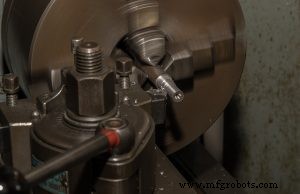
In precision manufacturing, turning and boring are the cornerstone machining techniques that shape both metal and wood components. While they share the same fundamental principle—using a stationary cutting tool to remove material—they target different parts of a workpiece and are executed on distinct machines.
What Is Turning?
Turning is the process of shaping the outer surface of a rotating workpiece. A lathe holds the part securely while the cutting tool, typically a sharp blade, is fed into the material. As the workpiece spins, the tool peels away material in a controlled, uniform manner. Turning is the go‑to method for producing shafts, spindles, gears and other cylindrical features.
- Sub‑processes: tapered, spherical, hard‑turning and threading.
- Typical tools: single‑edge, multi‑edge or three‑edge cutters.
- Applications: automotive bearings, aerospace fasteners and custom machined parts.
What Is Boring?
Boring removes material from the inside of a pre‑existing hole or bore. Unlike turning, the workpiece does not need to be fully rotating; the cutting tool is moved in a precise radial motion. Boring machines can be a lathe, a conventional milling machine or a specialized boring mill. The tool resembles a drill bit but operates at lower speeds to achieve fine tolerances.
- Key benefits: high dimensional accuracy, smooth surface finish and the ability to finish deep holes.
- Common use cases: shaft bore sizing, turbine shaft machining, and drilling large‑diameter holes that cannot be achieved by standard drilling.
Turning vs Boring: The Bottom Line
While both processes use a stationary cutter, the distinction lies in the area from which material is removed:
| Process | Material Removal Location |
|---|---|
| Turning | External surface (outside) |
| Boring | Internal surface (inside) |
Choosing between them depends on the desired geometry, required tolerances and the type of machinery available. Understanding these fundamentals ensures you select the right machining strategy for every project.
Industrial equipment
- Pin Rollers, Punch & Die, and Laser: A Comprehensive Guide to Perforation Techniques
- Seven Core Machining Operations Executed by Modern Lathes
- Manufacturing vs Production: Key Differences Explained
- Turning vs. Milling: Key Differences in Metalworking
- CNC Turning & Milling: Precision Machining Essentials for Modern Manufacturing
- Optimizing Machining Centers for Turning Operations
- Exploring Key Machining Processes for Precision Manufacturing
- Mastering Thread Machining on CNC Lathes
- Mastering CNC Turning: The Essential Guide to Precision Machining
- Brazing vs Welding: Choosing the Right Metal‑Joining Technique