



Cut vs Wire Nails: Understanding the Key Differences for Construction
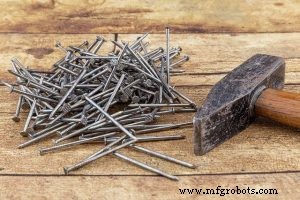
Nails are essential fasteners that secure objects by driving a slender shaft through them and using the flattened head to create a tight grip. While most people are familiar with the basic mechanics, many are unaware that nails come in distinct varieties—chiefly cut and wire—each crafted through a different manufacturing process.
What Are Cut Nails?
Cut nails, also called square nails, trace their origins to the late 18th century. In 1795, American engineer Jacob Perkins patented a production method that involved shearing flat stock metal into the characteristic wedge‑shaped head with a blunt tip. The result is a nail that cuts on all four sides, giving it a square profile and a flat end that resists pull‑out.
What Are Wire Nails?
Wire nails emerged roughly half a century later as a more efficient alternative. They are produced by drawing coils of metal wire through a series of precision dies, which gradually reduce the diameter until the desired size is reached. The wire is then cut, usually by machine, and shaped into the final nail form, featuring a sharp tip that facilitates easier penetration.
How Cut and Wire Nails Differ
Beyond their manufacturing techniques, cut and wire nails differ in several key ways:
- Tip shape: Cut nails have a blunt tip; wire nails are sharp.
- Size: Cut nails are generally larger, offering greater holding power.
- Ideal applications: The wedge‑like shape of cut nails makes them ideal for masonry work—such as attaching wood panels to brick—where they can bite into the stone for a stronger bond.
- Market share: Wire nails dominate global production, accounting for over 90% of all nails manufactured worldwide. Cut nails represent less than 10% of the market.
Choosing the right nail type depends on the job at hand. For masonry and heavy-duty applications, cut nails provide superior grip. For general construction and lighter tasks, wire nails offer speed, ease of use, and cost‑effectiveness.
Industrial equipment
- Thermoplastic vs. Thermoset: Understanding Key Differences in Polymer Materials
- Wheels vs. Casters: Understanding the Key Differences
- O‑Rings vs. Gaskets: Understanding Their Roles and Key Differences
- Forehand vs Backhand Welding: Key Differences and When to Use Each Technique
- Iron vs. Steel: Key Differences Explained
- Plasma vs. Laser Cutting: Key Differences and When to Use Each
- Milling vs. Grinding: Key Differences Explained
- Washers vs. Gaskets: Key Differences Explained
- DC vs. AC Motors: Key Differences and Choosing the Right One for Your Application
- Wire Nails Explained: Types, Uses, and Installation Tips