



Thermoplastic vs. Thermoset: Understanding Key Differences in Polymer Materials
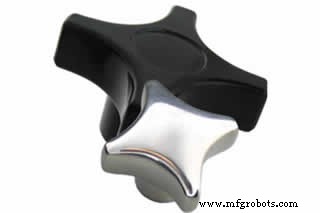
Thermoplastic and thermoset polymers are foundational materials in modern manufacturing, appearing in everything from consumer electronics to industrial machinery. Though both rely on polymer chemistry, their processing methods and end‑use characteristics diverge significantly.
What Is Thermoplastic?
Thermoplastics consist of long chains of repeating monomer units that remain flexible until heated. The standard manufacturing cycle involves melting the polymer, shaping it in a mold, and allowing it to cool into a solid part. Because the material can be reheated, thermoplastics lend themselves to reshaping and recycling.
Features of thermoplastic include the following:
- Lower cost
- Easy to recycle
- Supports reshaping and remolding
- Offers excellent electrical resistance
- Resistant to corrosion
What Is Thermoset?
Thermosets, in contrast, are polymers that undergo an irreversible curing reaction. During processing, the material is exposed to heat—and sometimes pressure—to initiate cross‑linking. Once the reaction completes, the polymer locks into a rigid network that cannot be melted again.
Two common thermoset fabrication techniques are reaction‑injection molding (RIM) and resin‑transfer molding (RTM). In RIM, a reactive mixture is injected into a heated mold and cures instantly. In RTM, a resin is poured into a pre‑formed mold and then cured under pressure.
Features of thermoset include the following:
- Better protection against extreme temperatures
- Ability to withstand higher compressive forces
- More resistant to shrinkage
- Superior strength and durability
- Available in a variety of finishes
Differences Between Thermoplastic and Thermoset
Although both material families are derived from polymers, their processing pathways and mechanical traits set them apart. Thermoplastics are reheatable, cost‑effective, and recyclable, making them ideal for high‑volume, low‑stress applications. Thermosets, however, deliver superior heat resistance, compressive strength, dimensional stability, and finish options, which is why they are chosen for structural components, aerospace parts, and high‑temperature housings.
Choosing the right material depends on the application’s performance requirements, lifecycle, and cost constraints.
Industrial equipment
- Wheels vs. Casters: Understanding the Key Differences
- O‑Rings vs. Gaskets: Understanding Their Roles and Key Differences
- Forehand vs Backhand Welding: Key Differences and When to Use Each Technique
- Iron vs. Steel: Key Differences Explained
- Cut vs Wire Nails: Understanding the Key Differences for Construction
- Plasma vs. Laser Cutting: Key Differences and When to Use Each
- Lathe vs Milling Facing: Understanding the Key Differences
- Milling vs. Grinding: Key Differences Explained
- Washers vs. Gaskets: Key Differences Explained
- DC vs. AC Motors: Key Differences and Choosing the Right One for Your Application