



Plasma vs. Laser Cutting: Key Differences and When to Use Each
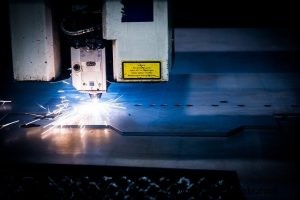
When choosing a cutting technology for metal fabrication, it’s crucial to understand how plasma and laser cutting differ in principle, performance, and safety. Both techniques offer high precision, but each has its own strengths and ideal use cases.
Laser Cutting: The Power of Focused Light
Laser cutting began in the mid‑1960s and relies on a highly amplified beam of light that is focused to a microscopic spot. Computer‑numerical‑control (CNC) systems guide the beam, enabling intricate designs and tight tolerances. The three most common laser types are:
- CO₂ lasers – Excellent for cutting and engraving a wide range of non‑ferrous metals and plastics.
- Nd:YAG lasers – Deliver high energy density, ideal for thicker, ferrous materials.
- Nd (neodymium) lasers – Offer superior beam quality for precision cuts in delicate workpieces.
Because the cutting action is confined to the laser spot, heat‑affected zones (HAZ) are minimal, and the process produces negligible slag. Laser cutting also emits no ionized gas, so operators need only standard eye protection to guard against reflected light.
Plasma Cutting: Heat from Ionized Gas
Plasma cutting dates back to the 1950s and uses a plasma torch to generate an arc of ionized gas that can melt through metal. A high‑voltage electrode and a stream of gas (commonly nitrogen or hydrogen) are accelerated through a nozzle, creating a hot jet that can reach temperatures up to 40,000 °F (22,000 °C). Unlike lasers, plasma cutting does not use a light beam; instead, it relies on the conductive properties of ionized gas.
Key safety considerations include:
- Arc eye protection – The intense ultraviolet radiation can cause photokeratitis.
- Proper ventilation – Sparks and metal shavings must be controlled.
- High‑temperature shielding – Protective gloves and aprons are essential.
Plasma cutting is typically faster on thicker metals and is more forgiving with rough or contaminated surfaces, but it can produce a larger HAZ and more slag than laser cutting.
Choosing the Right Technology
• Laser cutting is ideal for precision work, fine detail, and materials that require a clean edge.
• Plasma cutting excels at high‑volume production of thicker sheets where speed outweighs ultra‑fine detail.
Both methods are reliable, but selecting the appropriate tool depends on material type, thickness, design complexity, and production volume. Consult a qualified fabricator to determine the best fit for your project.
In Summary
While both plasma and laser cutting can slice through metal, they operate on fundamentally different principles—laser uses concentrated light, plasma uses ionized gas. Understanding these differences ensures optimal results, efficient production, and safe working conditions.
Industrial equipment
- Single‑Pass vs Multi‑Stroke Boring: How They Differ and Which to Choose
- CO₂ vs Nd Laser Cutting: Key Differences Explained
- Water Jet vs Laser Cutting: Which Delivers Superior Precision?
- Laser Cutting vs. CNC Cutting: Key Differences Explained
- Plasma Cutting vs Laser Cutting: Choosing the Right Technique for Your Project
- DC vs. AC Motors: Key Differences and Choosing the Right One for Your Application
- Laser Cutting vs. Die Stamping: Choosing the Right Metal Fabrication Technique
- Plasma vs. Laser Cutting: How to Pick the Best Technology for Your Workshop
- How Laser Cutting Prices Are Determined – A Clear Guide
- Laser vs. Plasma Cutting: Choosing the Right Metal Cutting Technology