



Forehand vs Backhand Welding: Key Differences and When to Use Each Technique
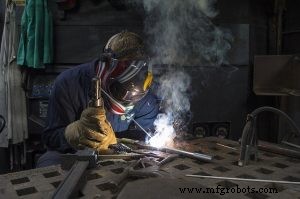
Welding is a foundational fabrication technique that joins metal components by heating them to a molten state, then allowing the material to solidify into a strong bond. Although the core principle—melting and fusing—remains consistent across all welding methods, technicians typically perform the process using one of two hand‑hold styles: forehand or backhand. Understanding the distinctions between these styles can help you select the right technique for each job.
Forehand Welding Explained
Forehand welding, also known as push welding, involves positioning the welding torch before the filler rod. The operator holds the torch at roughly a 30‑degree angle on the right side of the workpiece, pointing directly toward the weld puddle. This orientation delivers deeper penetration, allowing the torch to melt hard, dense materials more effectively. The trade‑off is that forehand welding often produces more slag splatter and can introduce arc inconsistencies if not controlled precisely.
Backhand Welding Explained
Backhand welding, or pull welding, reverses the torch‑rod sequence: the filler rod is held first, followed by the torch. The torch is angled at about 15 degrees from the right side, while the rod is fed from the left. This setup yields a steadier arc and more uniform filler distribution, resulting in cleaner welds with reduced splatter. Because of its consistent performance, many professionals prefer backhand for routine fabrication tasks.
Applying Forehand and Backhand to Other Fabrication Processes
Although the terms are most commonly associated with welding, the same hand‑hold concepts apply to brazing and soldering—processes that join metals without melting the base material. The key difference remains the order in which the torch and rod are positioned, influencing heat delivery, penetration, and cleanliness across all three methods.
In summary, forehand welding offers superior penetration but may increase splatter and arc variability, whereas backhand welding provides a smoother, more consistent arc and cleaner results. Selecting the appropriate technique depends on material type, joint geometry, and the desired weld quality.
Industrial equipment
- Thermoplastic vs. Thermoset: Understanding Key Differences in Polymer Materials
- Wheels vs. Casters: Understanding the Key Differences
- O‑Rings vs. Gaskets: Understanding Their Roles and Key Differences
- Iron vs. Steel: Key Differences Explained
- Milling vs. Grinding: Key Differences Explained
- Washers vs. Gaskets: Key Differences Explained
- Forehand vs. Backhand Welding: Key Differences Explained
- DC vs. AC Motors: Key Differences and Choosing the Right One for Your Application
- Metal Fabrication vs. Welding: Key Differences Explained
- TIG vs. MIG Welding: Key Differences and How to Choose the Right Technique