



Spring vs. Ball Plungers: Key Differences & When to Use Each
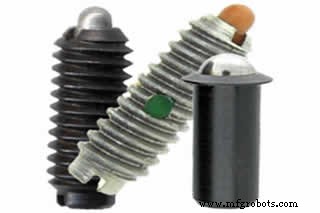
Plungers play a crucial role in securing and positioning workpieces across a wide range of industries—from furniture manufacturing to precision machining. While all plungers share the same fundamental principle—sinking into a cavity under load—two main types stand out: spring plungers and ball plungers. Understanding their distinct mechanics, material options, and load capacities can help you choose the right tool for any application.
What Is a Spring Plunger?
Spring plungers, also known as spring‑loaded devices (SLDs), incorporate a coiled spring inside the plunger body. Depending on the design, the spring can be engaged via a hex socket, slotted drive, or a top slot. The spring’s elastic force counteracts the applied load, providing a predictable, repeatable depression that is ideal for heavy‑load scenarios such as machine fixtures, heavy cabinet doors, or structural assembly.
Material choices for spring plungers are driven by strength and durability. Stainless steel is the most common due to its high tensile strength and corrosion resistance. Other options include carbon steel, brass, and nylon—each offering a balance between cost, weight, and environmental tolerance. Regardless of the material, the internal spring ensures that the plunger can return to its original position when the load is removed.
What Is a Ball Plunger?
Ball plungers feature a spherical tip that sits within a shallow groove on the plunger face. When a load is applied, the ball depresses slightly, allowing the plunger to engage the mating surface. This design is especially useful for lighter loads, such as drawer slides, cabinet hinges, or door stops, where precision and smooth operation are paramount.
Because the ball’s contact area is limited, ball plungers typically handle lower force ranges compared to spring plungers. However, their simplicity and low manufacturing cost make them a popular choice for quick‑assembly tasks and lightweight fixtures.
Choosing the Right Plunger
• Spring plungers excel in high‑force applications, offering robust performance and the ability to absorb dynamic loads. They are preferred when structural integrity and repeatability are critical.
• Ball plungers are ideal for lightweight or precision tasks where minimal movement and smooth engagement are required.
By matching the plunger type to your load requirements and operating environment, you can improve product reliability, reduce wear, and enhance overall assembly efficiency.
For further guidance on selecting plungers for specific applications, consult industry standards such as ISO 9001 for quality management or the ASME B46.2 standard for measurement of mechanical components.
Industrial equipment
- Wheels vs. Casters: Understanding the Key Differences
- Spring Plungers Explained: Function, Materials, and Installation
- O‑Rings vs. Gaskets: Understanding Their Roles and Key Differences
- Iron vs. Steel: Key Differences Explained
- Milling vs. Grinding: Key Differences Explained
- Understanding Ball Plungers: Design, Function, and Applications
- Extension vs Compression Springs: Key Differences and Practical Applications
- Plain vs. Spring Washers: How They Differ and When to Use Each
- Washers vs. Gaskets: Key Differences Explained
- DC vs. AC Motors: Key Differences and Choosing the Right One for Your Application