



Understanding Ball Plungers: Design, Function, and Applications
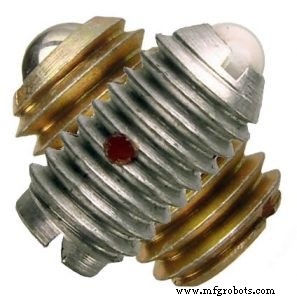
Ball plungers, a specialized form of spring‑loaded devices (SLDs), are essential tools for precise positioning in manufacturing and repair tasks. Their unique construction—combining a steel ball, a compressed spring, and a threaded housing—enables rapid, repeatable movement under load while maintaining tight tolerances.
How a Ball Plunger Works
When external pressure is applied, the ball at the top of the plunger sinks into the housing, compressing the internal spring. Once the load is released, the spring’s stored energy forces the ball back to its original position. The shallow depth of the ball allows it to move quickly under light forces yet still provide firm engagement when needed.
Key Components
- Steel Ball: Located at the tip, this component is designed to sink under pressure, enabling the plunger’s movement.
- Compressed Spring: Encased within a threaded body, it restores the ball to its starting point once the load is removed.
- Threaded Body with Grooves: External threads match the workpiece’s pilot hole, while surface grooves guide the plunger during installation.
- Slotted Drive: Situated at the base, this slot accepts a driver bit for insertion or extraction of the plunger.
Ball Plungers vs. Traditional Spring Plungers
Although both share the same core mechanism—a spring inside a threaded housing—ball plungers differ primarily in the top element. Traditional spring plungers use a pin or plunger‑style nose instead of a ball. This subtle variation influences how each device engages a workpiece, with ball plungers offering a smoother, more forgiving contact surface.
Whether you’re tightening fasteners in automotive assemblies or securing components in aerospace structures, ball plungers deliver reliable, repeatable positioning that enhances both efficiency and quality.
Industrial equipment
- Understanding Ball Bearing Races: Structure, Function, and Types
- Retractable Plungers: How They Work and Why They Matter
- Understanding the Four Most Common Types of Plungers
- What Is a Ball Mill? A Comprehensive Guide to Definition, Function, and Differences from Traditional Milling Machines
- Spring vs. Ball Plungers: Key Differences & When to Use Each
- Understanding the Oxygen (O2) Sensor: Role, Placement, and Failure Signs
- Ball Joints Explained: How They Work, When to Replace, and Repair Tips
- Understanding the Ballcock Valve: Function, Placement, and Replacement
- Exploring Bearing Types: Ball, Roller, and Precision Options
- Radius Ball Turner Explained: Function, Benefits, and Use Cases