



What Is a Ball Mill? A Comprehensive Guide to Definition, Function, and Differences from Traditional Milling Machines
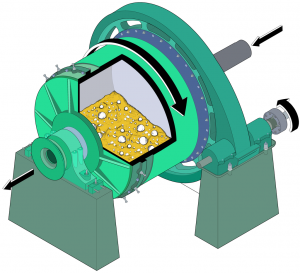
When most people think of milling machines, they envision a vertically oriented machine that contains rotary cutters. Traditional milling machines such as this are used extensively in the manufacturing industry to reshape workpieces. However, there are many other types of milling machines, one of which is a ball mill. What is a ball mill exactly, and how does it differ from traditional milling machines?
Overview of Ball Mills
As shown in the adjacent image, a ball mill is a type grinding machine that uses balls to grind and remove material. It consists of a hollow compartment that rotates along a horizontal or vertical axis. It’s called a “ball mill” because it’s literally filled with balls. Materials are added to the ball mill, at which point the balls knock around inside the mill.
How a Ball Mill Works
Ball mills work by using balls to grind materials. Materials such as iron ore, pain and ceramics are added to the ball mill. Next, the ball mill is activated so that it rotates — either on its vertical or horizontal axis. As the ball bill rotates, the balls bounce around while striking the enclosed material. The force of these strikes helps to grind the material into a finer, less-coarse medium.
For a ball mill to work, critical speed must be achieved. Critical speed refers to the speed at which the enclosed balls begin to rotate along the inner walls of the ball mill. If a ball mill fails to reach critical speed, the balls will remain stationary at the bottom where they have little or no impact on the material.
Ball Mills vs Traditional Milling Machines
Ball mills differ from traditional milling machines in several ways. First, ball mills don’t have a cutting tool. While traditional milling machines rely on a rotary cutting tool, ball mills leverage the force of moving balls to perform their operation. As a result, they don’t need a cutting tool.
Another difference between ball mills and traditional milling machines lies in their respective function. Both ball mills and traditional milling machines are designed to remove material. However, traditional milling machines support large workpieces, whereas ball bills support materials like ore, ceramics and paint. The material is added to the ball mill’s compartment, at which point it’s exposed to the rotating balls. This forceful rotation grinds down the material into a finer, powder-like medium.
Industrial equipment
- Understanding Ball Plungers: Design, Function, and Applications
- Spring vs. Ball Plungers: Key Differences & When to Use Each
- Ball Joints Explained: How They Work, When to Replace, and Repair Tips
- Sag Mill vs. Ball Mill: Key Differences Explained
- What Is a Mill File? Your Comprehensive Guide to the Essential Wood & Metalworking Tool
- Understanding the Ballcock Valve: Function, Placement, and Replacement
- What Is a Lumber Mill? How Wood Is Turned into Building Materials
- Mill Finish Explained: What It Means for Metal Surfaces
- Benchtop Mill Drills Explained: Features, Uses, and Benefits
- Radius Ball Turner Explained: Function, Benefits, and Use Cases