



Centrifugal Casting Explained: Process, Advantages, and Applications
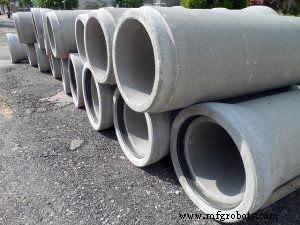
Centrifugal casting—also called rotocasting—uses the force generated by spinning to build hollow, cylindrical components from metals, alloys, and even concrete. By directing molten or wet material outward toward a rotating mold’s inner walls, the process yields uniform thickness and superior dimensional accuracy across a wide range of materials, from iron and aluminum to stainless steel and reinforced concrete.
How Centrifugal Casting Is Performed
First, the liquid feedstock (molten metal or wet concrete) is poured into a die that spins either vertically or horizontally, depending on the machine design. As the die accelerates, centrifugal force forces the material against the mold’s interior, spreading it evenly and eliminating voids. Once the material has solidified, the die is stopped, the casting is released, and the finished part is ready for inspection, finishing, or direct use.
Because the material is deposited directly onto the die’s walls, the resulting component is inherently hollow, which reduces weight and material consumption. This approach also eliminates the need for internal cores, a common source of waste in many other casting methods.
Benefits of Centrifugal Casting
• Large, complex shapes: The process can produce sizable hollow parts—such as concrete pipelines or heavy-duty metal rings—that are difficult or impossible to achieve with conventional casting techniques.
• Reusability of molds: Unlike many other casting methods that rely on disposable dies, centrifugal dies are durable and can be cycled hundreds of times, cutting tooling costs and improving production efficiency.
• Enhanced material properties: The high centrifugal forces promote grain refinement and density uniformity, resulting in components with superior mechanical strength and reduced porosity.
• Waste reduction: The absence of internal cores and the efficient use of molds minimize scrap generation and environmental impact.
Centrifugal casting is one of several advanced manufacturing processes, alongside die casting, investment casting, lost‑foam casting, lost‑wax casting, permanent mold casting, and sand casting. Each method has its own niche, but centrifugal casting’s unique blend of efficiency, precision, and versatility makes it a go‑to solution for many industries.
Industrial equipment
- 5 Essential Types of T‑Handles: What Every Operator Should Know
- Shearing: A Fast, Clean, and Versatile Metal Cutting Solution
- Bolt Snap Fasteners Explained: Types, Functionality, and Applications
- Why Gas Springs Are the Smart Choice for Modern Applications
- Tap Wrenches Explained: How They Work, Types, and Practical Uses
- Toe Clamps Explained: Features, Benefits, and How to Pick the Right One
- Flat vs. Lock Washers: Key Differences and When to Use Each
- Revolutionizing Rail Operations: Key Equipment Innovations You Need to Know
- Centrifugal Pumps Explained: Key Features, Applications & Benefits
- Evaporative Pattern Casting Explained: Key Insights for Professionals