



Flat vs. Lock Washers: Key Differences and When to Use Each
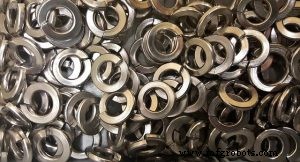
Washers—flat discs with a central hole—are essential components in fastening systems. They sit atop a bolt head or nut to evenly spread compressive forces, safeguarding the workpiece from damage and enhancing joint stability.
Flat Washers
Flat washers are the most widely used variety. Their name comes from their perfectly level geometry: both faces are flat, and the surface is uniformly flat. This design excels at distributing load across a broad area, preventing localized stress that could deform the material underneath.
Typical materials include:
- Stainless steel
- High‑carbon steel
- Brass
- Copper
Lock Washers (Split Washers)
Lock washers, also called split or semi‑coiled washers, add a tensioning feature that resists bolt loosening. Unlike flat washers, they have a helical or semi‑coiled profile that creates a spring‑like action when the bolt is tightened. This action holds the bolt in place even under vibration.
While nuts can also secure fasteners, they are vulnerable to loosening when exposed to dynamic forces. A lock washer mitigates this risk by providing a continuous resistance to rotational movement, ensuring the fastener stays tight in its threaded hole.
Choosing the Right Washer
Use a flat washer when the primary goal is load distribution and surface protection. Opt for a lock washer when vibration, thermal expansion, or other dynamic loads could cause a bolt or nut to loosen over time.
In summary, flat washers offer simple, reliable load spreading, whereas lock washers provide an added layer of security against loosening, making them indispensable in high‑vibration or critical‑structural applications.
Industrial equipment
- 5 Essential Types of T‑Handles: What Every Operator Should Know
- Shearing: A Fast, Clean, and Versatile Metal Cutting Solution
- Bolt Snap Fasteners Explained: Types, Functionality, and Applications
- Why Gas Springs Are the Smart Choice for Modern Applications
- Tap Wrenches Explained: How They Work, Types, and Practical Uses
- Toe Clamps Explained: Features, Benefits, and How to Pick the Right One
- Centrifugal Casting Explained: Process, Advantages, and Applications
- Unlock Efficiency: Key Advantages of Lean Manufacturing
- Scan-Pac Friction Solutions: Expert Insights for Optimal Performance
- Knurling Explained: Mastering Textured Finishing Techniques