



Pillow Block Bearings: Components, Benefits, and Installation Guide
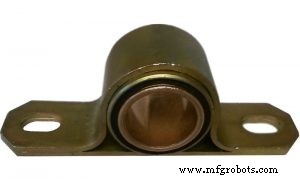
Bearings are essential for enabling smooth rotation in machinery. They comprise a housing with a central opening that accommodates a shaft, allowing it to turn with minimal friction. While all bearings share this basic design, pillow block bearings—also known as Plummer blocks—offer a robust, ready‑to‑install solution for many industrial applications.
What Is a Pillow Block Bearing?
A pillow block bearing is a mountable housing unit that contains a bearing assembly at its core. The housing extends beyond the bearing on both sides, featuring small mounting holes. These holes accept fasteners, enabling the block to be securely bolted to a work surface or frame. The central cavity houses a shaft, while an inner ring of balls and a cage maintain radial and axial support, facilitating smooth, low‑friction rotation.
Key Components of a Pillow Block Bearing
1. Housing – Typically fabricated from high‑strength materials such as stainless steel or cast iron, the housing protects the internal bearing and provides mounting points. 2. Central Bore – The opening that accepts the shaft; its diameter matches the shaft specification. 3. Ball and Cage Assembly – A ring of precision balls restrained by a cage that ensures even load distribution and consistent speed. 4. Oil Ring (optional) – A rubber sleeve that circulates lubricant along the shaft, reducing wear and extending component life.
Benefits of Pillow Block Bearings
Pillow block bearings are widely adopted in manufacturing for several reasons:
- Reduced Friction and Vibration – The ball and cage system smooths motion, lowering energy consumption and minimizing wear.
- Extended Equipment Life – By protecting shafts and distributing loads evenly, these bearings help machines run longer between maintenance intervals.
- Easy Installation – With pre‑drilled mounting holes, a pillow block can be bolted to most stable surfaces, saving time and labor.
- Reliable Lubrication – Oil rings maintain consistent lubrication, preventing premature shaft wear.
Installation Tips
To mount a pillow block bearing, select a flat, stable surface and align the mounting holes with the appropriate fasteners. Secure the block firmly; a tight fit ensures accurate shaft alignment and optimal bearing performance.
By incorporating pillow block bearings into your machinery, you can achieve smoother operation, lower maintenance costs, and greater operational reliability.
Industrial equipment
- What Are Bi‑Fold Hinges? Features, Benefits, and Applications
- Deck Screws Explained: Types, Benefits, and How They Compare to Wood Screws
- What Are Split Washers? A Deep Dive Into Vibrational Locking Fasteners
- Set Screws Explained: Design, Differences, and Applications
- Spring‑Energized Seals: Design, Function, and Industrial Benefits
- Vulcanized Seals: Definition, Production, and Industrial Advantages
- Pull Handles Explained: Types, Features, and Applications
- Block Valve Explained: Types, Functions & Applications
- Angle Blocks: Essential Tools for Precise Material Cutting
- Anchor Blocks Explained: Purpose, Design, and Installation