



Set Screws Explained: Design, Differences, and Applications
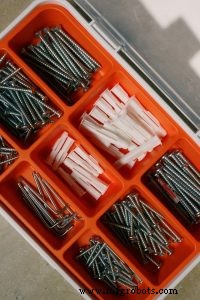
When most people think of screws, they picture a threaded fastener with a distinct head and tip. While traditional screws fulfill this image, a lesser‑known type—set screws—delivers a unique, headless design that excels in applications requiring a flush or concealed connection. In this guide we’ll break down what set screws are, how they differ from conventional screws, and where they’re most effectively used.
Overview of Set Screws
Set screws, also called blind screws or threaded rods, consist solely of a uniformly threaded shaft. They lack both a head and a tip, leaving the entire length of the rod threaded. This simple construction allows the screw to be driven directly into a mating component without protrusion.
Set Screws vs. Traditional Screws
Unlike standard screws, set screws have no head—so there’s no recess for a screwdriver or a hex socket for a wrench. They also lack a pointed tip, meaning they do not drill into material. Traditional screws feature either a flat‑head, Phillips, or hex head and a conical tip that bites into the substrate. Consequently, set screws are inserted and tightened solely by turning the threaded shaft, often with a wrench or socket that engages the internal threads.
Applications for Set Screws
Set screws shine in scenarios where a low‑profile fastening is essential:
- Aligning and securing pulleys to shafts: A set screw can lock a pulley onto a shaft, ensuring a snug, flush fit.
- Joining threaded components: Two parts with matching threaded holes can be fastened by inserting half of a set screw into each, keeping them flush and aligned.
- Securing rods, brackets, and housings: They are frequently used to fasten components where access is limited or a protruding head would be problematic.
Because set screws rely on direct thread engagement, they’re ideal for high‑precision assemblies, electronics, and any application where space constraints or a clean surface finish are paramount.
Industrial equipment
- What Are Bi‑Fold Hinges? Features, Benefits, and Applications
- Structural Screws: The Heavy‑Duty Fasteners Every Builder Trusts
- Hex Lag Screws Explained: Design, Uses, and Benefits for Construction & Woodworking
- Deck Screws Explained: Types, Benefits, and How They Compare to Wood Screws
- What Are Split Washers? A Deep Dive Into Vibrational Locking Fasteners
- Spring‑Energized Seals: Design, Function, and Industrial Benefits
- Vulcanized Seals: Definition, Production, and Industrial Advantages
- Pull Handles Explained: Types, Features, and Applications
- Weld‑On Hinges: Installation, Benefits, and Material Choices
- Wood Screws Explained: Types, Features, and Selection Tips