



What Are Bi‑Fold Hinges? Features, Benefits, and Applications
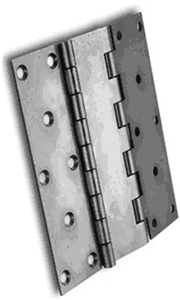
Hinges come in many shapes and sizes, but the most common type—standard hinges—consist of two leafs, a knuckle, and a pin. These allow a limited swing in a single direction. Bi‑fold hinges break that pattern by enabling rotation in both directions, giving users greater flexibility and convenience.
Overview of Bi‑Fold Hinges
A bi‑fold hinge is a mechanical bearing that permits the surfaces it connects to swing open in either direction. While a conventional hinge might let you pull or push a door open, a bi‑fold hinge lets you do both—useful for doors that need to be accessed from both sides or for panels that should remain reachable in tight spaces.
How Bi‑Fold Hinges Work
Bi‑fold hinges differ from standard hinges by featuring three leafs instead of two. This extra leaf, positioned in the middle, houses a second knuckle and pin, allowing the hinge to pivot around two axes. The two outer leafs attach to the surfaces being joined, while the central leaf provides the multi‑directional rotation. The result is a hinge that can swing in both directions without compromising stability.
Benefits of Bi‑Fold Hinges
- Dual‑directional swing – Open from either side, ideal for small rooms, closets, or double‑sided panels.
- Easy installation – Uses the same mounting holes as standard hinges; simply align the holes and secure with fasteners.
- Versatile materials – Available in steel, stainless steel, and other alloys; choose stainless steel for humid environments to prevent rust.
- Space‑saving – Since the hinge can pivot both ways, you can install it in tighter spaces where a single‑direction hinge would protrude too far.
- Durability – The three‑leaf design distributes load evenly, reducing wear and extending lifespan.
Applications
Bi‑fold hinges are perfect for:
- Closet doors and storage panels that need to be opened from either side.
- Utility rooms where space is limited.
- Commercial settings such as office partitions or service doors that must be accessed from both directions.
- Home décor panels or reversible doors that benefit from flexibility.
When choosing a bi‑fold hinge, consider the material that best suits your environment—stainless steel for moisture‑prone areas, brass for low‑traffic residential use, or heavy‑duty steel for commercial applications.
Industrial equipment
- What Are Detent Position Hinges? A Practical Guide
- Deck Screws Explained: Types, Benefits, and How They Compare to Wood Screws
- What Are Split Washers? A Deep Dive Into Vibrational Locking Fasteners
- Set Screws Explained: Design, Differences, and Applications
- Spring‑Energized Seals: Design, Function, and Industrial Benefits
- Vulcanized Seals: Definition, Production, and Industrial Advantages
- Pull Handles Explained: Types, Features, and Applications
- Weld‑On Hinges: Installation, Benefits, and Material Choices
- Loose Joint Hinges: Design, Function, and Advantages
- Hydraulic Seals Explained: Types, Materials, and Their Role in Industrial Cylinders