



Loose Joint Hinges: Design, Function, and Advantages
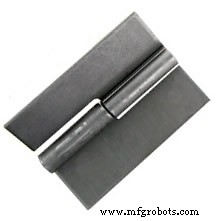
Loose joint hinges—often referred to as slip hinges—are a modern, versatile alternative to conventional hinges. They connect two components while permitting rotation, but their distinctive design sets them apart from standard hinges. What exactly are loose joint hinges?
Overview of Loose Joint Hinges
Also called slip hinges, loose joint hinges feature a vertical pin that passes through the centers of both leafs, securing them together. Unlike typical hinges, which attach the pin to both leafs, the pin in a loose joint hinge is permanently fixed to only one leaf.
During installation, the second leaf is slid through the stationary pin on the first leaf. The pin stays centered in both leafs but is permanently affixed to just one, which distinguishes loose joint hinges from conventional models.
How Loose Joint Hinges Work
Loose joint hinges function similarly to traditional hinges by permitting a controlled range of rotation. Doors typically employ two to four of these hinges, mounted vertically along the interior edge to attach the door to its frame. The key distinction is the stationary pin that is permanently fixed to one leaf.
Benefits of Loose Joint Hinges
One of the main advantages of loose joint hinges is that they enable removal of the connected object without disassembling the hinges themselves. For instance, a door fitted with these hinges can be lifted off the frame simply by lifting the door; the hinges remain intact, with one leaf still attached to the door and the other to the frame.
Loose joint hinges are available in a range of materials. Stainless‑steel versions excel in humid or corrosive settings, resisting moisture damage, while carbon‑steel variants offer greater strength and can bear heavier loads.
Industrial equipment
- What Are Bi‑Fold Hinges? Features, Benefits, and Applications
- What Are Detent Position Hinges? A Practical Guide
- Deck Screws Explained: Types, Benefits, and How They Compare to Wood Screws
- Standard Hinges vs Loose Joint Hinges: Understanding Key Differences
- Weld‑On Hinges: Installation, Benefits, and Material Choices
- Understanding Tee Joints: Types, Applications, and Construction
- Understanding Pin Joints in Mechanical Engineering
- Understanding Housing Joints: A Strong, Simple Woodworking Connection
- Understanding Screw Joints: Definition, Uses, and Advantages
- Understanding Joint Tape: How It Smooths Drywall Joints for a Seamless Finish