



The Evolution of Casters: From Ancient Wheels to Modern Omni‑Directional Solutions
Casters—those small yet indispensable wheels—are everywhere, from grocery carts to office chairs. Their simple mechanical design makes it effortless to move heavy loads in any direction, a feature that has proven indispensable across cultures and centuries. Despite their ubiquity, many people wonder how long casters have existed and what milestones shaped their development.
The word “caster” is as versatile as it is common. In a mechanical context it refers to a wheel mounted on an integrated frame and axle, often used as a sub‑assembly that can be attached to a cart or vehicle. Early Egyptian casters were fixed: they could roll but not pivot, limiting maneuverability.
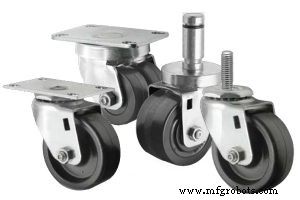
In crowded environments such as factories and hospitals, the inability of fixed casters to turn efficiently posed a serious problem. Early attempts at pivoting involved a kingpin mounted atop the caster frame, allowing the entire assembly to rotate. However, these designs lacked “self‑centering” capability; the caster would often drift or roll sideways when pushed in a direction different from its wheel’s axis.
It wasn’t until 1876 that the modern caster was truly born, thanks to David Fisher’s landmark patent. Fisher’s innovation was deceptively simple: offset the kingpin from the wheel’s center. This arrangement, known as a “self‑steering” or “self‑centering” caster, meant that any lateral friction would cause the wheel to pivot and align with the direction of force. The result was a caster that could turn 360° without a dedicated steering mechanism, dramatically reducing the space needed for maneuvering heavy loads.
Fisher’s design revolutionized material handling. A four‑caster cart could now glide smoothly through tight corridors, its wheels following the path of least resistance. The key to this behavior lies in the friction between the wheel and the floor—a subtle yet critical factor that determines how effectively a caster will self‑center.
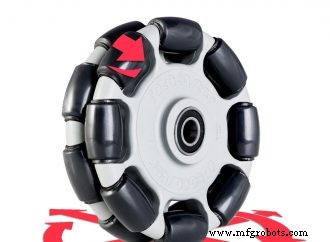
Today, casters are a staple in everyday life: beach carts, grocery trolleys, hospital beds, and furniture all rely on them. Modern variations—such as Roto‑casters or omni‑directional wheels—feature rollers around the wheel’s perimeter, eliminating the need for a trailing pivot point and enabling true 360° motion without relying on friction.
Although the modern caster was patented only about 150 years ago, its impact on efficiency, safety, and daily convenience is immeasurable. This humble invention exemplifies how a simple mechanical principle can become a universal commodity that shapes the way we move goods worldwide.
Industrial equipment
- Wheels vs. Casters: Understanding the Key Differences
- How to Prevent Caster Flutter: Expert Tips for Smooth, Stable Movement
- How Casters Work: From Early Designs to Omni‑Directional Innovation
- From Lodestone to Neodymium: The Evolution of Magnetism
- Mastering Caster Selection: Practical Guidance for Buyers and Manufacturers
- Edge & Cloud Computing in IoT: A Concise Evolutionary Overview
- The Industrial Internet of Things: A Short History of Its Evolution and Impact
- Tracing the Evolution of Heavy Equipment: From 19th Century Roots to Modern Innovation
- Understanding Pulley Systems: How Simple Machines Transform Effort into Lifting
- The Evolution of Horsepower: From Myth to Modern Measurement