



Wheels vs. Casters: Understanding the Key Differences
When we talk about moving equipment, the words wheels and casters are often used interchangeably. In reality, they serve distinct purposes and have different design considerations. This guide explains each component, highlights their differences, and helps you choose the right one for your needs.
What Are Wheels?
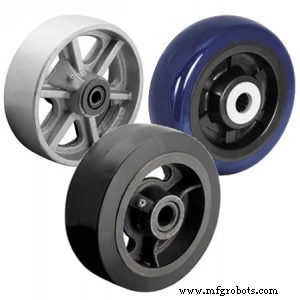
Wheels are fundamental mechanical components—circular discs that rotate around an axle when a force is applied. They belong to the family of simple machines, alongside levers, wedges, pulleys, and inclined planes. Historical evidence shows wheels in use as far back as 4500 BC, illustrating their enduring importance in human technology. Modern wheels come in a variety of materials: rubber, polyurethane (PU), metal, and composite blends, each suited to specific load, speed, and surface conditions.
What Are Casters?
Casters are wheel assemblies engineered for attachment to other objects. They consist of a wheel encased in a metal frame—typically stainless steel or aluminum—that allows the wheel to rotate around a pivot point. Casters are fastened to chairs, carts, hand trucks, and industrial machinery, providing mobility without compromising stability. All casters feature a wheel, but the added frame and mounting system give them versatility and ease of installation.
Common caster categories include:
- Rigid casters – fixed orientation, ideal for heavy loads.
- Swivel casters – 360° rotation for agile movement.
- Medical casters – smooth bearings for patient safety.
- Decorative casters – aesthetic designs for office furniture.
- Rotacasters – specialized rotation mechanisms.
- Industrial casters – high‑strength, durable construction.
Key Differences Between Wheels and Casters
While both enable motion, wheels are purely the rotating element, whereas casters combine that element with a mounting frame and pivot. This structural distinction means casters are generally more complex but also more user‑friendly: they can be snapped or bolted onto a frame, eliminating the need for custom machining or specialized mounting hardware that a standalone wheel might require.
Casters also offer additional functionalities, such as swiveling, that a simple wheel cannot provide. They can move in multiple directions—rolling forward or backward, and turning left or right—making them indispensable in settings where maneuverability is critical.
In short, choose a wheel when you need a basic, low‑maintenance rolling element, and opt for a caster when you require an integrated, easily attachable solution that can handle complex movements and higher loads.
Industrial equipment
- Thermoplastic vs. Thermoset: Understanding Key Differences in Polymer Materials
- O‑Rings vs. Gaskets: Understanding Their Roles and Key Differences
- Forehand vs Backhand Welding: Key Differences and When to Use Each Technique
- Iron vs. Steel: Key Differences Explained
- Cut vs Wire Nails: Understanding the Key Differences for Construction
- Plasma vs. Laser Cutting: Key Differences and When to Use Each
- Lathe vs Milling Facing: Understanding the Key Differences
- Milling vs. Grinding: Key Differences Explained
- Washers vs. Gaskets: Key Differences Explained
- DC vs. AC Motors: Key Differences and Choosing the Right One for Your Application