



Washers vs. Gaskets: Key Differences Explained
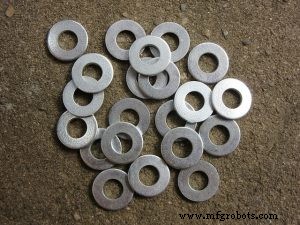
Although they share a similar disc shape, washers and gaskets perform distinct roles in mechanical assemblies. Understanding their differences ensures the right component is chosen for each application.
What Is a Washer?
A washer is a flat, disc‑shaped fastener with a central hole. It slides over a bolt, nut, or screw, distributing the load of the threaded fastener across a larger surface area. This prevents local stress concentrations and helps secure the joint.
Common types of washers:
- Plain washers
- Spring washers
- Locking washers
- Torque washers
- Cupped washers
- Toothed washers
- Tab washers
- Wedge‑lock washers
What Is a Gasket?
A gasket is a sealing element that prevents the passage of liquids, gases, or other substances between two mating surfaces. Unlike washers, gaskets are not attached to fasteners; they are installed in mechanical assemblies—such as engines, pumps, and piping systems—to ensure leak‑free operation.
Common types of gaskets:
- Spiral‑wound gaskets
- Constant‑seating gaskets
- Flange gaskets
- Soft‑cut gaskets
Differences Between Washers and Gaskets
Washers and gaskets serve separate purposes:
- Function: Washers distribute fastener load; gaskets seal joints.
- Usage: Washers are paired with bolts or nuts; gaskets are installed in machinery or piping.
- Shape & Size: Washers are typically uniform, small, circular discs; gaskets come in various shapes and larger dimensions to match mating surfaces.
- Materials: Washers are almost exclusively metal—aluminum, steel, brass, etc.—while gaskets can be metal, rubber, or synthetic composites.
Choosing the right component is critical: use a washer to spread load and a gasket to prevent leaks. Misusing either can compromise structural integrity or lead to fluid loss.
Industrial equipment
- Thermoplastic vs. Thermoset: Understanding Key Differences in Polymer Materials
- Wheels vs. Casters: Understanding the Key Differences
- O‑Rings vs. Gaskets: Understanding Their Roles and Key Differences
- Forehand vs Backhand Welding: Key Differences and When to Use Each Technique
- Iron vs. Steel: Key Differences Explained
- Cut vs Wire Nails: Understanding the Key Differences for Construction
- Plasma vs. Laser Cutting: Key Differences and When to Use Each
- Milling vs. Grinding: Key Differences Explained
- Plain vs. Spring Washers: How They Differ and When to Use Each
- DC vs. AC Motors: Key Differences and Choosing the Right One for Your Application