



Plain vs. Spring Washers: How They Differ and When to Use Each
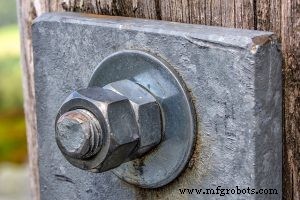
Washers are thin, donut‑shaped metal plates with a central hole. They sit between a fastener and the material being fastened, spreading the load over a larger area so the joint stays intact. While all washers perform this load‑distribution function, they come in different styles – the most common being plain (flat) and spring (curved).
Plain Washers
Also called flat washers, plain washers are the simplest design: a thin, flat metal disc with a central hole. They are inserted through the threaded fastener and, once the fastener is tightened, they spread the bearing load over a broad surface. Plain washers are manufactured from aluminum, carbon steel or stainless steel and are available in a wide range of diameters. Their defining feature is their flatness.
Spring Washers
Spring washers have a curved profile. Unlike flat washers, they do not sit flush against a surface unless a load is applied. The curvature creates an axial preload that resists loosening under vibration. They are ideal for machinery, automotive parts and any application where vibration can cause fasteners to loosen.
Common spring‑washer variants include:
- Cupped spring
- Wave (also known as disc‑spring)
- Curved disc
- Split
- Tooth‑locked
Key Differences
Both washer types perform load distribution, but their shapes and intended uses differ:
- Shape – Plain washers are flat; spring washers are curved.
- Load application – Plain washers are suited for static or low‑vibration assemblies; spring washers provide an additional axial preload that counters vibration‑induced loosening.
- Material options – Both can be made from the same metals, but the choice often depends on the required stiffness and environmental resistance.
When choosing a washer, consider the operating environment: use plain washers for general fastening and spring washers for dynamic or vibrating systems.
Industrial equipment
- Thermoplastic vs. Thermoset: Understanding Key Differences in Polymer Materials
- Wheels vs. Casters: Understanding the Key Differences
- O‑Rings vs. Gaskets: Understanding Their Roles and Key Differences
- Forehand vs Backhand Welding: Key Differences and When to Use Each Technique
- Iron vs. Steel: Key Differences Explained
- Milling vs. Grinding: Key Differences Explained
- Extension vs Compression Springs: Key Differences and Practical Applications
- Spring vs. Ball Plungers: Key Differences & When to Use Each
- Washers vs. Gaskets: Key Differences Explained
- DC vs. AC Motors: Key Differences and Choosing the Right One for Your Application