



Extension vs Compression Springs: Key Differences and Practical Applications
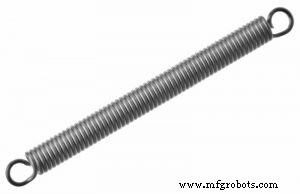
Springs, the ubiquitous coiled metal components in countless industrial and consumer products, store mechanical energy by deforming under load. While all springs share this fundamental principle, the manner in which they deform—either by extending or compressing—determines their specific function and application.
Extension Springs (Tension Springs)
An extension spring is engineered to resist separation forces. Each end typically features a hook or loop, allowing the spring to be anchored between two components. When those components try to pull apart, the spring lengthens, storing energy that pulls them back together. Extension springs are available in a range of diameters, wire gauges, and materials—including stainless steel and phosphor bronze—tailored to the required load and environmental conditions.
Compression Springs
In contrast, a compression spring is designed to counteract forces that push two parts together. These springs are usually broader and more robust than their extension counterparts, enabling them to withstand higher axial loads without buckling. Installed between two components that move toward each other, the spring compresses, storing energy that then pushes the parts apart when the load is released.
Core Differences
- Direction of Force: Extension springs resist pulling forces; compression springs resist pushing forces.
- Deformation: Extension springs elongate under load; compression springs shorten.
- Typical Uses: Extension springs appear in products like door closers, automotive suspensions, and electronic housings. Compression springs are common in shock absorbers, relays, and packaging springs.
Understanding these distinctions ensures that the correct spring type is selected for a given application, enhancing performance, reliability, and safety.
Industrial equipment
- Wheels vs. Casters: Understanding the Key Differences
- What Are Garter Springs? Design, Function, and Sealing Applications
- Compression Springs Explained: A Beginner’s Guide to Mechanics and Applications
- Extension Springs 101: A Practical Guide for Beginners
- O‑Rings vs. Gaskets: Understanding Their Roles and Key Differences
- Compression Molding vs Injection Molding: Key Differences & Choosing the Right Process
- Plain vs. Spring Washers: How They Differ and When to Use Each
- Spring vs. Ball Plungers: Key Differences & When to Use Each
- Mechanical Extension Springs Explained: How They Work and Why They’re Essential
- DC vs. AC Motors: Key Differences and Choosing the Right One for Your Application