



Grab Hooks vs Slip Hooks: Key Differences for Safer Lifting
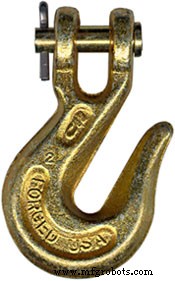
Lifting hooks play a crucial role in industrial and construction settings, enabling safe, efficient hoisting of heavy loads. Although all hooks share the same fundamental purpose—supporting and moving objects—they come in various designs, each tailored to specific safety and performance needs. Among the most common are the grab hook and the slip hook.
What Is a Grab Hook?
A grab hook features an open cradle or groove that “grabs” the chain or rope attached to the load. The hook’s open design allows the chain to be slipped over the cradle and secured with a shackle or bolt, ensuring the load remains in place during lift. Grab hooks are prized for their simplicity and quick attachment, making them ideal for repetitive tasks where speed is essential.
What Is a Slip Hook?
A slip hook incorporates a safety latch—typically a robust metal bar—that locks the cradle once the chain or rope is threaded through. The latch can be opened by pressing inward, but once closed it resists reopening under normal load conditions. This one‑way mechanism prevents accidental release, offering a higher safety margin for heavy or critical loads.
Key Differences Between Grab and Slip Hooks
• Design: Grab hooks have an open cradle; slip hooks have a closed cradle with a safety latch.
• Security: Without a latch, grab hooks rely on proper shackle placement for stability, whereas slip hooks lock automatically, reducing operator error.
• Application: Grab hooks excel in fast, repetitive lifts where quick attachment is needed. Slip hooks are preferred when load integrity is paramount, such as in crane operations or when lifting hazardous materials.
Industry standards—such as OSHA’s Lifting Equipment Standard and the American Society of Mechanical Engineers (ASME) A10.12—recommend slip hooks for applications that demand the highest safety assurance. Choosing the right hook type not only protects equipment but also safeguards personnel.
Industrial equipment
- Thermoplastic vs. Thermoset: Understanding Key Differences in Polymer Materials
- Wheels vs. Casters: Understanding the Key Differences
- Slip Hook vs Shackle: Key Differences for Safe Lifting
- O‑Rings vs. Gaskets: Understanding Their Roles and Key Differences
- Forehand vs Backhand Welding: Key Differences and When to Use Each Technique
- Iron vs. Steel: Key Differences Explained
- Cut vs Wire Nails: Understanding the Key Differences for Construction
- Milling vs. Grinding: Key Differences Explained
- Washers vs. Gaskets: Key Differences Explained
- DC vs. AC Motors: Key Differences and Choosing the Right One for Your Application