



Slip Hook vs Shackle: Key Differences for Safe Lifting
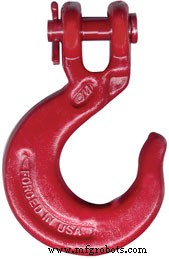
Slip hooks and shackles are staple components in material handling across construction, manufacturing, and maritime sectors. Each device attaches to heavy loads, enabling cranes or forklifts to hoist and relocate them. Though both serve similar functions, their distinct designs result in different performance characteristics.
What Is a Slip Hook?
A slip hook is a simple, robust hook that slips onto a load by fitting over its top edge. The device is typically a single, powder‑coated steel rod with a small opening. To attach, you simply slide the load over the hook’s lip.
What Is a Shackle?
A shackle is a closed‑loop connector, commonly shaped like a "U". It comprises a metal arm and a removable pin that locks the opening. To attach a load, you first remove the pin, slide the load into the U‑arm, and then reinsert the pin to secure it.
Differences Between Slip Hooks and Shackles
While both are used for lifting, slip hooks and shackles differ in design and application. Slip hooks offer a straightforward, slip‑on mechanism, making them ideal for high‑torque environments where the load may be twisted or rotated during hoisting. Shackles, with their removable pin, are more versatile for repeated movements and repositioning, allowing quick release and re‑attachment. In summary, slip hooks provide simple, high‑strength attachment, whereas shackles offer flexibility and ease of handling for dynamic operations.
Slip hooks and shackles are used for similar purposes but feature different designs. Slip hooks are basic hooks with an opening. Shackles, on the other hand, are U‑shaped hooks that can opened or closed with a removable pin.
Industrial equipment
- Thermoplastic vs. Thermoset: Understanding Key Differences in Polymer Materials
- Wheels vs. Casters: Understanding the Key Differences
- O‑Rings vs. Gaskets: Understanding Their Roles and Key Differences
- Forehand vs Backhand Welding: Key Differences and When to Use Each Technique
- Iron vs. Steel: Key Differences Explained
- Cut vs Wire Nails: Understanding the Key Differences for Construction
- Milling vs. Grinding: Key Differences Explained
- Grab Hooks vs Slip Hooks: Key Differences for Safer Lifting
- Washers vs. Gaskets: Key Differences Explained
- DC vs. AC Motors: Key Differences and Choosing the Right One for Your Application