



Extension Springs 101: A Practical Guide for Beginners
When selecting components for mechanical systems, you’ll often encounter extension springs. These devices, like all springs, store mechanical energy and are integral to countless products—from vehicles and machinery to furniture and household appliances. This guide explains what extension springs are, how they operate, and where they’re used.
What Are Extension Springs?
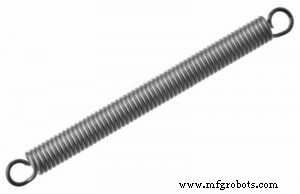
Extension springs, also called tension springs, generate a pulling force when stretched. They consist of a single coil of metal with a loop on each end, allowing you to attach them to two separate points. As the connected objects move apart, the spring resists the separation by pulling back.
Common materials include stainless steel, carbon steel, and aluminum. Despite material differences, all extension springs share the same core design: a compact coil that elongates under load, delivering a consistent tension.
How Extension Springs Work
In their unloaded state, extension springs are compact. When a load is applied—typically by two objects pulling away from each other—the coil stretches, increasing the spring’s length. The stored elastic energy then pulls the objects toward each other, counteracting the applied force.
This behavior contrasts with compression springs, which shorten under load to create a compressive force. Extension springs are chosen whenever a pulling action is required, such as in door closers, mattress supports, or automotive suspension components.
Key Takeaways
- Extension springs store energy in a single, coiled metal wire.
- They generate a pulling force, elongating when objects move apart.
- Materials vary, but design remains consistent across stainless steel, carbon steel, and aluminum models.
- Use them when tension is needed; use compression springs for pushing forces.
Whether you’re a hobbyist or a professional engineer, understanding the fundamentals of extension springs will help you select the right component for any mechanical application.
Industrial equipment
- Spring‑Energized Seals: A Practical Guide for Reliable High‑Pressure Applications
- Compression Springs Explained: A Beginner’s Guide to Mechanics and Applications
- A Beginner’s Guide to Double‑Ended Screws: Design, Use, and Installation
- Yoke Ends 101: How to Select, Secure, and Use Them Safely
- Spring Plungers Explained: Function, Materials, and Installation
- A Complete Guide to Self‑Closing Hinges: How They Work & Where to Use Them
- Eye Bolts Explained: A Comprehensive Guide for Beginners
- Hex Bolts 101: What You Need to Know for Reliable Fastening
- Honing 101: A Beginner’s Guide to Precision Surface Finishing
- The Beginner's Guide to Machine Screws: What They Are, How They Work, and Key Differences from Bolts