



Yoke Ends 101: How to Select, Secure, and Use Them Safely
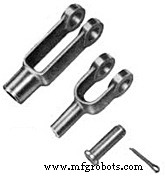
Yoke ends, also known as clevis ends, are U‑shaped fasteners that clamp a cable or rod securely in place, making them indispensable for lifting heavy loads. The system typically includes a clevis and a clotter pin: the clevis is inserted through the yoke’s opening, and the clotter pin locks it in position. This simple yet robust design has made yoke ends a staple in crane, rigging, and industrial lifting equipment.
Overview of Yoke Ends
Yoke ends feature a U‑shaped aperture that accepts a cable or rod. Many models are threaded on one end, allowing attachment to other fasteners. When the clevis is driven through the aperture and the clotter pin is inserted, the opening closes tightly, preventing any movement of the cable or rod during lift.
Choosing the Right Yoke End
Material matters: stainless steel yoke ends resist corrosion and are ideal for moist or humid environments, while carbon steel variants offer higher tensile strength but require protective coatings or treatment in corrosive settings. Inspect the finish for rust or scale before installation.
Size is critical. Yoke ends come in a range of lengths and opening widths; select the dimensions that match your cable diameter, rod length, and the load geometry. Oversized or undersized units can compromise safety.
Many suppliers include the clevis and clotter pin in the package, but some sell them separately. Verify that all components are present and compatible with your yoke end to ensure a secure fit.
Before use, perform a visual inspection for cracks, deformities, or loose threads. Verify that the clevis and clotter pin fit snugly and that the yoke end can bear the rated load without deformation.
Safe Application Tips
Always double‑check the load rating of the yoke end, clevis, and clotter pin. Use a torque wrench to tighten the clotter pin to the manufacturer’s specification, preventing accidental disengagement. In environments with high vibration, consider anti‑vibration washers or lock‑nuts to maintain clamping force.
When in doubt, consult a qualified rigging engineer or refer to industry standards such as ANSI B30.1 for rigging safety.
Industrial equipment
- Spring‑Energized Seals: A Practical Guide for Reliable High‑Pressure Applications
- Compression Springs Explained: A Beginner’s Guide to Mechanics and Applications
- A Beginner’s Guide to Double‑Ended Screws: Design, Use, and Installation
- Spring Plungers Explained: Function, Materials, and Installation
- A Complete Guide to Self‑Closing Hinges: How They Work & Where to Use Them
- Eye Bolts Explained: A Comprehensive Guide for Beginners
- Extension Springs 101: A Practical Guide for Beginners
- Hex Bolts 101: What You Need to Know for Reliable Fastening
- Honing 101: A Beginner’s Guide to Precision Surface Finishing
- The Beginner's Guide to Machine Screws: What They Are, How They Work, and Key Differences from Bolts