



Eye Bolts Explained: A Comprehensive Guide for Beginners
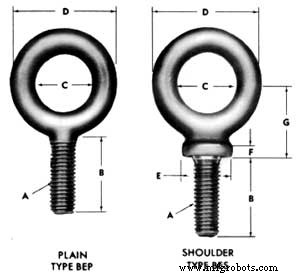
When most people think of bolts, they picture a threaded rod capped with a solid head. While that classic design dominates the market, a less familiar variant exists: the eye bolt. Eye bolts replace the solid head with a loop, offering unique fastening possibilities.
What Is an Eye Bolt?
An eye bolt is a threaded fastener that ends in a loop—much like an eye—hence the name. The loop is integral to the threaded body, allowing the bolt to be driven into a pre‑drilled hole just like a standard bolt.
How Eye Bolts Work
Unlike traditional bolts, which primarily join two surfaces, eye bolts are engineered to anchor ropes, cables, chains, or other tethered loads. The threaded rod is inserted into a hole, and the loop provides a convenient attachment point for a rope or chain.
Because the loop is part of the threaded shaft, it can bear substantial tension, making eye bolts indispensable in rigging, construction, and marine applications.
Choosing the Right Eye Bolt
Key factors to consider include:
- Material: Stainless‑steel eye bolts resist corrosion, ideal for outdoor or marine use. Carbon‑steel eye bolts offer higher tensile strength, suitable for heavy‑duty applications.
- Safe Working Load (SWL): This is the maximum load an eye bolt can support safely. SWL ranges from 500 lb (≈227 kg) to over 5,000 lb (≈2,268 kg), so selecting the correct load rating is critical.
- Size & Thread Pitch: Match the bolt’s diameter and pitch to the pilot hole and the load requirements.
- Standards Compliance: Look for eye bolts that meet ISO 898‑1 or ASTM A193 standards for strength and durability.
By assessing material, load rating, and industry standards, you can confidently select an eye bolt that meets both safety and performance needs.
Industrial equipment
- Spring‑Energized Seals: A Practical Guide for Reliable High‑Pressure Applications
- Compression Springs Explained: A Beginner’s Guide to Mechanics and Applications
- A Beginner’s Guide to Double‑Ended Screws: Design, Use, and Installation
- Yoke Ends 101: How to Select, Secure, and Use Them Safely
- Spring Plungers Explained: Function, Materials, and Installation
- A Complete Guide to Self‑Closing Hinges: How They Work & Where to Use Them
- Extension Springs 101: A Practical Guide for Beginners
- Hex Bolts 101: What You Need to Know for Reliable Fastening
- Honing 101: A Beginner’s Guide to Precision Surface Finishing
- The Beginner's Guide to Machine Screws: What They Are, How They Work, and Key Differences from Bolts