



A Beginner’s Guide to Double‑Ended Screws: Design, Use, and Installation
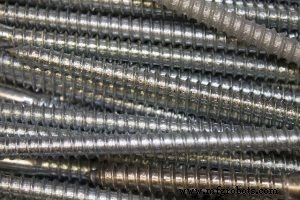
Double‑ended screws, often called dowel screws, are engineered fasteners that allow two surfaces to be joined without a visible head. Their unique, fully‑threaded shank and two pointed ends enable a clean, hidden connection that’s prized in furniture, cabinetry, and structural applications.
What Are Double‑Ended Screws?
Unlike conventional screws that feature a single pointed tip and a drive head, double‑ended screws have no head at all. Both ends are tapered, allowing the screw to be driven into two separate materials simultaneously. The result is a seamless joint that remains entirely concealed beneath the finished surface.
The Anatomy of a Double‑Ended Screw
Key components include:
- Threaded shank: The entire length is fully threaded, providing maximum grip.
- Dual tapered ends: Each end tapers to a sharp point for precise insertion.
- No head: Eliminates the need for countersinking or taping.
Applications and Benefits
These fasteners are ideal for:
- Creating invisible joints in furniture and cabinetry.
- Joining wood to metal in structural framing.
- Assembling decorative panels where aesthetics matter.
Installation Tips
Because the screw threads through both materials, a pilot hole is essential. Follow these steps:
- Mark the desired screw positions on both surfaces.
- Drill a pilot hole that matches the screw’s major diameter.
- Insert the screw, turning it gently until it engages both sides.
- Finish with a clamp or jig if precise alignment is required.
See Monroe’s Fasteners
Industrial equipment
- Spring‑Energized Seals: A Practical Guide for Reliable High‑Pressure Applications
- Compression Springs Explained: A Beginner’s Guide to Mechanics and Applications
- Yoke Ends 101: How to Select, Secure, and Use Them Safely
- Spring Plungers Explained: Function, Materials, and Installation
- A Complete Guide to Self‑Closing Hinges: How They Work & Where to Use Them
- Eye Bolts Explained: A Comprehensive Guide for Beginners
- Extension Springs 101: A Practical Guide for Beginners
- Hex Bolts 101: What You Need to Know for Reliable Fastening
- Honing 101: A Beginner’s Guide to Precision Surface Finishing
- The Beginner's Guide to Machine Screws: What They Are, How They Work, and Key Differences from Bolts