



5 Essential Types of Socket Wrenches for Every Technician
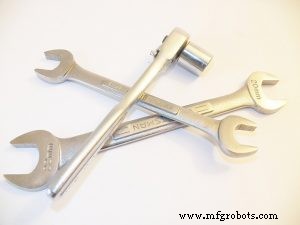
When it comes to tightening or loosening hex‑head fasteners, a socket wrench is your most reliable ally. Compared to a standard wrench, a socket set delivers superior torque, cleaner work, and faster completion times. Below we break down the five most common socket wrench types—each designed for a specific set of tasks—and explain why the right tool can make a world of difference on the job.
#1) Ratcheting Socket Wrenches
Ratcheting sockets are the industry standard. Their built‑in ratchet mechanism lets you turn a fastener continuously without repositioning the tool. This feature saves time and reduces strain, especially in confined spaces. Professional mechanics routinely choose a high‑quality ratcheting set because it offers the best combination of torque, durability, and ergonomic comfort.
#2) Flex‑Head (Swivel) Socket Wrenches
Flex‑head sockets combine a ratchet with a swiveling head, allowing you to reach around obstacles or operate in tight corners. While not as common as straight ratchets, these tools excel in automotive and marine work where space is limited. The swivel head keeps the drive axis aligned, minimizing slippage and ensuring a clean torque application.
#3) T‑Handle Socket Wrenches
Featuring a classic T‑shaped handle, T‑handle sockets provide a straightforward, no‑frills design. The long vertical shaft delivers excellent leverage, while the horizontal bar offers a comfortable grip. Mechanics favor T‑handles for heavy‑duty jobs such as engine assembly or structural work where maximum torque is required.
#4) Nut Driver Socket Wrenches
A nut driver is essentially a handheld screwdriver equipped with a socket head instead of a Phillips or flat‑head tip. This hybrid tool is ideal for quick, on‑the‑go fastening when you only need a limited range of motion. Nut drivers are lightweight, making them a favorite for field service and maintenance crews who value portability.
#5) Gearless Socket Wrenches
Gearless, or ball‑bearing, sockets are a newer innovation that eliminates the traditional gear train. By using high‑precision ball bearings, these wrenches offer smoother operation, reduced wear, and quieter performance. Engineers and high‑precision technicians increasingly adopt gearless sockets for tasks that demand exact torque control and longevity.
Choosing the right socket wrench depends on your work environment and the types of fasteners you encounter. For most applications, a premium ratcheting socket set remains the best investment, providing unmatched torque, versatility, and durability. Pair it with a few specialized tools—such as a flex‑head or gearless option—and you’ll be ready for any fastening challenge.
Industrial equipment
- 4 Essential Types of Coil Springs Explained
- Understanding the Four Most Common Types of Plungers
- Five Key Fusion Welding Techniques Explained
- 5 Common Types of Knobs and Their Practical Applications
- Four Key Types of Material Handling Equipment for Efficient Operations
- Understanding Variables in C#: Types, Storage, and Usage
- Polypropylene: Key Features, Uses, and Production
- Drill Socket Explained: A Must-Have Tool for Quick, Reliable Socket Access
- Explore Wrench Varieties: Types, Uses, and Key Features
- Expert Guide to 4 Types of Aggregate Conveyors: Choosing the Right System