



How Modern Magnets Are Made: From Rare‑Earth Mining to Final Magnetization
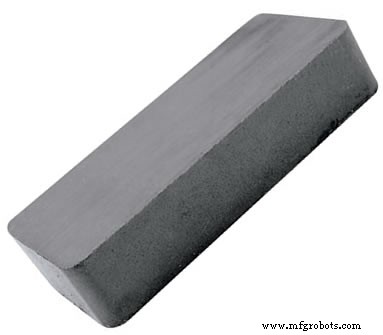
Modern magnets are engineered from naturally occurring magnetic materials, offering powerful, lightweight performance that can be produced at scale in both standard and custom shapes. Advances in material science have identified several minerals—particularly rare‑earth elements—that significantly boost magnetic strength. These elements, such as neodymium, samarium, and cobalt, are unevenly distributed worldwide, with the majority of deposits located in Asia. Consequently, most commercial magnet production takes place there, prompting other nations to explore alternative materials and production methods. Today’s rare‑earth magnets are a sophisticated blend of iron, neodymium, samarium, cobalt, and nickel, among others. The manufacturing techniques for these magnets have been protected by patents from major companies like Sumitomo; as those patents expire, we anticipate broader global participation in magnet production. Given their critical role in electronics, magnet manufacturing is a strategic priority worldwide. 1. The raw metals are blended in precise ratios and melted into ingots in a vacuum furnace. At this stage, the alloy exhibits negligible magnetic properties. 2. The ingots are then milled into a superfine powder, with particle sizes ranging from 3 to 7 µm. Each granule behaves like an individual magnetic domain, ready for alignment. 3. The powder is compressed into the desired geometry—rods, blocks, or strips—while an external magnetic field is applied through an electric current. This field aligns the microscopic domains, establishing the magnet’s polarity and boosting its strength, although the material remains non‑magnetic until the next step. 4. To fuse the particles together, the pressed billet is heated to just below its melting point in a process called sintering. This step locks the grains in place, creating a dense, coherent magnet. 5. Rapid cooling, or quenching, follows sintering, hardening the magnet to a brittle, steel‑like hardness. Subsequent machining—cutting, edge rounding, or custom shaping—requires specialized equipment, such as diamond‑tipped cutters and precision grinders. 6. To protect these brittle alloys from corrosion, virtually all magnets receive a protective coating. Common options include nickel, rubber, or PTFE plastic, with nickel favored for bright, polished magnets and rubber/TPU for darker, matte finishes. 7. The magnet then undergoes a final magnetization step, where it is exposed to a powerful electromagnetic field that aligns the remaining magnetic domains. The resulting remanence typically exceeds the magnet’s nominal rating by about 3 ×, ensuring consistent performance. 8. Finally, each magnet is rigorously tested to confirm its magnetic strength, dimensions, and quality, after which it is packaged and shipped to customers. Large‑scale magnet production is capital intensive, yet billions of units are manufactured worldwide each year. Due to the rigidity of the process, most magnets are produced in standard geometries. From the ancient compass that guided explorers in 500 BC to the miniature magnets that power modern electronics, the technology has evolved dramatically.
Manufacturing Process Overview
Industrial equipment
- How Ceramic (Ferrite) Magnets Are Manufactured
- Cup Magnets: Design, Function, and Selection Guide
- What Flexible Magnets Are Made Of – Composition and Construction
- Creating Closet Doors with CNC Machines: Precision, Customization, and Efficiency
- How Forged Pipe Fittings Are Made: Standards, Materials, and Manufacturing Techniques
- Inside the Manufacturing of Electronic Circuits
- How Mechanical Pencils Are Manufactured: A Step-by-Step Guide
- The Complete Guide to Manufacturing Investment Casting Parts
- Inside a Speaker: How They Convert Electricity into Sound and Are Built
- How Microphones Are Made: From Design to Everyday Use