



Understanding Spark Plugs: Their Role, Types, and Maintenance
Spark plugs may be small, but they are essential for every internal combustion engine’s performance. From a single‑cylinder to an eight‑cylinder, from carbureted to fuel‑injected, spark plugs have remained the heart of ignition for decades.
These devices deliver a high‑voltage pulse that ignites the air‑fuel mixture, initiating the combustion cycle that powers your vehicle. Let’s walk through how they work, the variations you’ll find, and how to tell when they need replacing.
How Spark Plugs Ignite Your Engine
An engine needs three elements to produce power: air, fuel, and ignition. The intake system funnels air into the combustion chamber, while the fuel system—whether through a carburetor or fuel injectors—delivers gasoline. The mixture is then compressed by the piston, and the spark plug’s high‑voltage spark jumps a tiny electrode gap, igniting the mixture.
That single spark converts chemical energy into heat and then mechanical energy, turning the crankshaft and ultimately driving the wheels. Each spark lasts roughly 0.001 seconds, and the cycle repeats thousands of times per minute.
Fun Fact: Diesel engines don’t use spark plugs. They rely on high compression to auto‑ignite diesel fuel. Some diesel engines do employ glow plugs to assist cold starts.
Types of Spark Plugs
Spark plugs differ in size, heat range, electrode design, and the metals used. Ceramic insulation keeps the spark from grounding. Manufacturers specify the correct plug for each engine. Common metal types include:
- Copper: Inexpensive, but less durable; rarely used today.
- Platinum: More durable than copper; longer lifespan.
- Iridium: Longest‑lasting and heat‑resistant; uses a smaller electrode for lower voltage.
- Ruthenium: Newer precious metal; claims improved durability over iridium but at a higher cost.
- Silver: Rare, costly, and less durable than platinum or iridium; found in some performance setups.
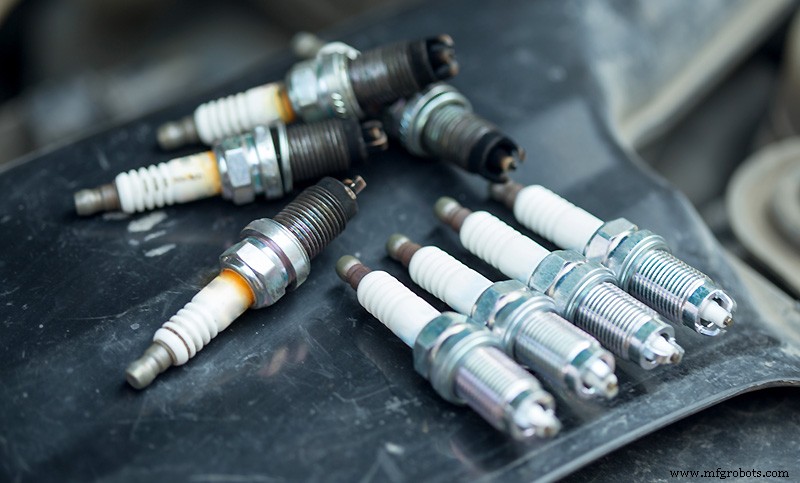
Signs a Spark Plug May Be Failing
Because spark plugs are central to combustion, their failure can manifest in several ways:
- Difficulty starting the vehicle
- Rough idle or misfiring
- Loss of power
- Reduced fuel economy
- Increased emissions
A check‑engine light may also illuminate or flash. If any of these symptoms occur, have a qualified technician diagnose the issue promptly.
Benefits of Replacing Spark Plugs on Time
Most manufacturers recommend replacing spark plugs every 60,000–100,000 miles on newer vehicles, though usage and driving conditions may vary. Proper replacement offers:
- Improved power, fuel economy, and lower emissions: Efficient spark firing keeps the engine running cleanly.
- Smoother operation: From starting to cruising, fresh plugs ensure seamless performance.
- Protection for the catalytic converter: Misfires can leave unburned fuel in the exhaust, risking converter damage and costly repairs.

Training to Work on Internal Combustion Engines
The Automotive Technology program at Universal Technical Institute (UTI) covers spark plugs and other combustion components. Their Automotive Engine Service & Repair course teaches the fundamentals of engine operation and maintenance, preparing students for a high‑demand automotive career.
With more than 68,000 annual automotive job openings in the U.S., UTI offers a comprehensive, hands‑on curriculum you can complete in less than a year. Learn more and request information here.
Industrial equipment
- What Are Bi‑Fold Hinges? Features, Benefits, and Applications
- Deck Screws Explained: Types, Benefits, and How They Compare to Wood Screws
- What Are Split Washers? A Deep Dive Into Vibrational Locking Fasteners
- Set Screws Explained: Design, Differences, and Applications
- Spring‑Energized Seals: Design, Function, and Industrial Benefits
- Vulcanized Seals: Definition, Production, and Industrial Advantages
- Pull Handles Explained: Types, Features, and Applications
- Weld‑On Hinges: Installation, Benefits, and Material Choices
- Hydraulic Seals Explained: Types, Materials, and Their Role in Industrial Cylinders
- Understanding Magnetic Catches: Types, Benefits, and How to Choose the Right One