



Weld‑On Hinges: Installation, Benefits, and Material Choices
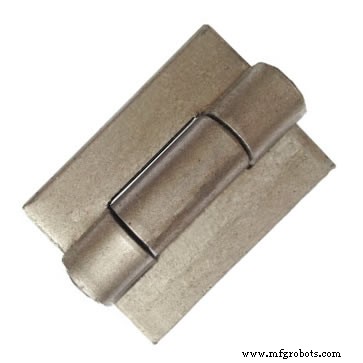
When you’re selecting hinges for a project, you’ll notice that many feature pre‑drilled holes for screws or bolts. These are the standard, fast‑install hinges that can be mounted by simply driving a fastener through the hinge and into the substrate. In contrast, weld‑on hinges are designed without any holes, requiring a welding process for installation.
What Are Weld‑On Hinges?
Weld‑on hinges are constructed from smooth, uninterrupted leafs. Like all hinges, they consist of two leaves that meet at a knuckle and are secured by a pin inserted through the center. The absence of holes means they cannot be fastened with screws; instead, each leaf is fused directly to the metal surface with a welding torch.
When to Use Weld‑On Hinges
These hinges are ideal for metal surfaces where drilling is impractical or impossible—such as thick steel walls, automotive chassis, or industrial equipment. Even when the metal can accommodate fasteners, weld‑on hinges eliminate the need for drilling and provide a cleaner, more streamlined installation. They also reduce the risk of loosening or vibration damage over time.
Materials Commonly Used
Weld‑on hinges are available in two primary alloys:
- Stainless Steel – Offers excellent corrosion resistance and is typically cost‑effective, making it suitable for outdoor or high‑humidity environments.
- Carbon Steel – Provides superior strength and durability for heavy‑load applications, though it is more prone to rust if not properly coated or maintained.
Choosing the right material depends on the application’s load requirements, environmental exposure, and budget.
Industrial equipment
- What Are Bi‑Fold Hinges? Features, Benefits, and Applications
- What Are Detent Position Hinges? A Practical Guide
- Deck Screws Explained: Types, Benefits, and How They Compare to Wood Screws
- What Are Split Washers? A Deep Dive Into Vibrational Locking Fasteners
- Set Screws Explained: Design, Differences, and Applications
- Spring‑Energized Seals: Design, Function, and Industrial Benefits
- Vulcanized Seals: Definition, Production, and Industrial Advantages
- Pull Handles Explained: Types, Features, and Applications
- Loose Joint Hinges: Design, Function, and Advantages
- Hydraulic Seals Explained: Types, Materials, and Their Role in Industrial Cylinders