



How Car Suspension Systems Work—and Why They’re Critical for Safety
Under the hood, a vehicle’s suspension system quietly performs a vital job: it keeps the car stable, comfortable, and safe across every road surface. By absorbing bumps and keeping tires in constant contact with the pavement, the suspension delivers the handling and braking performance that drivers rely on.
Below is a concise guide to the mechanics of modern suspensions, the key components you’ll encounter, the tell‑tale signs of wear, and why regular maintenance is essential.
What Does a Car Suspension Do?
At its core, a suspension maximizes tire‑road friction, enabling smooth rides and precise steering. Roads are rarely perfect; potholes, uneven curbs, and loose gravel all generate forces that a well‑designed suspension can absorb and dampen.
Vehicle dynamics break this down into three fundamental principles:
- Road isolation: Keeps the car body from being jolted by uneven surfaces.
- Road holding: Maintains tire contact for reliable steering, braking, and acceleration.
- Cornering: Minimizes body roll while the vehicle negotiates turns.
By addressing each principle, the suspension system ensures a smooth, predictable driving experience.
Main Car Suspension Parts
The suspension is an integral part of the chassis— the vehicle’s structural backbone. Key components include:
- Coil springs: Absorb impact from road irregularities, allowing wheels to move freely.
- Shock absorbers: Work in tandem with springs to control rebound and keep tires planted on the road.
- Struts: Combine a shock absorber and a coil spring into a single assembly, providing structural support and steering linkage.
- Control arms: Link the chassis to the wheel hub, permitting vertical movement while guiding steering geometry.
- Ball joints: Enable smooth steering pivoting and support the up‑and‑down motion of control arms.
These components collaborate to keep the vehicle stable, responsive, and safe. 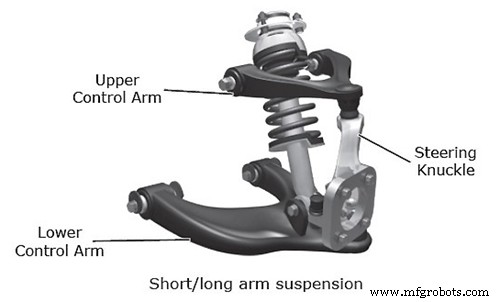
Car Suspension Types
Most vehicles employ different suspension setups for front and rear axles. The two primary configurations are:
- Dependent (rigid axle): All wheels on an axle share the same movement.
- Independent: Each wheel moves separately, improving ride quality and handling.
Independent suspensions are now standard on the front of almost all passenger cars, while many trucks and older models still use a rigid rear axle. 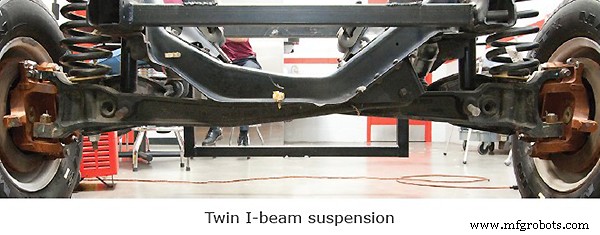
Signs of Suspension Wear and Tear
Suspension components are subject to wear from mileage, road conditions, and age. Watch for these warning signs:
- Vehicle pulling to one side: Indicates shocks or struts are losing effectiveness.
- Uneven ride height: A sagging corner can mean worn springs.
- Increased bumpiness or harshness during normal driving.
- Clunking or banging noises: Often a sign of loose or damaged struts, shocks, or control arms.
- Steering wheel vibration: May point to worn shocks or unbalanced tires.
- Uneven tire wear: Suggests suspension imbalance or misalignment.
When you notice any of these symptoms, schedule a professional inspection. Prompt repairs not only restore comfort but also prevent further damage and potential safety hazards.
For a deeper dive into how suspension failures can arise, check out our dedicated blog post on the topic.
Get Hands‑On Experience With Suspensions at UTI
The 51‑week Automotive Technology program at Universal Technical Institute equips you with the knowledge and hands‑on skills needed for a career in vehicle repair.
Our curriculum covers all aspects of vehicle service, including a comprehensive module on Vehicle Steering and Suspension Service and Repair. With relationships to over 35 leading OEMs, students gain exposure to state‑of‑the‑art technology and real‑world manufacturing practices. 1
Ready to start your journey? Contact an Admissions Representative today to learn more about how we can help you become a suspension specialist.
15
Industrial equipment
- Understanding Full Mortise Hinges: Function, Installation, and Benefits
- Electrical Grounding Explained: Safeguarding Systems from Arcing and Fires
- How Casters Work: From Early Designs to Omni‑Directional Innovation
- Engine Braking Explained: How It Works and Why It Matters
- How Car Braking Systems Operate: Disc vs. Drum, Parts, Wear Signs, and Technician Careers
- Inside NASCAR Engines: Design, Power, and Training
- How Car Air‑Conditioning Systems Operate: A Technical Guide
- How SCADA Systems Operate: Monitoring and Controlling Industrial Processes
- How Air Dryers Work: Keeping Compressed Air Clean & Efficient
- Understanding Electric Brakes: How They Operate and Why They Matter